Biryani Rice Parboiling Calculator
Calculate Your Perfect Parboiling Time
The article states: "Rice is boiled until it's 70% cooked—just shy of done." This tool calculates the exact time needed based on your rice quantity and type.
Ever taken a bite of biryani and wondered why it hits differently than any other rice dish? It’s not just the meat or the rice. It’s not even the onions or the yogurt. It’s the quiet alchemy of layers-spices toasted just right, herbs released at the perfect moment, and steam trapped like a secret between layers of rice and meat. This isn’t magic. It’s technique. And if you’ve ever made biryani and felt like something was missing, you weren’t imagining it. You were missing the details that turn good into unforgettable.
The spice blend that doesn’t show up on the label
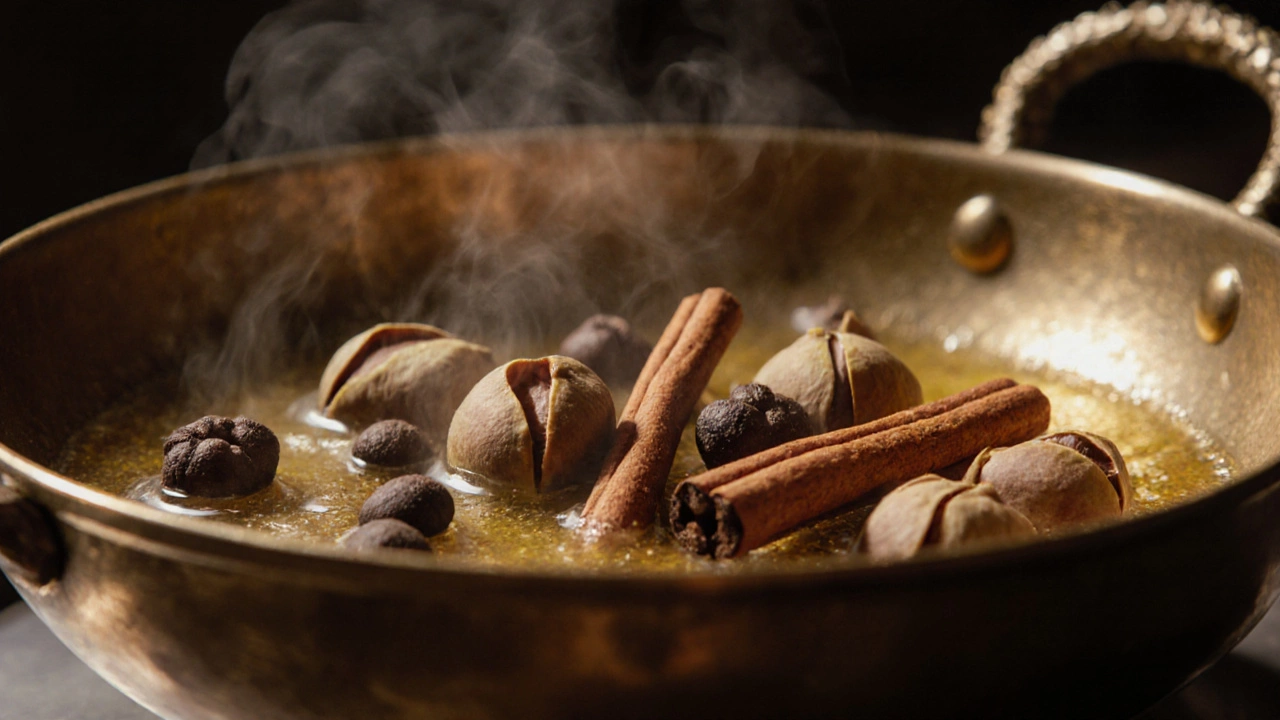
Most people think biryani spice mix is just garam masala and cumin. It’s not. The real flavor comes from a blend that’s toasted, ground, and layered in stages. Whole spices like cardamom pods, cloves, cinnamon sticks, and black peppercorns are fried in ghee or oil before anything else hits the pan. This isn’t just flavor-it’s chemistry. Heating whole spices releases essential oils that ground spices can’t match. That’s why your biryani might taste flat if you skip this step.
Then there’s the star nobody talks about: saffron. Not the cheap stuff dyed with turmeric. Real Kashmiri saffron, soaked in warm milk or rosewater. Just a few threads. But those threads? They don’t just color the rice. They carry a floral, honeyed depth that lingers long after the last bite. It’s the difference between a dish that’s tasty and one that makes you close your eyes.
The rice isn’t just rice
Basmati is non-negotiable. But not all basmati is the same. Long-grain, aged basmati from India or Pakistan has a lower moisture content and a natural aroma that’s almost jasmine-like. Fresh, unaged basmati? It turns mushy. You’ll end up with sticky rice, not the separate, fluffy strands biryani needs.
And the parboiling? It’s not optional. Rice is boiled until it’s 70% cooked-just shy of done. That’s because it finishes cooking in the pot, layered with meat and spices, absorbing their juices. If you boil it fully, it turns to paste. If you don’t boil it enough, it stays crunchy in the middle. It’s a tight window. One minute too long or too short changes everything.
The meat isn’t marinated-it’s transformed
Chicken, lamb, or goat: the meat doesn’t just sit in yogurt and spices. It’s massaged in, then left for hours, sometimes overnight. But the secret? The yogurt isn’t just for tenderness. It’s a slow acid that breaks down proteins without making the meat sour. And the ginger-garlic paste? It’s not a flavoring. It’s a binder. When fried with the meat, it caramelizes and sticks to every fiber, creating a crust that locks in moisture.
Some cooks add a splash of rosewater or kewra water to the marinade. It’s subtle. You won’t taste it as floral. But you’ll notice the difference when it’s gone. It’s like the difference between plain water and water with a hint of mint-subtle, but essential.
The layering isn’t decoration-it’s science
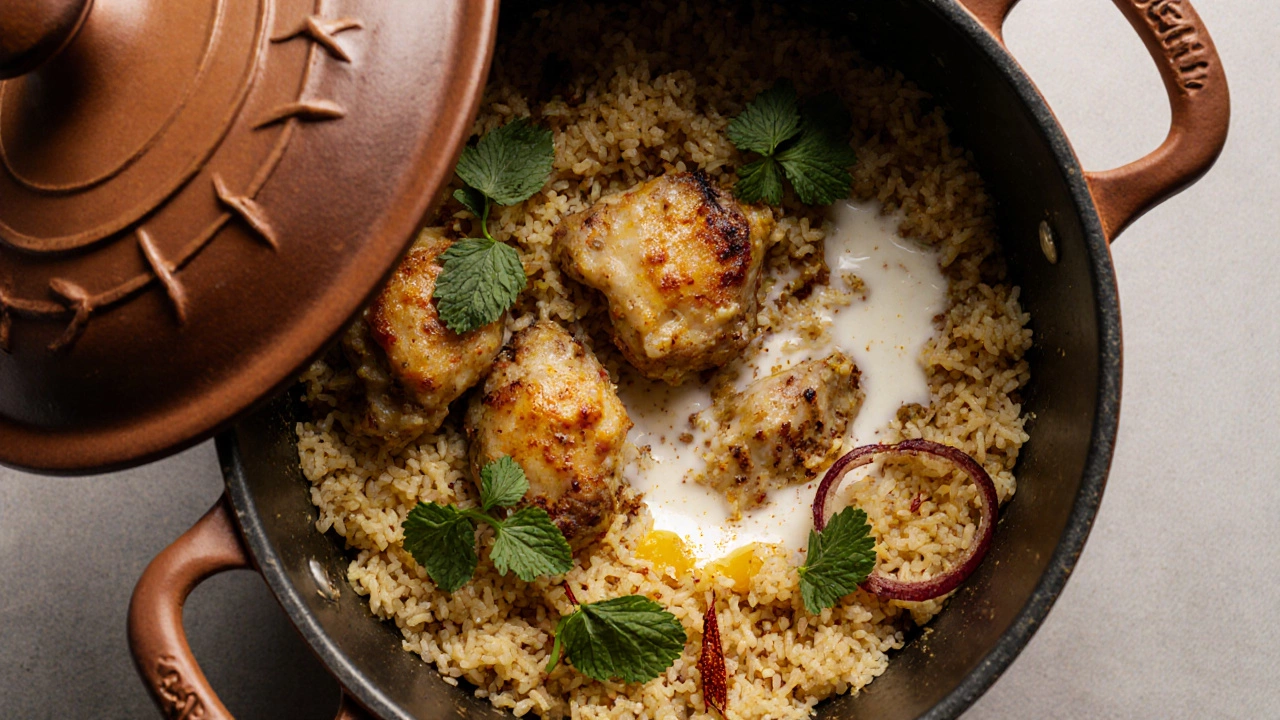
Here’s where most home cooks go wrong. They dump everything in one pot. Biryani is built like a lasagna. First, a layer of rice. Then meat, fried onions, saffron milk, fresh mint, coriander, and a drizzle of ghee. Then rice again. Then more meat. Then more herbs. And finally, a seal: dough or a lid with a weight on top.
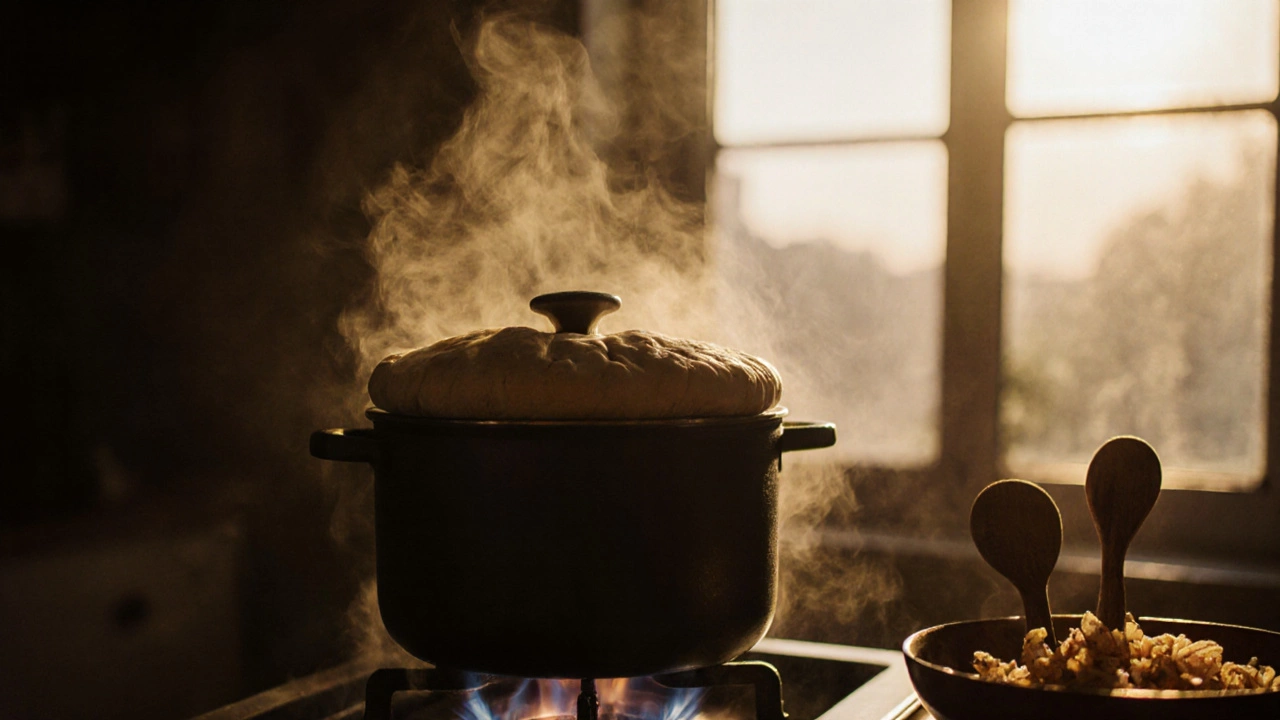
This seal traps steam. And steam is what carries the aromas from the bottom to the top. Without it, the spices stay where they’re added. With it, they rise through the layers, infusing every grain. This is called dum cooking-slow, sealed, low-heat steaming. It’s not just traditional. It’s the only way the flavors truly marry.
The onions aren’t just garnish
Those crispy fried onions on top? They’re not there for looks. They’re the final flavor bomb. Thinly sliced onions fried slowly in ghee until they turn golden brown, almost caramelized, then fried a little longer until they crisp up. They’re sweet, smoky, and crunchy. When you dig in, they’re the first thing your teeth hit. They break the softness of the rice and meat, adding texture and a deep, almost nutty sweetness that balances the spices.
And they’re not added at the end. They’re layered in. Some go between the rice and meat. Some go on top. The ones on top get toasted again in the final steam. That’s why they stay crisp even after hours of cooking.
The ghee and the water
Modern cooks use oil. Traditional cooks use ghee. And there’s a reason. Ghee has a higher smoke point and a nutty, buttery depth that oil can’t replicate. It coats the rice, prevents sticking, and carries fat-soluble flavors deep into the grains.
And the water? It’s not plain. It’s often infused with a cinnamon stick, a few cardamoms, or even a bay leaf. This water is what the rice is boiled in. It’s the first layer of flavor. Skip it, and you’re just cooking rice in tap water. That’s not biryani. That’s rice with spices on top.
Why your biryani might taste off
Here’s what usually goes wrong:
- You used pre-ground spices. Toasting whole spices makes a 40% difference in aroma, according to flavor scientists at the Institute of Food Technologists.
- You rushed the marination. Meat needs at least 4 hours. Overnight is better.
- You boiled the rice too long. It should still have a slight bite when drained.
- You didn’t seal the pot. Steam escapes. Flavors don’t blend.
- You used cheap saffron. Real saffron has a deep red color and a strong, sweet smell. If it smells like hay, it’s fake.
What makes biryani different from pulao
People mix them up. But they’re not the same. Pulao is a one-pot dish. Rice and meat cook together from the start. Biryani is layered and steamed. Pulao is simple. Biryani is ritual.
Pulao uses pre-cooked or raw ingredients mixed and cooked once. Biryani builds flavor in stages. It’s like comparing a quick stir-fry to a slow-braised stew. One is efficient. The other is soulful.
Where to start if you’ve never made biryani
Don’t try the full version first. Start with chicken biryani. It’s forgiving. Use:
- 2 cups aged basmati rice
- 500g chicken thighs (bone-in, skin-on for more flavor)
- 1 large onion, thinly sliced and fried until crisp
- 1 tsp each: whole cardamom, cloves, cinnamon, black peppercorns
- 1/2 tsp saffron soaked in 2 tbsp warm milk
- 1/2 cup yogurt, 2 tbsp ginger-garlic paste
- 2 tbsp ghee
- Handful of fresh mint and coriander
Toast the whole spices in ghee. Add chicken, yogurt, ginger-garlic paste. Cook until the yogurt separates. Parboil rice until 70% done. Layer. Seal with foil and a lid. Cook on low for 30 minutes. Let it rest 10 minutes before opening. That’s it. No fancy tools. Just patience.
Final thought: Taste isn’t just ingredients
Biryani tastes like time. The time spent toasting spices. The time waiting for onions to caramelize. The time letting the meat soak in yogurt. The time steam works its magic under a sealed lid. You can’t rush it. And if you try, you’ll taste the difference.
It’s not about following a recipe. It’s about respecting the rhythm. Once you get that, you won’t need another recipe. You’ll know by smell, by texture, by the way the steam rises when you lift the lid.
Can I use regular rice instead of basmati for biryani?
No. Regular rice lacks the long, slender shape and natural aroma of aged basmati. It absorbs too much water, turns sticky, and doesn’t separate when cooked. Basmati is the only rice that holds its structure during the layered dum cooking process. Substituting it will ruin the texture and authenticity of the dish.
Is saffron necessary in biryani?
Technically, no-but it’s the soul of the dish. Saffron adds a unique floral sweetness and golden hue that no other spice can replicate. If you can’t afford real saffron, skip it. But don’t use turmeric as a substitute. It changes the flavor profile and looks artificial. A few threads of real saffron are worth the cost.
Why is my biryani too spicy?
You likely added ground chili powder or red pepper flakes too early. Biryani gets heat from whole dried chilies fried in ghee, not powdered spices. Ground chilies burn and turn bitter. Use whole Kashmiri chilies or red chili powder sparingly, and add it with the meat, not the rice. Balance spice with yogurt and saffron.
Can I make biryani without meat?
Absolutely. Vegetable biryani is just as traditional. Use potatoes, carrots, peas, cauliflower, and paneer. The key is to fry the vegetables lightly before layering so they don’t turn soggy. Add a pinch of asafoetida (hing) for depth-it mimics the umami of meat. The same layering and dum technique applies.
How do I store leftover biryani?
Let it cool completely, then store it in an airtight container in the fridge for up to 3 days. Reheat gently on the stove with a splash of water or milk to restore moisture. Avoid the microwave-it dries out the rice and makes the onions soggy. The flavors actually improve after a day, as the spices settle deeper into the rice.