Grab and Go Breakfast Calculator
Your Breakfast Preferences
Recommended Options
Ever raced out the door in the morning with nothing but a cup of chai and a feeling of regret? You’re not alone. In cities like Mumbai, Delhi, or Bangalore, millions of people grab something quick before work, school, or the commute. That’s where grab and go breakfast comes in - simple, tasty, and designed to be eaten while walking, on a train, or in a car. It’s not fancy. It’s not sit-down. But it’s real, it’s reliable, and it’s deeply rooted in Indian food culture.
What Exactly Is a Grab and Go Breakfast?
A grab and go breakfast is any food that’s prepped ahead of time, easy to carry, and doesn’t need utensils or a plate. It’s meant to be eaten in under five minutes, often with one hand. Think of it as breakfast that fits in your bag, pocket, or hand.
In India, this isn’t a new trend - it’s been around for decades. Street vendors, home cooks, and even big brands have perfected the art of making breakfast that’s fast, filling, and doesn’t fall apart. Unlike Western granola bars or yogurt cups, Indian grab and go breakfasts are often savory, packed with carbs and protein, and made with ingredients you already have in your kitchen.
Top 5 Grab and Go Breakfasts in India
Here are the most common ones you’ll see on sidewalks, train platforms, and office lobbies across the country:
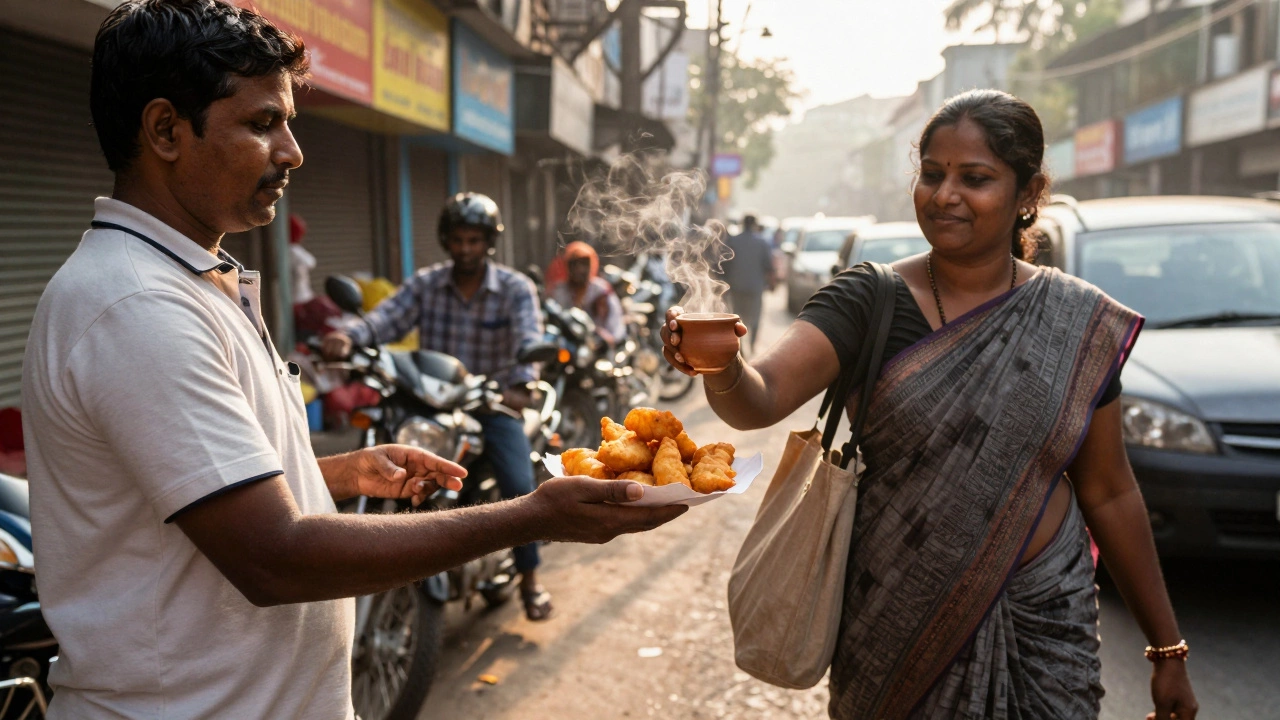
- Chai and Pakora - A small paper cone of hot, crispy fritters made from besan (chickpea flour), onions, and spices. Served with a small cup of hot, milky chai. No plate needed. No fork required. Just eat and go.
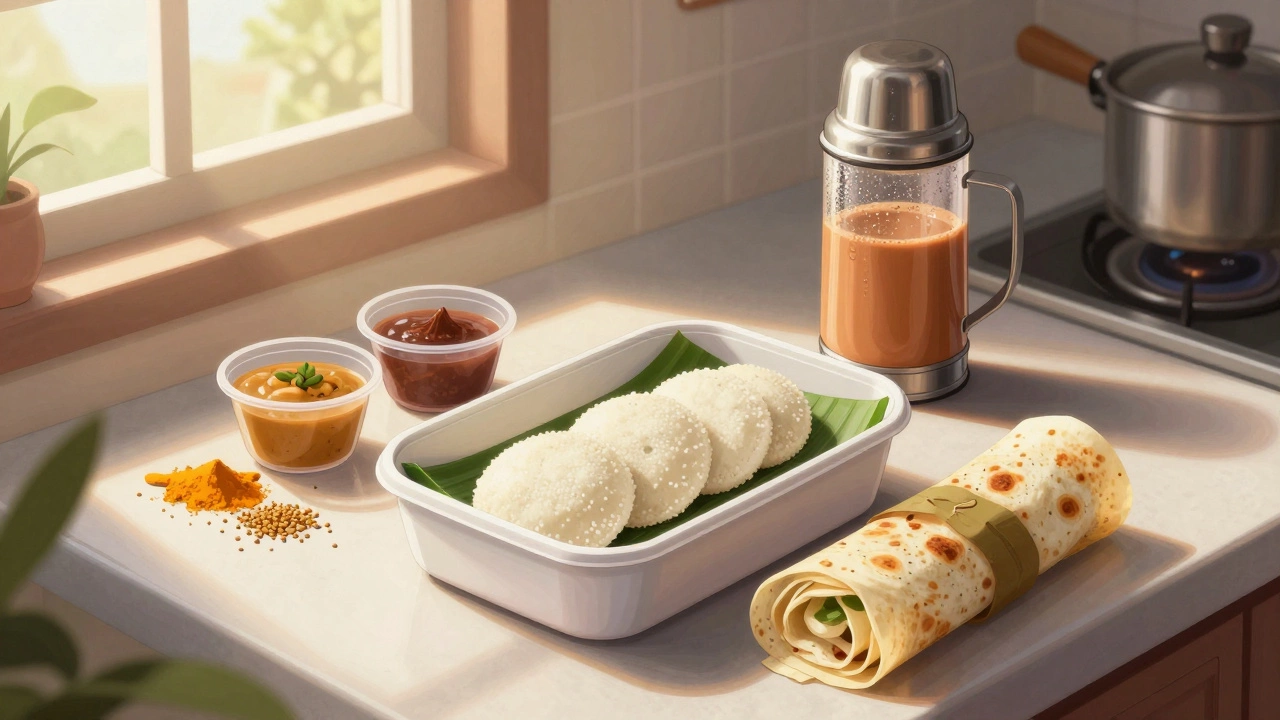
- Idli with Sambar and Chutney - Steamed rice cakes, soft and light, packed in a small box or banana leaf. Comes with a side of coconut chutney and sambar in tiny plastic cups. Easy to hold, easy to eat. Many households make a batch on Sunday and refrigerate it for the week.
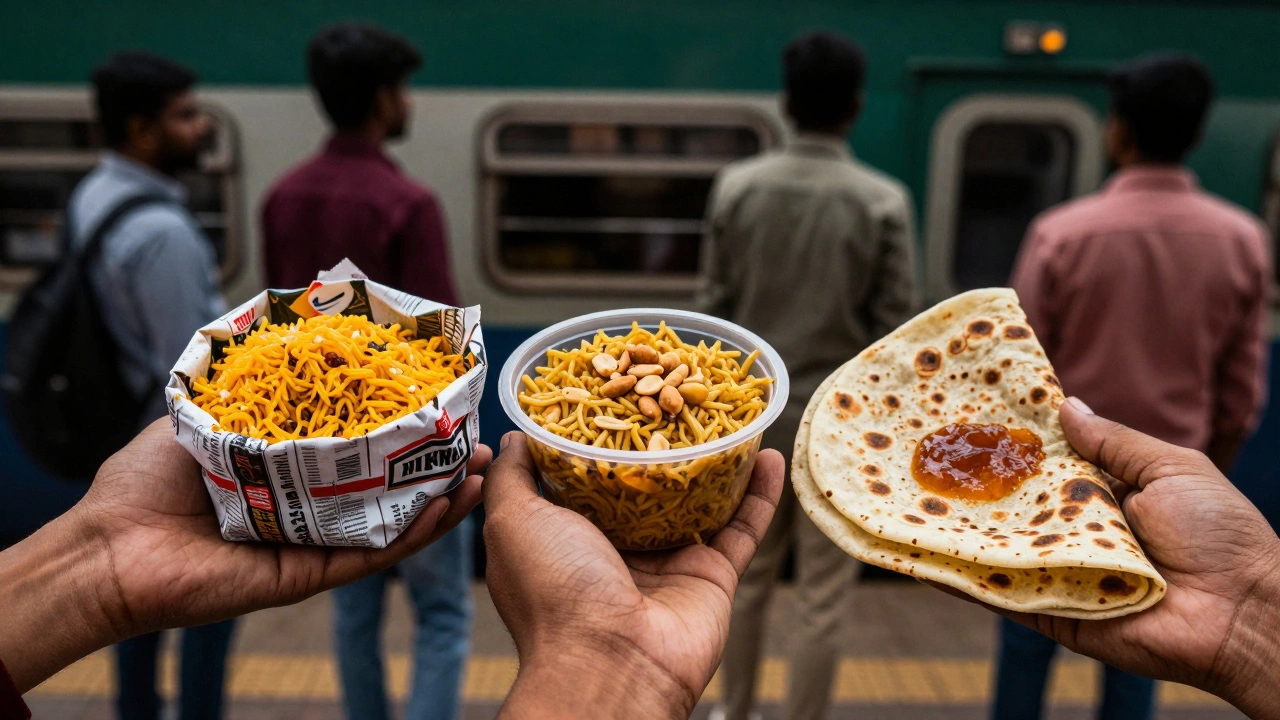
- Poha - Flattened rice cooked with mustard seeds, curry leaves, turmeric, and peanuts. Often sold warm in disposable bowls or wrapped in newspaper. Light, tangy, and filling. Perfect for early mornings when you don’t want something heavy.
- Paratha with Pickle - A single, freshly made whole wheat paratha, slightly oily, rolled with a spoonful of mango or lime pickle. Folded in half, wrapped in paper, and handed over. You can eat it standing up, even while waiting for the bus.
- Upma with Roasted Peanuts - A dry, grainy porridge made from semolina, onions, and spices. Often sold in small plastic containers. The roasted peanuts add crunch and protein. It’s the kind of breakfast that keeps you full until lunch.
Why These Work So Well
These meals aren’t just convenient - they’re smart nutritionally. Most combine:
- Complex carbs (rice, wheat, oats) for steady energy
- Protein (besan, peanuts, lentils, paneer)
- Healthy fats (oil used for frying, ghee, coconut)
- Spices that aid digestion (mustard seeds, turmeric, ginger)
Unlike Western breakfasts that rely on sugar or processed cereals, Indian grab and go options are naturally balanced. A plate of poha has less sugar than a single banana, and it keeps you full for hours. No mid-morning crash. No need to snack before lunch.
They’re also culturally designed for India’s climate and pace. Hot food warms you up in winter. Spices help with digestion in humid weather. And eating with your hands? That’s not messy - it’s instinctive.
How to Make Your Own Grab and Go Breakfast at Home
You don’t need a food truck to make this work. Here’s how to build your own system:
- Choose your base - Pick one: idli, poha, upma, paratha, or even leftover khichdi.
- Add protein - Toss in roasted peanuts, boiled eggs, or a spoon of paneer bhurji.
- Include flavor - Keep small jars of chutney, pickle, or yogurt on hand. These add taste and aid digestion.
- Portion and pack - Use small tiffins, silicone molds, or even banana leaves. Wrap parathas in parchment paper. Store idlis in a sealed container with a paper towel to absorb moisture.
- Prep ahead - Cook a big batch on Sunday. Refrigerate or freeze. Reheat in the microwave for 60 seconds the next morning.
Pro tip: Keep a thermos of chai ready. Brew it the night before and reheat in the morning. Or make instant masala chai powder with cardamom, ginger, and black tea - just add hot water.
What to Avoid
Not everything sold as “quick breakfast” is worth grabbing.
- Deep-fried snacks sold all day - If it’s been sitting under a heat lamp since 6 a.m., skip it. Oil goes rancid. Taste suffers. Your stomach knows.
- Pre-packaged sweet breads - Many bakeries sell sugary buns or croissants labeled as “breakfast.” These spike blood sugar and leave you hungry again by 10 a.m.
- Boiled eggs without salt or pepper - Plain boiled eggs are fine, but without seasoning, they’re bland and unsatisfying. Add a pinch of chaat masala or black salt.
Stick to food that smells fresh, looks warm, and is sold by someone who makes it daily. That’s your best bet.
Why This Matters Beyond Convenience
Grab and go breakfast isn’t just about saving time. It’s about preserving food culture in a fast-moving world. In rural India, people still eat warm, home-cooked meals. In cities, that’s fading. But the grab and go tradition keeps the soul of Indian breakfast alive.
It’s not just students and office workers. It’s nurses on night shifts, delivery riders, auto drivers, and teachers who don’t have time to sit down. These meals feed millions every day - quietly, reliably, without fanfare.
When you choose a plate of poha over a cereal bar, you’re choosing tradition over processed convenience. You’re choosing flavor over sugar. You’re choosing food that was made with care, even if it was made in a hurry.
Final Thought: Make It Yours
You don’t need to eat like your grandmother to have a great grab and go breakfast. But you can learn from her. Try making one version this week. Keep it simple. Use what you have. Eat it standing up. Feel the difference.
Breakfast doesn’t need a table. It just needs to be good.
Is a grab and go breakfast healthy?
Yes, if you choose wisely. Traditional Indian grab and go options like poha, idli, and upma are made with whole grains, legumes, and spices that support digestion and energy. They’re low in sugar and high in fiber and protein. Avoid fried snacks sold all day and sugary baked goods - those are the unhealthy ones.
Can I make grab and go breakfasts ahead of time?
Absolutely. Most Indian breakfasts like idli, poha, upma, and parathas store well in the fridge for 3-4 days. Reheat them in a microwave or steamer. Keep chutneys and pickles in small jars. Pre-portion everything on the weekend, and you’re set for the whole week.
What’s the best grab and go breakfast for weight loss?
Poha and idli are your best bets. Both are low in calories, high in fiber, and don’t spike blood sugar. Skip the fried pakoras and parathas cooked in excess oil. Add a boiled egg or a handful of roasted peanuts for protein. Drink chai without sugar or with just a teaspoon.
Are there vegan grab and go breakfast options in India?
Yes, and they’re everywhere. Poha, upma, idli, and dhokla are naturally vegan. Just ask for no ghee or yogurt. Most street vendors use oil, not butter. Coconut chutney and tamarind chutney are plant-based. Check for paneer or egg in dishes like bhurji - those are the non-vegan additions.
How long do these breakfasts stay fresh?
Cooked items like poha and upma last 2-3 days in the fridge. Idlis last up to 4 days. Parathas can be frozen and reheated. Always store them in airtight containers. Chutneys and pickles last weeks if kept cool. If it smells off or looks dry, toss it.