Jalebi Calorie Calculator
How Many Calories in Jalebi?
Jalebi is a beloved Indian sweet with 120-150 calories per piece. This calculator helps you understand your consumption.
calories
Based on 120-150 calories per jalebi. One jalebi contains about 30g of carbohydrates and 12g of sugar.
Enjoy in moderation. Jalebi is high in sugar and should be consumed as an occasional treat.
Ask anyone in India what their favorite sweet is, and chances are they’ll pause-then say jalebi. Not just because it’s sweet, but because it’s alive with memory. The sizzling oil, the golden swirls dipped in syrup, the sticky fingers, the smell that drifts through morning markets and festival nights. It’s not just a dessert. It’s a cultural pulse.
Why Jalebi Reigns Supreme
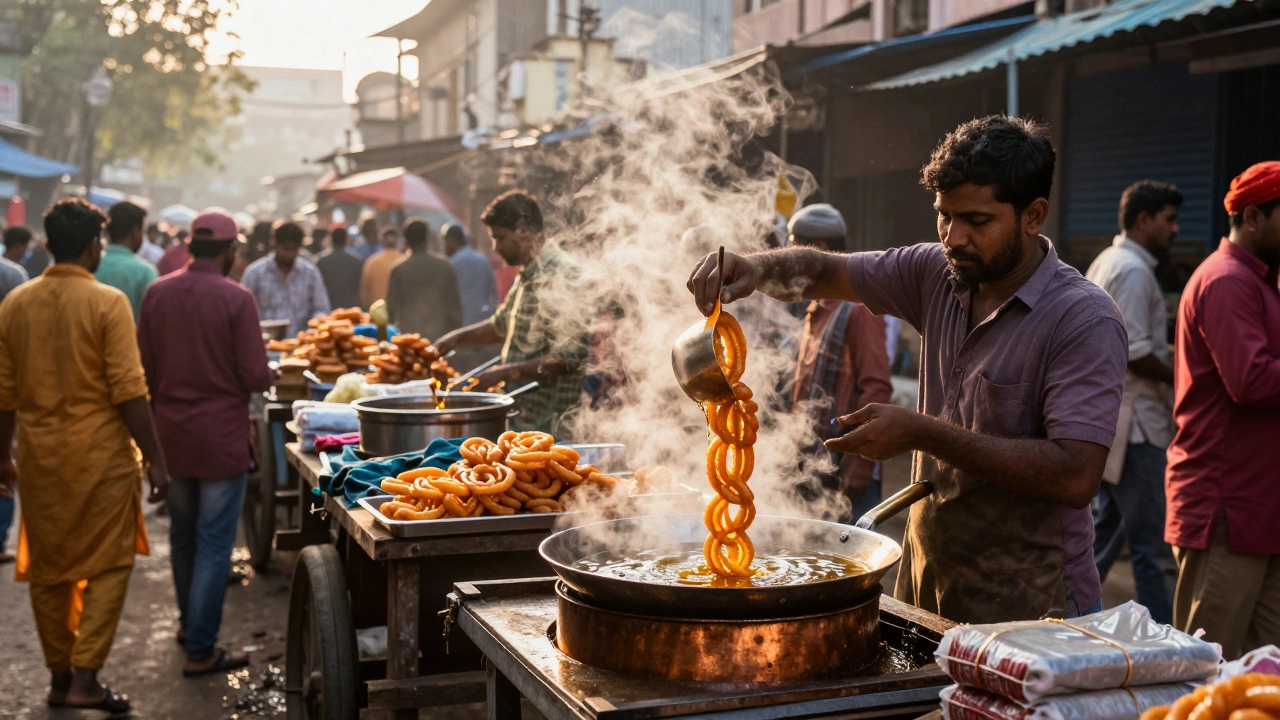
Jalebi isn’t just popular-it’s everywhere. From roadside carts in Varanasi to five-star hotel buffets in Mumbai, from Diwali platters to wedding feasts, jalebi shows up without invitation and never leaves without applause. It’s not the most expensive sweet, nor the most complex. But it’s the most universal. You don’t need a special occasion to eat jalebi. You just need hunger and a street vendor with a copper kadhai.
What makes it different from gulab jamun or rasgulla? Texture. Jalebi is crisp on the outside, soft and syrup-soaked inside. It’s warm when you bite into it. The syrup doesn’t just coat-it seeps in, clinging to every curve. And unlike many Indian sweets made with milk solids, jalebi is fermented batter fried and soaked. That fermentation gives it a subtle tang that balances the sugar. It’s not cloying. It’s alive.
A 2023 survey by the Indian Food Research Institute found that 78% of Indians named jalebi as their top sweet, beating out rasgulla (12%) and gulab jamun (6%). In rural areas, the number jumps to 89%. It’s not a regional favorite-it’s a national obsession.
The Science Behind the Swirl
Jalebi isn’t magic. It’s chemistry. The batter is made from all-purpose flour, yogurt, a pinch of baking soda, and water. It ferments overnight-sometimes up to 12 hours. That’s not just for flavor. The lactic acid from the yogurt breaks down the gluten, making the batter light. When it hits hot oil, the trapped air expands, creating those signature spirals.
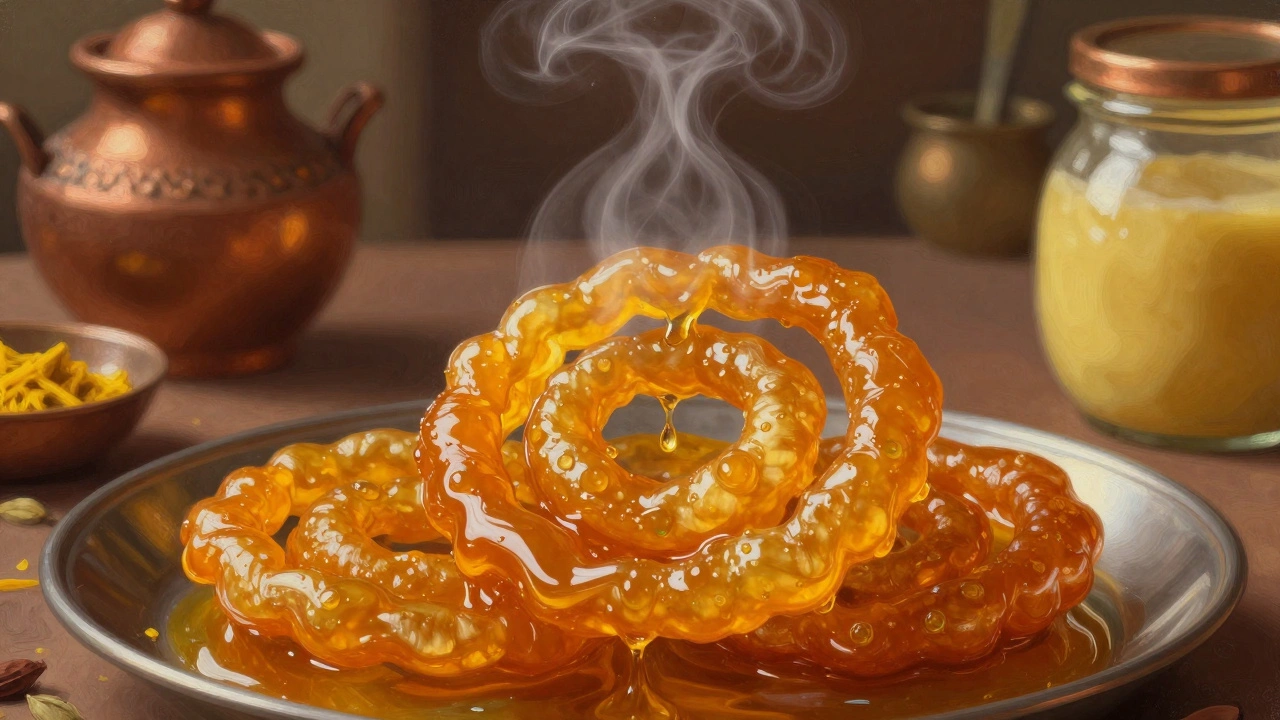
The syrup? Usually sugar and water, boiled to a one-string consistency. Sometimes cardamom or saffron is added. But the real trick is timing. The fried coils must be dipped while still hot. Too early, and they break. Too late, and the syrup doesn’t soak in. The best jalebis are made fresh, served within minutes of frying.
Some vendors use a special nozzle-called a jalebi maker-to squeeze the batter into perfect spirals. Others use a spoon. Both work. But the ones made by hand, with a steady wrist and decades of practice, are the ones you remember.
Where Jalebi Comes From
Jalebi didn’t start in India. It came from the Middle East. Its ancestor is the Persian zulbiya, which traveled with traders along the Silk Road. By the time it reached the Mughal courts in the 16th century, it had evolved. Indian cooks added yogurt to the batter, making it more digestible in the heat. They also started serving it with rabri-a thick, creamy milk reduction-turning it from a snack into a royal treat.
Today, jalebi is called by different names across the country: jilapi in Bengal, jalebi in the North, imarti in some parts of Madhya Pradesh. But the core remains the same: fermented batter, fried, soaked in syrup.
How It’s Eaten Around India
In North India, jalebi is often paired with hot milk or served with a side of rabri. In Gujarat, it’s eaten with a sprinkle of chaat masala for a sweet-and-sour kick. In South India, it’s sometimes made with rice flour instead of wheat, giving it a lighter texture. In Maharashtra, you’ll find it stuffed with khoya (reduced milk) for a richer bite.
At festivals, jalebi is sold by the dozen. During Diwali, families fry batches at home. In winter, street vendors wrap them in paper and hand them out warm. In summer, they’re chilled and served with a dollop of ice cream-a modern twist that’s catching on in cities.
Why It’s Not Just a Sweet
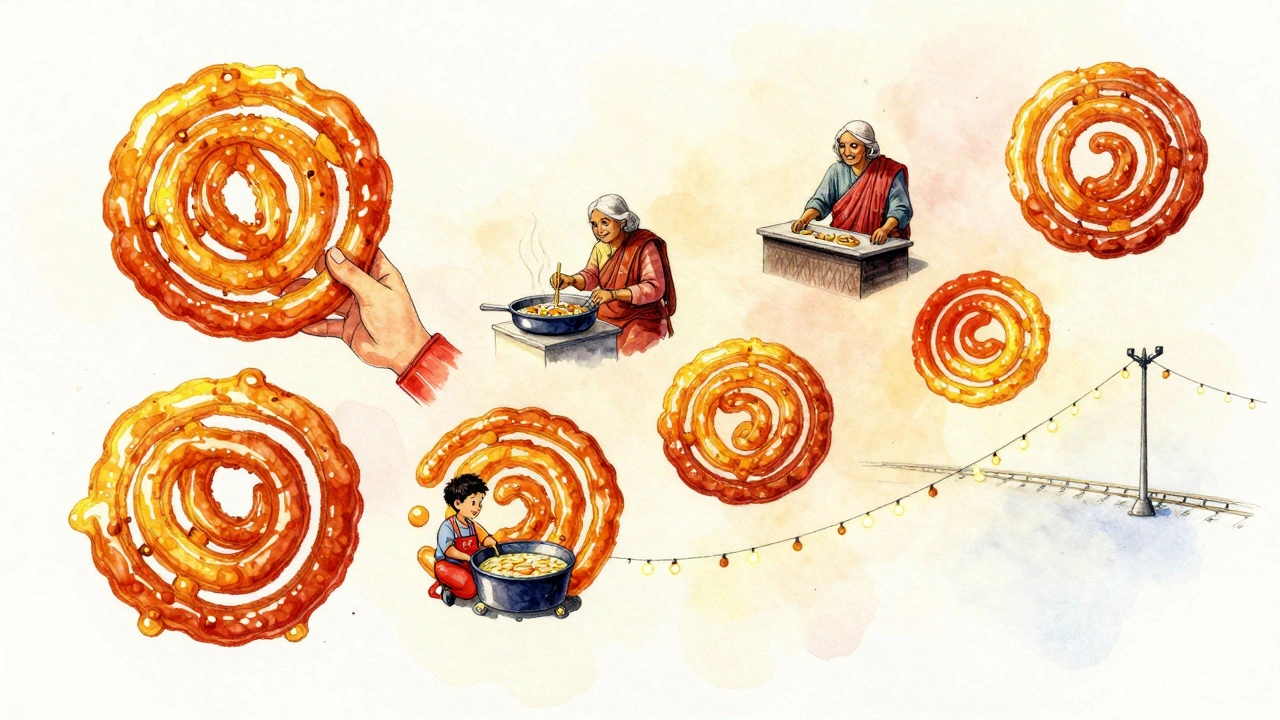
Jalebi is tied to time. It’s the sweet you eat after school, the one your grandmother made on Sundays, the one you crave when you’re homesick. It’s the dessert you share with strangers at a railway station because the vendor smiles and says, “Try one, beta.”
It’s also tied to rhythm. The sound of oil bubbling. The hiss as batter hits the pan. The slow drip of syrup. The crunch of the first bite. These are sensory anchors. They don’t just satisfy hunger-they bring back moments.
There’s no recipe that says “this is the real jalebi.” Every family has their version. Some use milk instead of water. Some add a drop of lemon juice to the syrup. Some fry it in ghee. All of them are right.
How to Make Jalebi at Home
You don’t need a fancy kitchen. Just a heavy-bottomed pan, a whisk, and patience.
- Combine 1 cup all-purpose flour, 1/4 cup yogurt, 1/4 tsp baking soda, and 3/4 cup water. Mix until smooth.
- Cover and leave overnight at room temperature. It should double in volume and smell slightly sour.
- Heat 2 inches of oil in a deep pan to 350°F (175°C).
- Transfer the batter to a squeeze bottle or a spoon. Slowly drizzle in tight spirals into the hot oil.
- Fry for 2-3 minutes until golden. Flip once.
- Meanwhile, boil 1 cup sugar and 1/2 cup water until it reaches one-string consistency (about 10 minutes). Add a pinch of cardamom.
- Drop the fried coils into the syrup. Let them soak for 5 minutes.
- Drain and serve warm.
Pro tip: Don’t overcrowd the pan. One or two swirls at a time. And never skip the fermentation. That’s where the magic happens.
What About Other Sweets?
Of course, India has hundreds of sweets. Rasgulla from Bengal is soft and pillowy. Gulab jamun melts in your mouth. Barfi is dense and nutty. Kheer is creamy rice pudding. But none of them have jalebi’s combination of texture, accessibility, and emotional weight.
Jalebi doesn’t need refrigeration. It doesn’t require special equipment. You can make it in a village kitchen with a wood fire. And it tastes just as good in Delhi as it does in Chennai.
The Real Reason It’s #1
Jalebi isn’t #1 because it’s the most expensive. Or the most rare. Or the most complex. It’s #1 because it’s simple enough for anyone to make, but deep enough to carry a lifetime of memories. It’s the sweet that doesn’t ask for permission. It shows up when you need it most-on a rainy afternoon, after a long day, during a celebration, or just because.
That’s why, when you ask someone in India what their favorite sweet is, they don’t hesitate. They smile. And they say: Jalebi.
Is jalebi the same as imarti?
No, they’re related but different. Imarti is made from urad dal batter, not flour, and has a darker color and more intricate shape-often like a flower. It’s denser and less crispy than jalebi. Both are fried and soaked in syrup, but imarti is more common in central and eastern India, while jalebi is nationwide.
Can jalebi be made gluten-free?
Yes, but it’s tricky. Rice flour or besan (chickpea flour) can replace wheat flour, but the batter won’t hold its shape as well. You’ll need to adjust the water ratio and ferment longer. Some vendors use a mix of rice and chickpea flour for a gluten-free version that still holds the spiral.
Why is jalebi served warm?
Warm jalebi absorbs syrup better. Cold jalebi becomes soggy and loses its crisp exterior. The heat also releases the aroma of cardamom and fried batter-key to the experience. That’s why street vendors never make it ahead of time. It’s always made fresh.
Is jalebi healthy?
Not really. It’s fried and soaked in sugar. One piece has about 120-150 calories. But it’s not meant to be eaten daily. It’s a treat-like cake or ice cream in Western cultures. Enjoy it in moderation, especially during festivals or special occasions.
How long does jalebi last?
Best eaten the same day. After 6 hours, it starts to lose its crispness. If refrigerated, it can last up to 2 days, but it turns rubbery. Reheat in a toaster oven for 2 minutes to restore some texture. Don’t microwave-it turns mushy.
What to Try Next
If jalebi hooked you, explore its cousins. Try gulab jamun dipped in rosewater syrup. Or peda-dense milk fudge flavored with cardamom. Or khaja, a flaky, layered sweet from Bihar. But start with jalebi. It’s the one that starts every Indian sweet journey.