Pashmak Calorie Calculator
Calculate Your Pashmak Calories
Traditional Indian candy floss (pashmak) contains approximately 40 calories per 10g serving. Enter your portion size to calculate calories.
Calorie Result
Enter your serving size to see calories
Have you ever seen a cloud made of sugar? In India, that’s exactly what candy floss looks like - but it’s not the same as the pink fluff you get at a fairground. This version, called pashmak, is an ancient Indian dessert with a history older than most modern candies. It’s delicate, airy, and melts on your tongue like spun silk. If you’ve only ever had sugary cotton candy from a machine, you haven’t tasted real Indian candy floss.
What Exactly Is Pashmak?
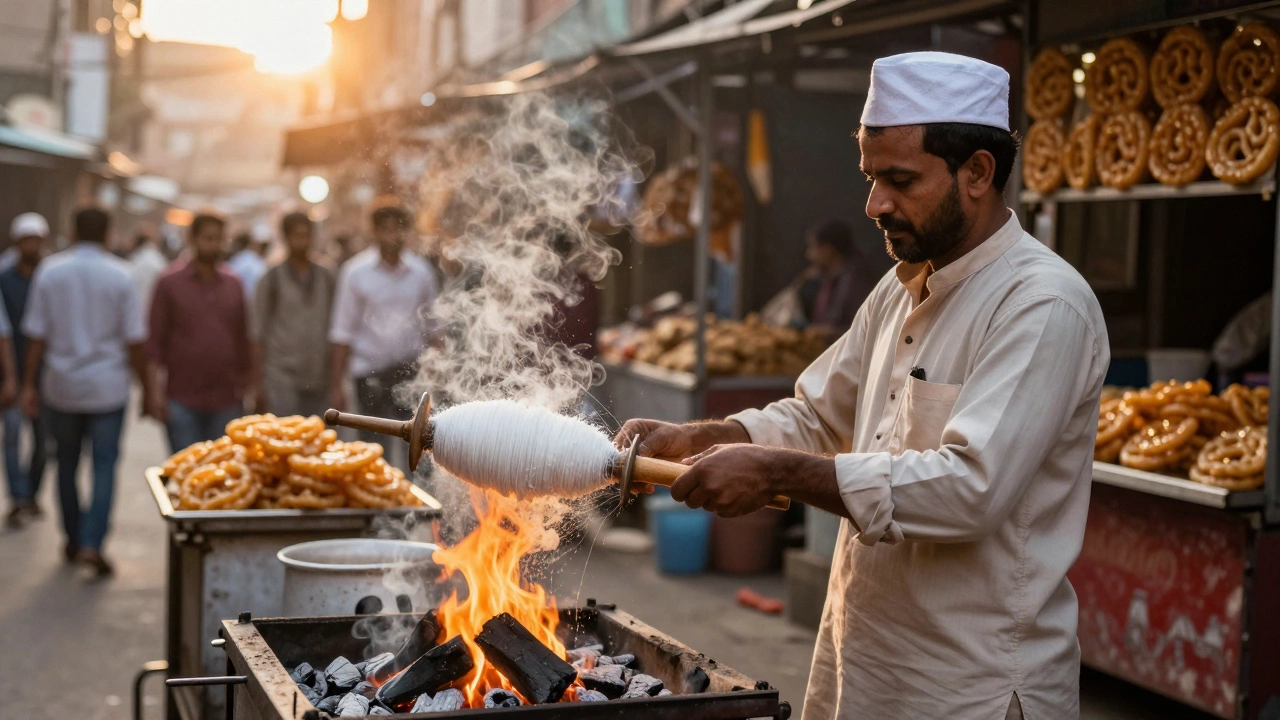
Pashmak is the Persian-influenced name for India’s version of spun sugar. It’s made by heating sugar syrup to the hard-ball stage - around 150°C (302°F) - then pulling and stretching it into fine threads. Unlike Western cotton candy, which uses a spinning machine and food coloring, traditional pashmak is hand-spun. The result? A snow-white, ultra-light confection that’s barely sweet, with a subtle nutty aroma from ghee or butter.
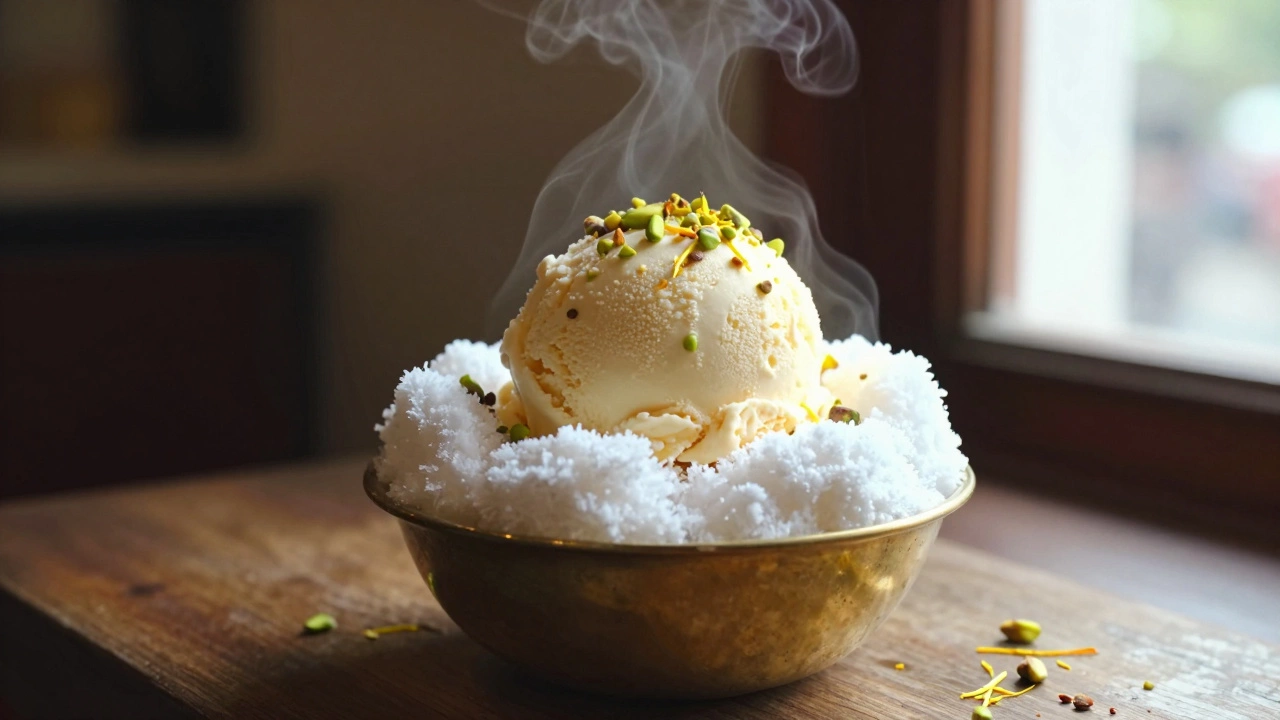
It’s not just sugar. Many recipes include a pinch of cardamom or saffron. Some versions are mixed with crushed nuts like pistachios or almonds. In parts of North India and Pakistan, it’s often served alongside falooda or ice cream, adding texture and elegance to the dish. In wedding trays or festive boxes, a small nest of pashmak is a sign of celebration - not just dessert, but symbolism.
How Is It Different From Regular Cotton Candy?
At first glance, they look alike. But the differences are clear once you taste them.
- Texture: Pashmak is denser and more fibrous. It holds its shape longer and doesn’t dissolve instantly.
- Flavor: No artificial colors or flavors. Pure sugar, sometimes with natural spices.
- Method: Made by hand using a wooden spindle and a bowl of hot syrup. No electricity needed.
- Storage: Pashmak lasts longer if kept dry - up to a week in an airtight container. Cotton candy melts in humidity within hours.
One street vendor in Jaipur told me his grandfather taught him to make pashmak in the 1950s. "You can’t rush it," he said. "If the syrup is too hot, it burns. Too cool, it won’t spin. You need your hands to feel the sugar breathe."
Where Do You Find It in India?
You won’t find pashmak in every supermarket. It’s mostly sold by small vendors - often in old markets, near temples, or outside train stations in North India. Cities like Lucknow, Delhi, Agra, and Varanasi still have families who’ve made it for generations.
In Rajasthan, it’s called pheni. In Kashmir, it’s folded into rose-scented halwa. In Mumbai’s Irani cafes, it’s piled on top of kulfi. The most famous place to try it? The old sweet shops of Old Delhi’s Chandni Chowk. Walk past the jalebi stalls, and you’ll see a man in a white cap, spinning sugar over a charcoal flame. He’ll hand you a paper cone - no plastic, no wrapper - just sugar and air.
How Is It Made? (Traditional Method)
Making pashmak isn’t hard, but it takes practice. Here’s how it’s done in a traditional kitchen:
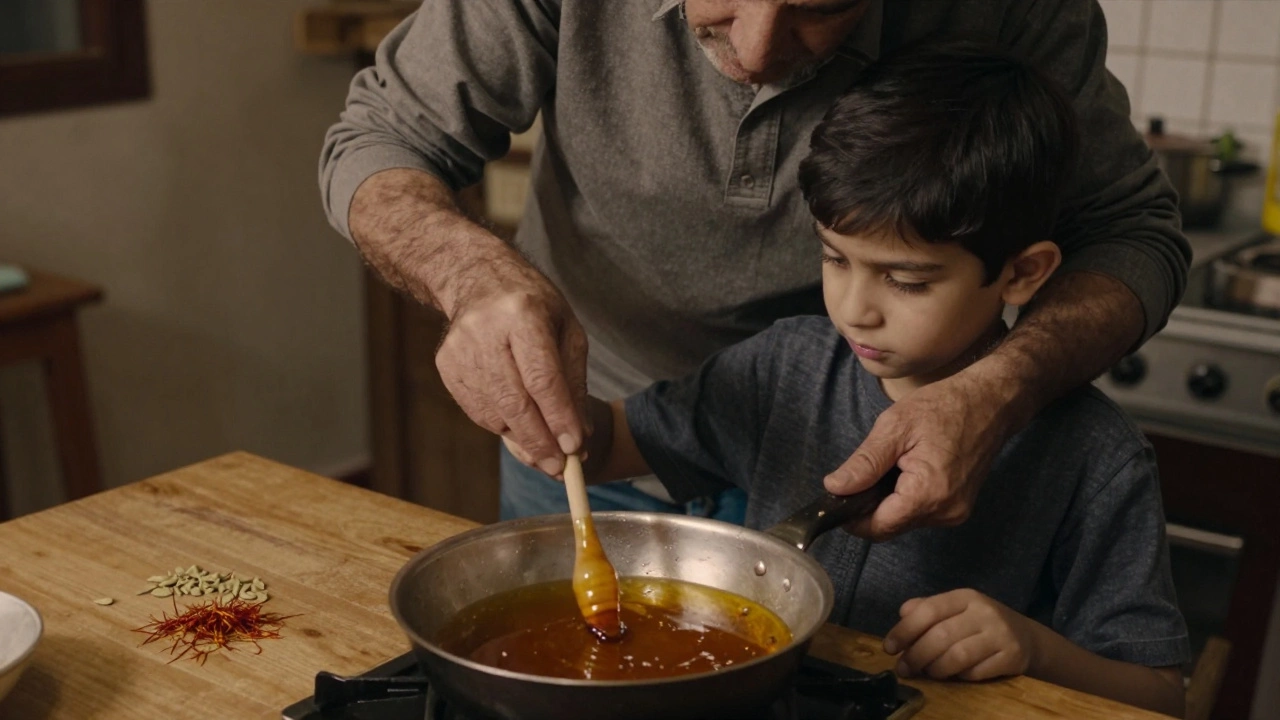
- Heat 1 cup of granulated sugar with 2 tablespoons of water and 1 teaspoon of ghee in a heavy-bottomed pan.
- Cook over medium heat until the syrup reaches the hard-ball stage - test by dropping a drop into cold water. It should form a firm, brittle ball.
- Remove from heat. Let it cool for 30 seconds - just enough to thicken but not harden.
- Hold a wooden spindle in one hand. Dip it into the syrup and begin rotating it quickly over a bowl.
- As the syrup cools, it forms threads. Pull gently and wind them around the spindle.
- Once you have a large nest, carefully slide it onto parchment paper.
- Optional: Sprinkle with crushed pistachios or a few strands of saffron.
It’s messy. It’s hot. And it’s not something you’ll master on your first try. Most home cooks buy it ready-made - but if you’ve ever tasted it fresh, you’ll know why people still make it by hand.
Why Does It Still Exist in a World of Machines?
Why keep making something so labor-intensive when machines can produce cotton candy in seconds? Because pashmak isn’t just sugar. It’s memory.
For many Indian families, it’s tied to childhood - the sound of the spinner’s rhythmic twirl, the smell of caramelizing sugar, the way your grandmother would break off a tiny piece for you before the wedding guests arrived. It’s the dessert that doesn’t need a name to be recognized. You just know it when you see it.
Even today, during Diwali or Eid, pashmak is given as a gift. It’s too fragile for shipping, so it’s made locally. That’s why you won’t find it on Amazon. But if you travel to the right place - a quiet alley in Lucknow, a temple fair in Mathura - you’ll find it. And you’ll understand why it’s still alive.
How to Store and Serve Pashmak
Pashmak is delicate. Moisture is its enemy. Keep it in an airtight container with a silica gel packet. Don’t refrigerate - condensation will turn it into a sticky mess.
Best served:
- On top of falooda or rose milk
- With kulfi or vanilla ice cream
- As a garnish on rasgulla or gulab jamun
- Plain, in a paper cone, with a cup of chai
Some modern chefs now use it in desserts like pashmak tuile or as a topping for chocolate truffles. But purists say: keep it simple. Sugar. Air. A little love.
Is Pashmak Healthy?
Not really. It’s almost pure sugar. But compared to processed candies, it has no additives, preservatives, or artificial colors. A small serving - about 10 grams - has around 40 calories. It’s not a snack you eat daily, but as a treat? It’s one of the cleanest sweets you can find.
For diabetics, it’s best avoided. But for those who appreciate tradition over convenience, pashmak is a rare kind of joy - fleeting, beautiful, and made with care.
Is Indian candy floss the same as cotton candy?
No. Indian candy floss, or pashmak, is hand-spun from pure sugar syrup with optional spices like cardamom or saffron. It’s denser, less sweet, and has no artificial colors. Western cotton candy is machine-made, uses food dyes, and dissolves faster. Pashmak is meant to be savored slowly.
Where can I buy authentic pashmak outside India?
Authentic pashmak is hard to find outside South Asia. Some specialty Indian sweet shops in cities like London, Toronto, or Dubai carry it during festivals. Online sellers sometimes ship it, but it often arrives crushed or sticky due to humidity. The best option is to make it yourself - or visit India during Diwali or Eid.
Can I make pashmak at home without special tools?
Yes, but it’s tricky. You need a heavy pan, a wooden skewer or spindle, and patience. A candy thermometer helps, but you can test the syrup by dropping it in cold water - if it forms a hard ball, it’s ready. Start with small batches. Most people ruin their first few attempts. Don’t get discouraged. It’s a skill passed down through hands, not videos.
Why is pashmak often served with ice cream?
The contrast is intentional. The cold, creamy texture of ice cream balances the light, airy sweetness of pashmak. It also prevents the sugar from dissolving too fast. In traditional desserts like falooda, pashmak adds a visual elegance and a textural surprise - like biting into a cloud.
Does pashmak have any cultural significance?
Yes. In Indian weddings and religious festivals, pashmak symbolizes purity and celebration. Its white color represents peace, and its fragility reminds people to cherish fleeting moments. It’s often given as a gift because it can’t be mass-produced - it’s personal, handmade, and temporary. That’s why it’s still made by hand today.
If you ever find yourself in a quiet corner of North India, watching someone spin sugar into air - pause. Take a moment. That’s not just candy. That’s centuries of tradition, shaped by hand, meant to be eaten before it disappears.