Samosa Nutrition Calculator
Understand Your Samosa's Impact
Calculate hidden calories, sugar, and trans fats in street versus healthier samosa versions. See how small changes can significantly reduce health risks.
Nutrition Comparison
Health Impact
Key Takeaway
Switching to baked samosas with whole wheat reduces trans fats by 98% and sugar by 70%. One healthy samosa provides 20% of your daily fiber needs!
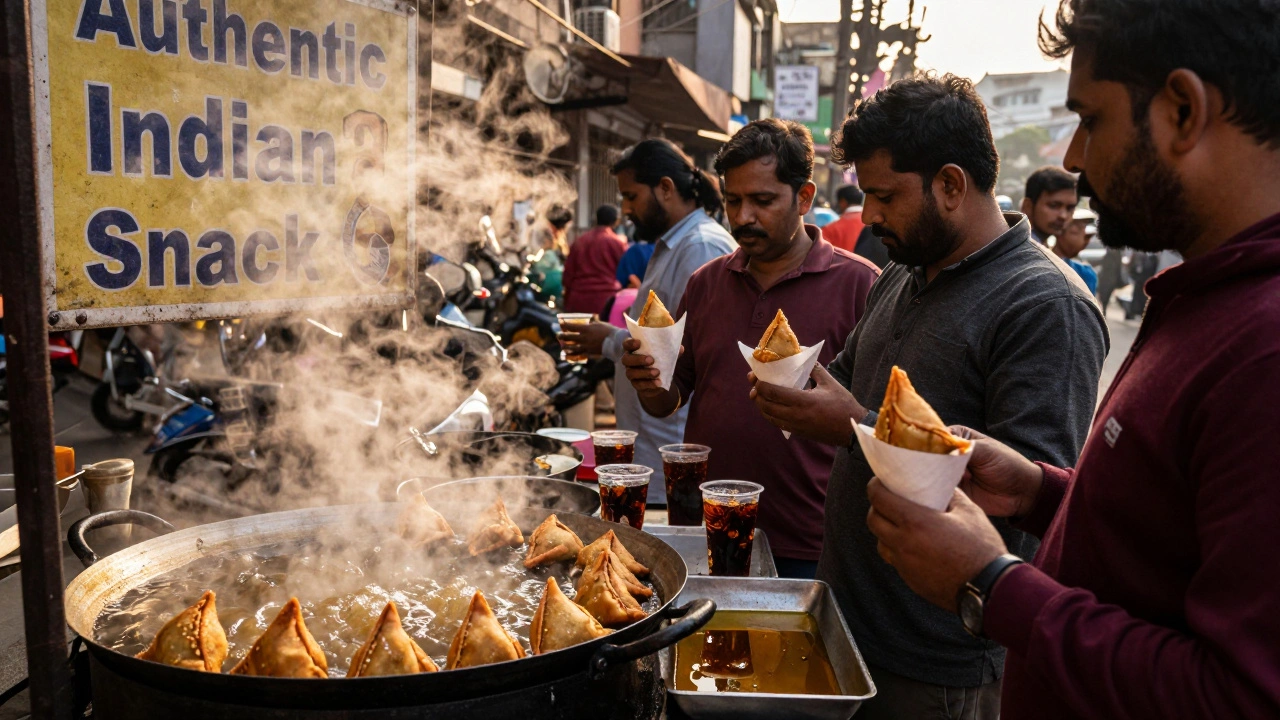
There’s a myth floating around that some fancy dessert or imported snack is the most unhealthy food in the world. But if you’re looking for the real culprit-something that’s widely eaten, cheap, addictive, and packed with hidden toxins-it’s not found in a luxury bakery. It’s in the street corner of every Indian town: deep-fried samosas served with sweet chutney and washed down with sugary soda.
Let’s be clear: samosas aren’t evil. A homemade version with whole wheat dough, baked instead of fried, and filled with spiced lentils and veggies? That’s fine. But the version sold by the thousands every day in India, and now copied worldwide, is a nutritional disaster. It’s not just one bad ingredient. It’s the combination of everything wrong with modern processed food, wrapped in a crispy, golden shell.
How a Simple Snack Became a Health Hazard
Traditionally, samosas were made with ghee, whole wheat flour, and fresh vegetables. Today, most street vendors use cheap, hydrogenated vegetable oil-often reused dozens of times. This oil turns into trans fats when heated repeatedly. Trans fats raise bad cholesterol, lower good cholesterol, and increase your risk of heart disease by up to 21%, according to the World Health Organization.
Inside the samosa, you’ll find refined flour (maida), which spikes blood sugar faster than table sugar. The filling is often loaded with salt for flavor and preservation. And then there’s the chutney. Sweet tamarind chutney isn’t just sweet-it’s loaded with added sugar. One tablespoon can have up to 12 grams of sugar. That’s more than half the daily limit recommended by the American Heart Association for women.
And if you’re drinking a sugary cola or lassi to go with it? You’ve just consumed over 100 grams of sugar in one sitting. That’s the equivalent of 25 teaspoons. Your liver doesn’t know how to handle that kind of load. It turns excess sugar into fat, which builds up around your organs. That’s not just weight gain. That’s metabolic damage.
Why This Food Is Worse Than Fast Food
People think burgers or pizza are the worst. But those usually have one or two major problems: too much salt, too much fat. Samosas have all of them-plus more.
- Trans fats from reused frying oil
- Refined carbs that cause insulin spikes
- Added sugar in chutney and drinks
- High sodium from preservatives and seasoning
- No fiber or protein to slow digestion
Compare that to a McDonald’s burger. It has saturated fat and sodium, sure. But it also has protein from the beef and some fiber from the bun. A samosa? Zero protein. Zero fiber. Just empty calories wrapped in grease.
And here’s the kicker: people eat multiple samosas at once. One serving at a roadside stall? Three or four pieces. That’s 400-600 calories before you even drink the soda. And because it’s fried and sugary, your brain doesn’t register fullness. You keep eating. You feel sluggish. You crave more. It’s designed to be addictive.
It’s Not Just India-It’s Everywhere
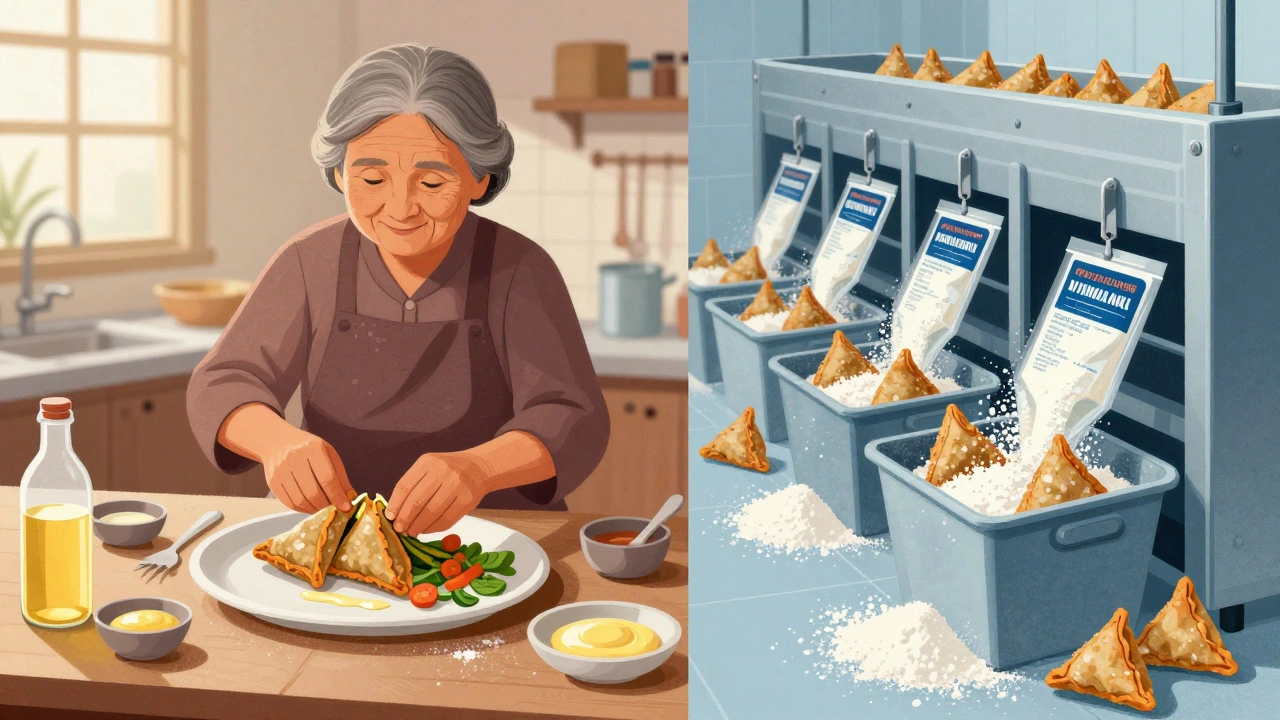
You’ll find samosa-style fried snacks in Pakistan, Bangladesh, Nepal, and even in African and Latin American street food. In Australia, where I live, you can buy them in supermarkets labeled as “Indian snacks.” The ingredients list is the same: hydrogenated oil, maida, sugar, salt. They’re marketed as “authentic” or “traditional,” but they’re a far cry from what grandmothers used to make.
These snacks are cheap to produce. They last for days. They’re easy to fry in bulk. And they’re irresistible to kids and busy adults who want something quick. That’s why they’ve become a global phenomenon. But global popularity doesn’t mean it’s healthy.
What’s the Real Culprit? The System, Not the Snack
Blaming samosas misses the point. The problem isn’t the food itself-it’s the system that makes it so easy to eat this way every day.
Low-income families rely on these snacks because they’re affordable. A samosa costs 10-20 rupees ($0.10-$0.25 USD). A bowl of dal chawal? 40 rupees. A piece of fruit? 15 rupees. When you’re working two jobs and have no time to cook, the fried snack wins. It’s fast, filling, and tastes good.
But here’s what no one tells you: the long-term cost is higher. Type 2 diabetes rates in India have doubled since 2010. Over 80 million people now have it. Many of them grew up eating samosas every day. The same pattern is showing up in migrant communities in Australia, the UK, and the US.
What Can You Do? Swap, Don’t Stop
You don’t need to give up samosas forever. You just need to change how you eat them.
- Bake them instead of fry. Use an air fryer or oven. Cut oil use by 80%.
- Use whole wheat or multigrain flour. Adds fiber and slows sugar spikes.
- Make your own chutney. Blend tamarind with dates and a pinch of salt-no added sugar.
- Pair with protein. Eat one samosa with a boiled egg or a cup of yogurt. It balances the meal.
- Drink water or buttermilk. Skip the soda. Even unsweetened lassi is better than sugary drinks.
Try this: Next time you buy a samosa, ask the vendor if they use fresh oil. If they say yes, buy one. If they say “same oil all day,” walk away. You’re not being picky-you’re protecting your health.

Other Unhealthy Foods That Come Close
Samosas aren’t alone. Here are a few others that rank high on the unhealthy scale in Indian diets:
- Halwa-made with ghee, sugar, and semolina. One serving = 300+ calories, mostly sugar and fat.
- Pakoras-fried fritters dipped in batter made with refined flour. Same oil problem as samosas.
- Sweetened lassi-often has 2-3 tablespoons of sugar per glass.
- Instant masala noodles-high in sodium, MSG, and preservatives. Sold as a quick meal, but nutritionally empty.
None of these are “the worst” on their own. But when eaten daily, they add up. And that’s the real danger.
Why This Matters Beyond Calories
It’s not just about weight. It’s about energy, mood, and long-term disease risk. People who eat fried snacks daily report more afternoon crashes, brain fog, and irritability. That’s not “just how I feel.” That’s your body struggling to process the sugar and trans fats.
Studies show that people who eat fried foods more than four times a week have a 37% higher risk of developing depression. That’s not a coincidence. Your gut and brain are connected. What you eat affects your mental health.
And for kids? Eating these snacks regularly sets up a lifetime of cravings. Their taste buds get rewired to expect high salt, high sugar, high fat. Healthy foods like vegetables and lentils start to taste bland. That’s not their fault. It’s the food environment.
Final Thought: It’s Not About Perfection
You don’t have to be a saint to eat well. You just have to be aware. One samosa a week? Fine. One every day? That’s a problem. The goal isn’t to eliminate your favorite snack. It’s to stop letting it become your default.
Change doesn’t come from guilt. It comes from small swaps. Make your own. Choose better oil. Skip the sugar. Eat mindfully. Your body will thank you-not with a scale number, but with better energy, clearer skin, and fewer cravings.
There’s no single “most unhealthy food in the world.” But there is one food that’s been quietly poisoning millions of people every day. And it’s not in a lab. It’s on the street corner. Right where you’d expect comfort food to be.
Is deep-fried food always unhealthy?
Not always. Deep-frying once with fresh, high-heat oil (like peanut or avocado oil) and using whole ingredients can be fine in moderation. But when oil is reused, or the food is made with refined flour and added sugar, it becomes a health risk. The problem isn’t frying-it’s the ingredients and how often you eat it.
Are store-bought samosas worse than homemade ones?
Almost always. Store-bought samosas use hydrogenated oils, preservatives, and added sugar in the filling and chutney. Homemade versions let you control the ingredients-use whole wheat, bake instead of fry, and skip the sugar in chutney. That alone cuts the health risks in half.
Can I still eat samosas if I have diabetes?
You can, but you need to be very careful. Avoid fried versions. Choose baked, whole wheat samosas with low-sugar chutney. Eat only one at a time, and pair it with protein like yogurt or paneer. Monitor your blood sugar after eating. If it spikes, skip it next time.
Why do samosas taste so good if they’re bad for me?
Because they hit all three pleasure triggers: fat, salt, and sugar. Food companies and street vendors know this. They design these snacks to be addictive. Your brain releases dopamine when you eat them, which makes you want more. It’s biology, not weakness.
What’s a healthier alternative to samosas?
Try baked vegetable cutlets made with oats or whole wheat flour, or roasted chickpeas with spices. You can also make stuffed bell peppers with lentils and bake them. They’re just as satisfying, but packed with fiber and protein instead of empty calories.
If you’re trying to eat better, don’t focus on banning foods. Focus on changing how you make them. That’s the real path to lasting health.