The Perfect Chutney Pairing Tool
Step 1: What are you eating?
Select a dish and your preferences to discover the perfect chutney pairing.
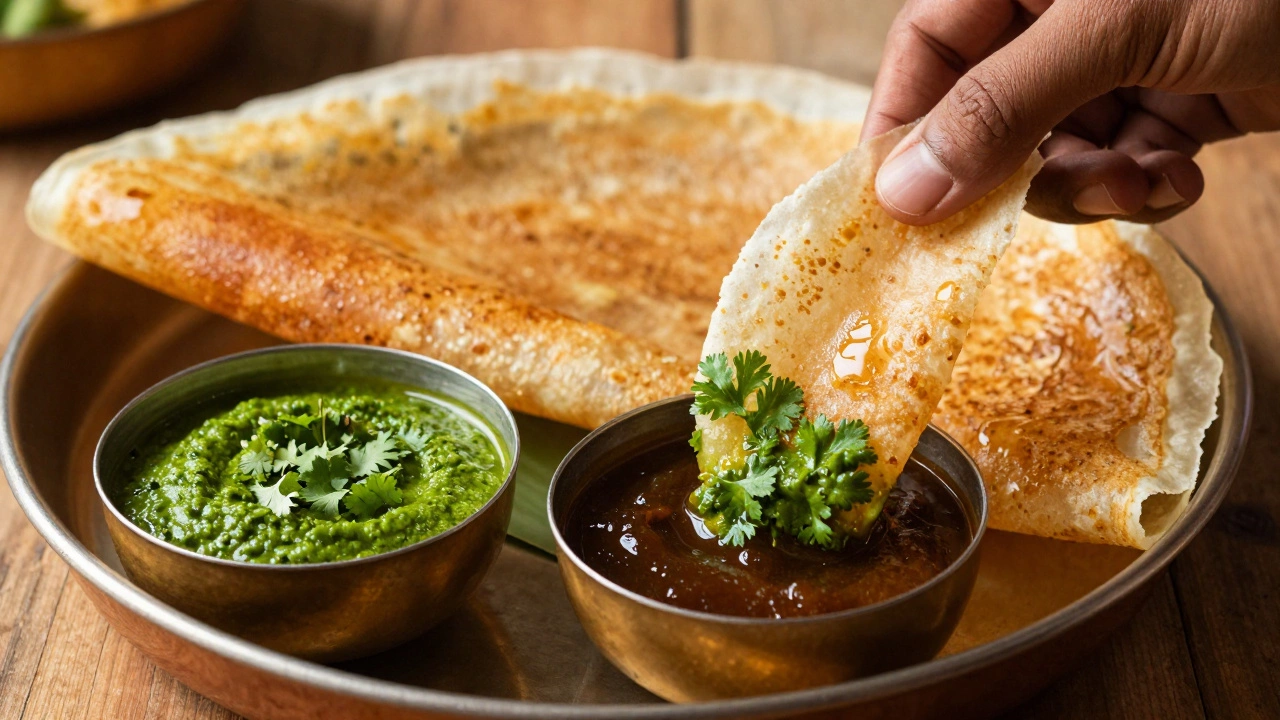
Imagine biting into a hot, heavy dosa. It’s delicious, but after three bites, your palate starts to feel flat. You need something sharp, bright, and acidic to wake up your taste buds. That is exactly where chutney comes in. It is not just a side dish; it is the engine that drives the flavor profile of South Asian cuisine.
Many people mistake chutney for just another dip or a sweet relish served with Christmas ham. While those are valid uses, they only scratch the surface. In its traditional context, particularly in India and Sri Lanka, chutney serves specific culinary and physiological functions. It balances textures, aids digestion, and preserves seasonal produce. Understanding these purposes changes how you cook and eat.
The Flavor Balancer: Cutting Through Richness
The primary purpose of a chutney is to provide contrast. South Asian cooking often relies on rich, fatty, or heavy ingredients. Think about fried snacks like samosas, creamy curries like paneer makhani, or dense rice dishes like biryani. Without an acidic or spicy counterpoint, these dishes can become cloying or one-dimensional.
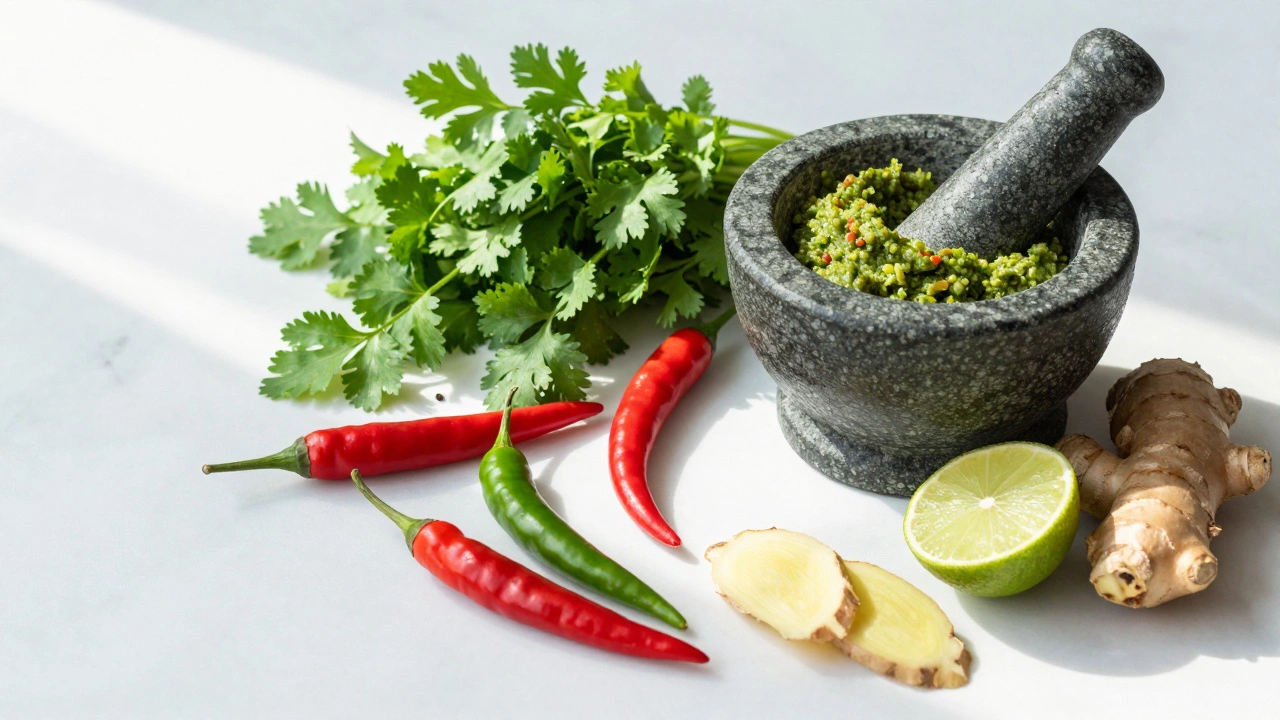
Chutney acts as a palate cleanser. The acidity from lime juice, tamarind, or fermented vegetables cuts through fat. The heat from chili peppers stimulates saliva production, which helps break down food. For example, a simple green chutney made from cilantro, green chilies, ginger, and lemon juice provides a sharp, herbaceous kick that complements the earthiness of lentil pancakes (dal bhalla) or the crispness of fried puris.
This balance isn't accidental. It follows the Ayurvedic principle of balancing the six tastes: sweet, sour, salty, bitter, pungent, and astringent. A meal might be predominantly sweet (rice) and salty (curry), so the chutney introduces sour (tamarind/lime) and pungent (chili/garlic) elements to create a complete sensory experience.
Digestive Aid: More Than Just Taste
In traditional Indian households, chutney is rarely optional. It is considered essential for digestion. Many common chutney ingredients are known for their carminative properties, meaning they help relieve gas and bloating.
- Ginger: Stimulates gastric juices and speeds up stomach emptying.
- Cilantro (Coriander): Contains antioxidants and aids in liver function.
- Tamarind: High in malic acid, which helps break down proteins.
- Mint: Soothes the gastrointestinal tract and reduces inflammation.
- Vinegar: Improves insulin sensitivity and blood sugar control.
When you serve a heavy meat curry or a protein-rich lentil dish, adding a spoonful of mint-coriander chutney isn't just about flavor-it's about ensuring your body processes the meal efficiently. This functional aspect explains why chutneys are served alongside almost every savory dish, from breakfast idlis to dinner thalis.
Preservation and Seasonality
Historically, chutney served a practical purpose: preservation. Before refrigeration, families needed ways to store summer harvests for winter use. Fruits like mangoes, tomatoes, and plums were abundant during specific seasons but scarce at other times.
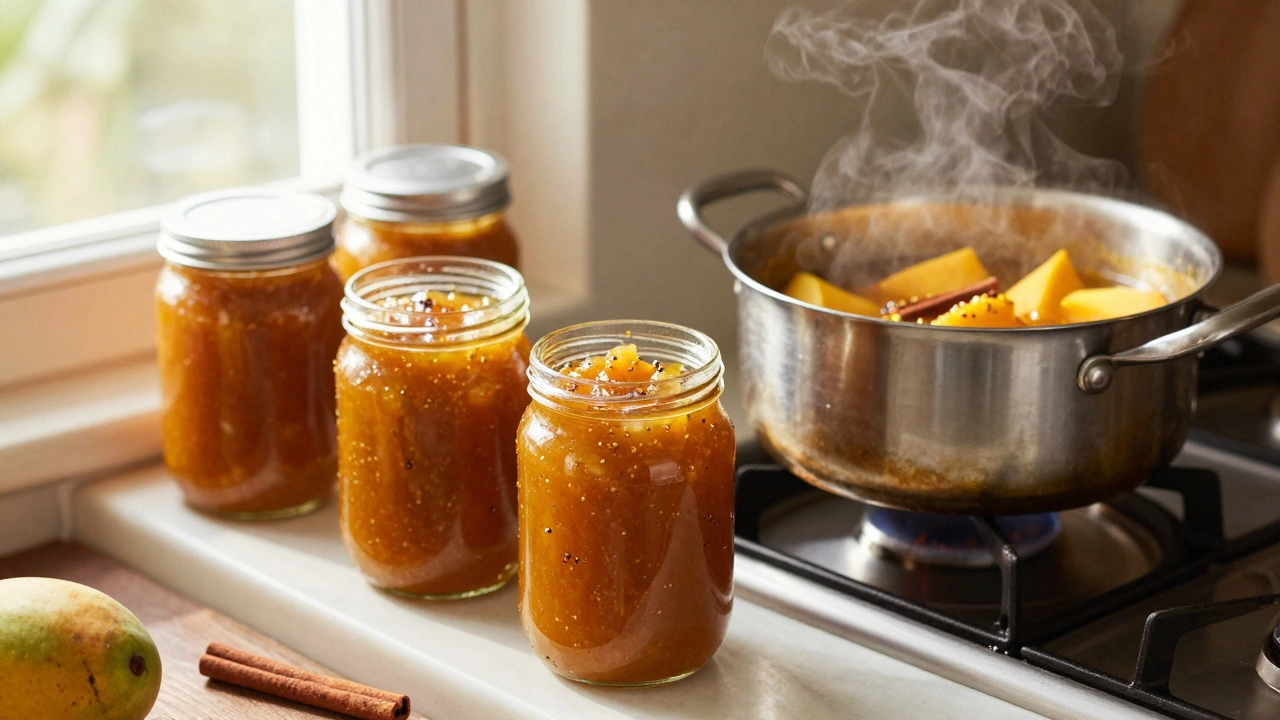
Mango chutney is a perfect example. During the monsoon season in India, mangoes are cheap and plentiful. By cooking them down with sugar, vinegar, and spices like mustard seeds and fenugreek, families could preserve the fruit for months. The high sugar content and acidity create an environment where bacteria struggle to survive.
This tradition continues today, though many modern cooks prefer fresh, uncooked chutneys for immediate consumption. However, understanding this history helps explain why some chutneys are thick and jam-like (preserved) while others are thin and watery (fresh). Both serve different needs based on availability and storage capacity.
Texture and Consistency Variations
The form of the chutney dictates its purpose. Not all chutneys are smooth pastes. Their texture determines how they interact with the main dish.
| Type | Consistency | Primary Purpose | Best Paired With |
|---|---|---|---|
| Fresh Green Chutney | Smooth paste | Acidic bite, freshness | Fried snacks, dosas, pav bhaji |
| Coconut Chutney | Creamy, thick | Add richness, cool heat | Idlis, vadas, spicy curries |
| Tamarind Chutney | Syrupy liquid | Sweet-sour balance | Pav bhaji, chaat, kebabs |
| Tomato Chutney | Chunky or smooth | Umami depth, moisture | Rice dishes, grilled meats |
| Onion Chutney | Crunchy relish | Texture contrast, raw bite | Dahi vada, pooris, sandwiches |
Notice how coconut chutney adds creaminess to offset spicy foods, while onion chutney adds crunch to soft foods. Choosing the right type depends on what your main dish lacks. If your curry is already oily and rich, skip the coconut chutney and go for a tangy tamarind or spicy green version.
Global Adaptations: Beyond the Subcontinent
As chutney spread globally, its purpose evolved. In British cuisine, "chutney" often refers to a cooked fruit relish, typically made with mango, apple, or peach, simmered with vinegar, sugar, and warm spices like cinnamon and cloves. This version is less about digestion and more about cutting through the richness of cold cuts, cheeses, and roasted meats.
Even here, the core principle remains: contrast. A sharp, vinegary mango chutney alongside mild cheddar cheese creates a complex flavor profile that neither ingredient achieves alone. The sweetness of the fruit balances the saltiness of the cheese, while the vinegar prevents the combination from feeling too heavy.
In modern fusion cooking, chutney appears in unexpected places. Chefs use mint-chutney as a salad dressing base, replace ketchup with tamarind chutney on burgers, or swirl green chutney into yogurt dips. These adaptations prove that the fundamental purpose-adding brightness, acidity, and herbal notes-is universal across cuisines.
How to Make Chutney Work for You
To get the most out of chutney, treat it as an active ingredient, not a passive garnish. Here are practical tips for using chutney effectively:
- Season aggressively: Chutney should have a pronounced flavor. Don't be shy with salt, lime juice, or chili. If it tastes bland on its own, it will disappear when mixed with your main dish.
- Adjust consistency: Add water or ice cubes to thin out thick chutneys. Add ground nuts or coconut to thicken runny ones. The goal is a sauce that coats the back of a spoon without being gloopy.
- Layer flavors: Use multiple chutneys in one meal. A classic South Indian thali includes both a sweet tamarind chutney and a spicy green chutney to offer varied experiences with each bite.
- Store properly: Fresh chutneys last 3-5 days in the fridge due to oxidation. Cooked chutneys can last weeks if sterilized and sealed. Always use clean utensils to avoid contamination.
Experiment with local ingredients. Living in Sydney, I often swap traditional coriander for parsley or add native Australian pepperberry to green chutney for extra heat. The purpose remains the same, but the flavor profile becomes uniquely yours.
Can I make chutney without dairy?
Yes, most traditional chutneys are naturally vegan. Green chutney, tamarind chutney, and tomato chutney contain no animal products. Coconut chutney is also dairy-free, though some variations add yogurt for creaminess. Simply omit the yogurt and use water or coconut milk instead.
Why does my chutney turn brown quickly?
Oxidation causes green chutneys to darken. To prevent this, add a squeeze of lemon juice immediately after blending, which slows down the enzymatic reaction. Store it in an airtight container with a piece of plastic wrap pressed directly against the surface to minimize air exposure.
Is chutney healthy?
Fresh chutneys are very healthy, packed with vitamins, minerals, and antioxidants from herbs and vegetables. They aid digestion and contain minimal calories. Cooked fruit chutneys may have higher sugar content, so check labels or recipes if you're monitoring sugar intake.
What is the difference between chutney and salsa?
While both are condiments, chutney typically involves grinding ingredients into a smoother paste and often includes spices like cumin, mustard seeds, or fenugreek. Salsa tends to be chunkier and focuses on fresh tomato, onion, and cilantro flavors. Chutney is more likely to be cooked or preserved, whereas salsa is usually served fresh.
Can I freeze chutney?
Yes, most chutneys freeze well. Pour them into ice cube trays for easy portioning, then transfer the frozen cubes to a freezer bag. Thaw overnight in the fridge before use. Note that texture may change slightly upon thawing, especially for coconut-based chutneys, but flavor remains intact.