Biryani Rice Calculator
Your Biryani Ingredients
Pro Tip: Use aged basmati rice - fresh rice will turn mushy. Look for grains at least 3cm long and parboil to 70% doneness for perfect texture.
There’s a moment in every kitchen where the smell of biryani hits you - not just the spice, not just the rice, but something deeper. It’s the kind of scent that makes you stop what you’re doing, walk into the next room, and just breathe. That’s not luck. That’s not magic. That’s technique, patience, and a few non-negotiable truths most recipes leave out.
The Rice Isn’t Just Rice
Most people think basmati is basmati. It’s not. You need aged, long-grain, extra-long basmati - the kind that smells like jasmine when dry. Fresh basmati? It’ll turn mushy. Aged at least a year? It holds its shape, absorbs flavor without falling apart, and gives that signature fluffiness. Look for grains that are at least 3 cm long. If they’re shorter, skip them.
Parboiling isn’t optional. Boil the rice to 70% doneness - firm in the center, soft on the outside. Test it by pressing a grain between your fingers. It should give slightly but not crush. Drain it, rinse with cold water, and let it sit. This stops the cooking and keeps each grain separate when layered.
Layering Is a Ritual, Not a Step
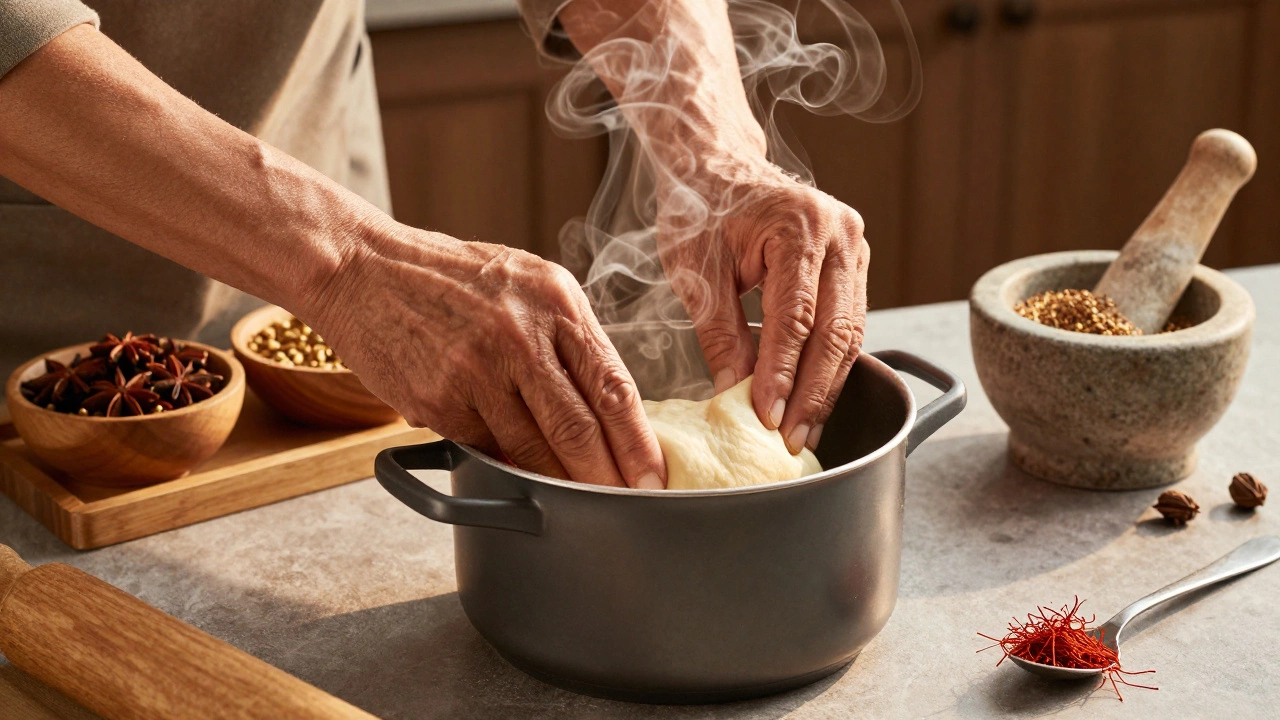
You don’t just dump chicken and rice together. You build. Start with a thin layer of rice at the bottom of the pot - this prevents sticking. Then a layer of marinated meat. Then a sprinkle of fried onions, saffron milk, fresh coriander, mint, and a drizzle of ghee. Repeat. The top layer should be rice, then more ghee, then a final dusting of saffron. Seal the pot with dough or a tight lid and a cloth underneath. This traps steam so the flavors marry slowly.
That’s the real secret: slow steam. Not high heat. Not a pressure cooker. Low, even heat for 30-40 minutes. The kind of heat that turns meat tender without drying it out, that lets the spices bloom into the rice, that makes the bottom crust - the taqin - crispy and caramelized. Skip this, and you’re just eating spiced rice with chicken.
The Marinade Doesn’t Need 12 Spices
Here’s what most recipes get wrong: they list 20 spices. You don’t need them. The core is yogurt, ginger-garlic paste, turmeric, red chili powder, and a pinch of ground cardamom. That’s it. The yogurt tenderizes. The turmeric gives color. The chili gives heat. Cardamom? It’s the whisper in the background.
What you do need is time. Marinate the chicken - or lamb, or beef - for at least 8 hours. Overnight is better. The yogurt breaks down the fibers. The spices sink in. If you marinate for less than 4 hours, you’ll taste the spice on the surface, not the meat underneath.
Fried Onions Are the Soul
Those crispy brown onions? They’re not a garnish. They’re the foundation of flavor. Slice them thin. Fry them low and slow in ghee or oil. Don’t rush. Let them turn golden, then deep brown. Burn them? You’ll taste bitterness. Undercook them? They’ll be soggy and bland.
Use 2 large onions per kilo of meat. Fry them in batches if needed. Keep the oil they fry in - it’s liquid gold. Use it to sauté your spices. That’s where the depth comes from. Not from more cumin. Not from more coriander. From the caramelized sugar in those onions.

Saffron Isn’t Optional - It’s the Signature
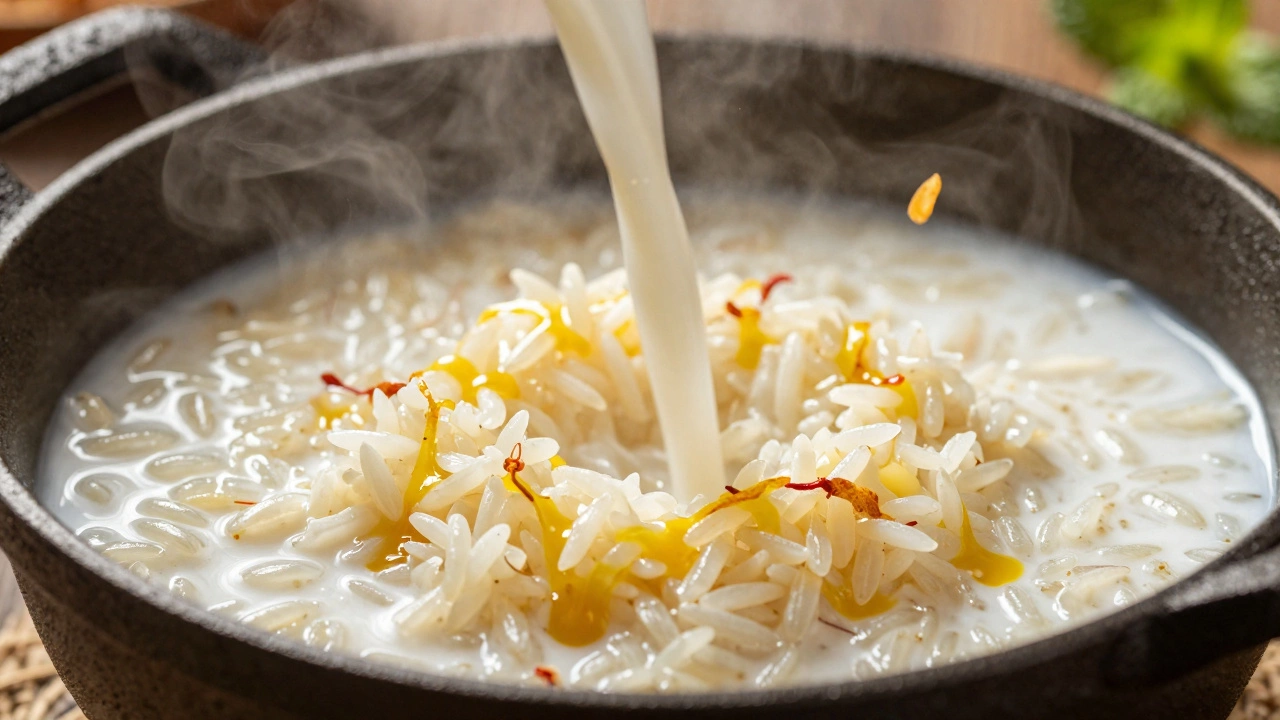
Real saffron costs more than gold per gram. But you only need a pinch. Soak 10-12 threads in 2 tablespoons of warm milk for 15 minutes. That milk turns golden. Drizzle it over the top layer. The color alone makes people stop and stare. But it’s the aroma - that earthy, floral note - that lingers after the last bite.
Don’t use powdered saffron. Don’t use artificial color. If your biryani looks orange, it’s not right. Real biryani is golden. Not red. Not yellow. Golden.
The Pot Matters More Than You Think
A heavy-bottomed pot - cast iron, thick aluminum, or even a traditional handi - makes a difference. Thin pots heat unevenly. You get burnt rice on the bottom and undercooked layers on top. The pot needs to hold heat, not just conduct it.
If you don’t have one, use a Dutch oven. Line the lid with a clean kitchen towel before sealing. That catches condensation so it doesn’t drip back and make the rice soggy. This is how it’s done in Lucknow. This is how it’s done in Hyderabad. No shortcuts.
Why Your Biryani Tastes Like a Grocery Store
If your biryani tastes flat, it’s probably because you used pre-ground spices. Spices lose their oil and aroma within weeks of grinding. Buy whole cumin, coriander, cloves, cardamom, and cinnamon. Toast them in a dry pan for 30 seconds. Grind them fresh. That’s the difference between a decent meal and something that makes you close your eyes and sigh.
Also, don’t skip the rose water. A single teaspoon stirred into the saffron milk adds a floral lift that ties everything together. It’s not sweet. It’s not overpowering. It’s the quiet note that makes people ask, ‘What is that flavor?’
What Not to Do
- Don’t stir the biryani after layering. You’ll break the grains and ruin the texture.
- Don’t open the pot before the 30-minute steam time is up. You’ll let out the steam and the magic.
- Don’t use store-bought biryani masala. It’s full of anti-caking agents and flavorless fillers.
- Don’t use chicken thighs if you want authentic texture. Use bone-in, skinless thighs or leg pieces. The bone adds richness.
- Don’t add tomatoes unless you’re making a Hyderabadi version. Most North Indian biryanis are tomato-free.
It’s Not About the Recipe - It’s About the Process
There’s no single ‘perfect’ biryani recipe. Lucknow styles are subtle. Hyderabad styles are bold. Kolkata biryani has boiled eggs and potatoes. But they all share the same rules: aged rice, slow steam, fresh spices, and time.
What makes a good biryani isn’t the list of ingredients. It’s the rhythm. The waiting. The smell that fills the house before it’s even done. It’s the way the rice separates when you fluff it with a fork, each grain glistening with ghee and spice.
That’s the secret. No one told you because it can’t be written in a 5-step list. It’s learned in the kitchen, over years, with your hands, your nose, and your patience.
What to Serve With It
Don’t drown biryani in raita. A small bowl of plain yogurt with a pinch of roasted cumin and finely chopped mint is enough. Maybe some sliced onions with lemon. That’s it. Biryani doesn’t need sauce. It doesn’t need sides. It needs space to breathe.
And if you’re serving it to guests? Let it rest for 10 minutes after steaming. Cover it with a clean towel. That’s when the flavors settle. That’s when it becomes unforgettable.
Can I use instant rice for biryani?
No. Instant rice breaks down too easily and turns mushy. Biryani needs long-grain, aged basmati rice to hold its shape and absorb flavor without collapsing. Using instant rice will ruin the texture and make the dish sticky and bland.
Why is my biryani dry?
Dry biryani usually means not enough ghee or not enough steam. Make sure you’re drizzling ghee between each layer and sealing the pot properly. Also, check that your meat was marinated long enough - dry meat releases less moisture during cooking. Add a splash of warm water or milk if needed before sealing the pot.
Can I make biryani in a rice cooker?
You can, but you won’t get the real texture. Rice cookers don’t allow for layering or slow steam. The bottom layer will burn, and the top will be soggy. If you must use one, cook the rice and meat separately, then combine them in a pot and steam for 20 minutes with a tight lid and towel under it.
What’s the difference between Hyderabadi and Lucknowi biryani?
Hyderabadi biryani uses more chili, tomatoes, and fried onions - it’s bold and spicy. Lucknowi biryani is subtle, with fewer spices, more saffron, and meat cooked separately before layering. Hyderabadi is layered and cooked together (kacchi); Lucknowi is often cooked separately (pukki). Both are excellent, but they taste completely different.
How long does biryani last?
Biryani keeps well in the fridge for up to 3 days. Reheat it gently with a splash of water or milk and cover it tightly. Avoid microwaving on high - it dries out the rice. A steam oven or stovetop with a lid works best. The flavors actually improve after a day.