Creamy Curry Simulator
Select your preferred dietary style and desired flavor profile to get personalized recommendations for achieving that restaurant-quality velvety texture.
Your customized thickening strategy will appear here.
You’ve probably been there. You order a chicken curry at your local spot, and it’s luscious, velvety, and coats the spoon perfectly. Then you try to recreate it at home in your Sydney kitchen, and what comes out is... thin. Watery. Maybe even separated. Why does restaurant curry taste so rich while homemade versions often feel flat? It’s not magic, and it’s rarely just about adding more cream.
The secret to that luxurious mouthfeel lies in a combination of emulsification, specific ingredient choices, and technique. Whether you’re using dairy, nuts, or plant-based alternatives, understanding how these elements interact with heat and spices changes everything. Let’s break down exactly what makes curry creamy and how you can achieve that texture without turning your dish into a heavy, greasy mess.
Dairy Products: The Classic Route to Richness
For many traditional North Indian recipes, dairy is the backbone of creaminess. Heavy cream, yogurt, and paneer are the usual suspects here. But each behaves differently under heat, and using them incorrectly is the fastest way to ruin a curry.
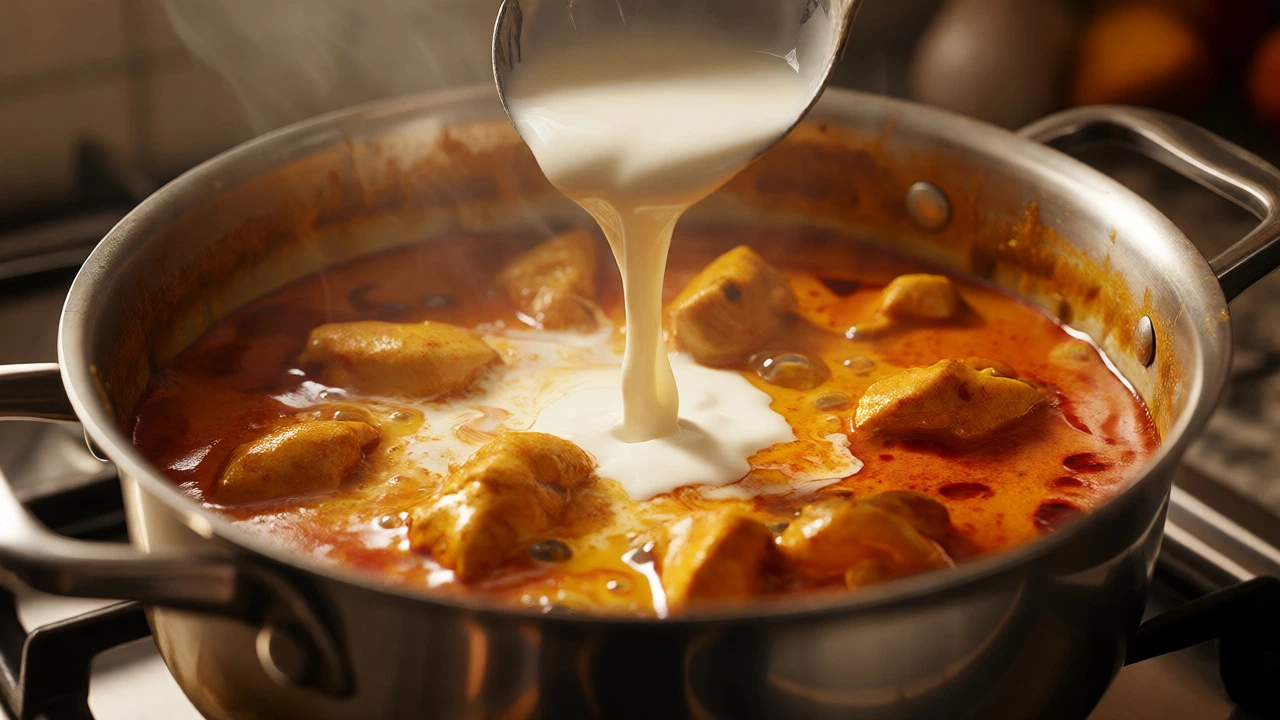
Heavy cream is high in fat content (usually around 36-40%), which means it doesn’t curdle easily when boiled. It adds immediate richness and a smooth texture. However, if you dump it in too early, the flavors can mute, and the sauce might become overly sweet. The trick? Add it in the last five minutes of cooking. This allows the fat to integrate with the spice oils without breaking down.
Yogurt, on the other hand, brings tanginess alongside creaminess. It’s lower in fat but high in protein. The problem with yogurt is its tendency to split when exposed to high heat. To prevent this, temper it first. Whisk a few tablespoons of hot gravy into your cold yogurt to raise its temperature slowly, then stir the mixture back into the pot off the direct flame. This method ensures a stable, creamy base without the grainy texture.
Don’t forget Paneer. While technically a solid cheese, grated or crumbled paneer melts slightly into the gravy, releasing casein proteins that thicken the sauce naturally. It’s less common in chicken curries than in vegetable dishes, but a small amount blended into the masala can add surprising body.
Nut Pastes: The Secret Weapon for Texture
If you want creaminess without the heaviness of dairy, look no further than nuts. Cashews, almonds, and melon seeds are staples in Mughlai cuisine, known for their opulent sauces. These ingredients work because they contain natural oils and starches that emulsify beautifully with water and spices.
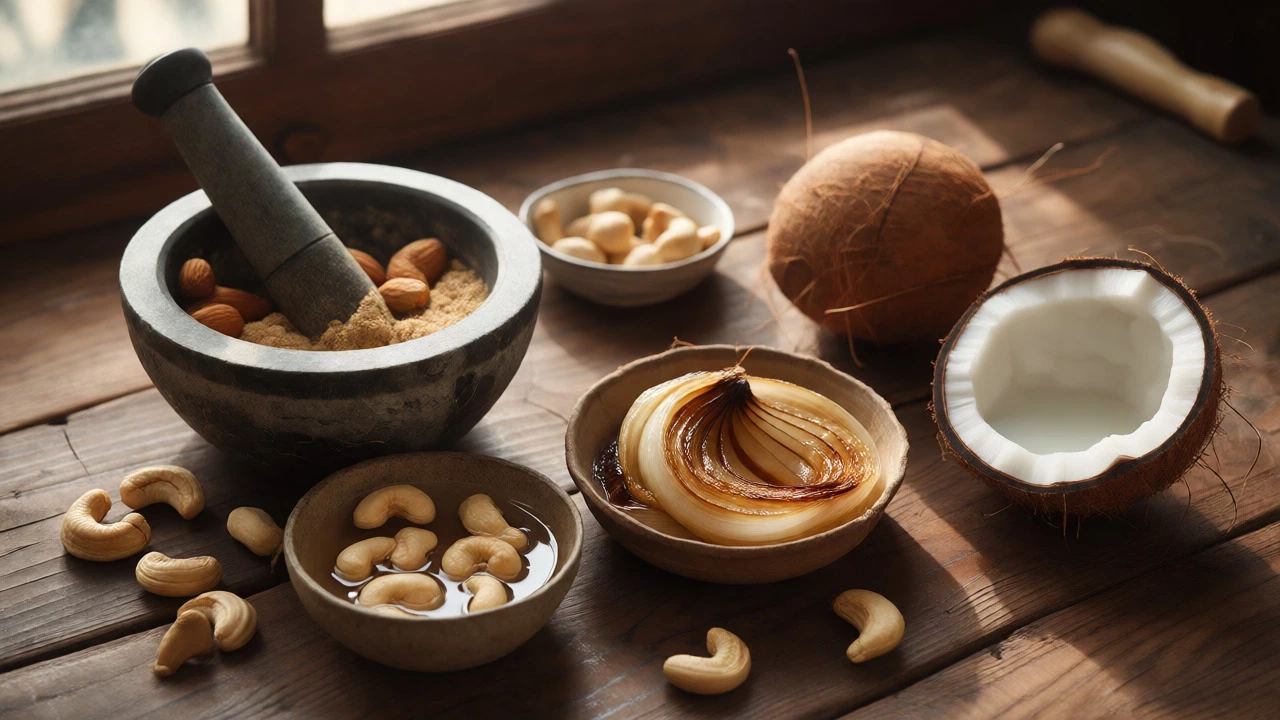
Cashew paste is arguably the most popular non-dairy thickener. Soak raw cashews in warm water for two hours, then blend them into a fine paste. When stirred into simmering gravy, the cashews release their fats and starches, creating a glossy, thick consistency. Unlike flour, cashew paste doesn’t taste "starchy"; it tastes nutty and rich. A tablespoon per cup of gravy is usually enough to transform a thin broth into a luscious sauce.
Almond paste offers a similar effect but with a slightly sweeter, more delicate flavor profile. It’s often used in Korma-style dishes. Melon seeds (magaz) provide a subtle thickness and a unique, almost floral note that pairs well with aromatic spices like cardamom and saffron. If you’re making a chicken curry recipe that leans towards festive or royal styles, nut pastes are your best friend.
| Thickener | Flavor Profile | Best For | Cooking Tip |
|---|---|---|---|
| Heavy Cream | Rich, neutral, slightly sweet | Punjabi-style gravies | Add at the end to prevent splitting |
| Yogurt | Tangy, sharp, creamy | Kadai or Rogan Josh | Temper before adding to avoid curdling |
| Cashew Paste | Nutty, mild, velvety | Korma, Butter Chicken | Soak and blend very finely |
| Coconut Milk | Sweet, tropical, distinct | South Indian, Thai-inspired | Simmer gently to reduce water content |
| Onion-Tomato Base | Deep, savory, acidic | All-purpose gravies | Caramelize onions thoroughly for body |
Coconut Milk: The Tropical Thickener
Move south from the Punjab region, and you’ll find a different approach to creaminess. In Kerala and Tamil Nadu cuisines, as well as in Southeast Asian curries, coconut milk takes center stage. It’s not just about flavor; it’s about structure. Coconut milk contains high levels of saturated fat, which creates a stable emulsion that resists separating.
There are two types: thick and thin. Thick coconut milk has a higher fat content and is added towards the end for richness. Thin coconut milk is used earlier in the process to build volume and simmer the meat. The key to a truly creamy coconut curry is reduction. Simmer the thick coconut milk gently until it reduces by about 20-30%. This concentrates the fats and solids, resulting in a sauce that clings to the chicken rather than sliding off.
One pitfall to avoid: boiling coconut milk vigorously. High heat breaks the emulsion, causing the oil to separate from the liquid. This results in a grainy, oily surface rather than a smooth, creamy one. Keep the heat low and steady, and stir occasionally.
The Foundation: Onions, Tomatoes, and Reduction
Before you add any creams or pastes, you need a base that has actual substance. Many home cooks rush this step, leading to watery curries regardless of what they add later. The foundation of a thick, creamy gravy is often built on caramelized onions and reduced tomatoes.
When you cook onions slowly over medium-low heat, their sugars caramelize and their cellular structure breaks down, releasing pectin and natural sugars. This creates a sticky, jam-like consistency that acts as a natural thickener. If you fry them quickly on high heat, they brown but don’t break down fully, leaving you with chunks rather than a smooth base.
Tomatoes contribute acidity and pectin. As they cook down, the water evaporates, and the pulp thickens. Combining deeply browned onions with well-reduced tomatoes creates a "masala" that has inherent body. This base is essential because it provides the canvas onto which creams and pastes adhere. Without a good base, even heavy cream will just float on top of a watery soup.
Technique Matters: Emulsification and Simmering
Even with the right ingredients, poor technique can lead to failure. Creaminess is largely about emulsification-the process of mixing two liquids that don’t normally combine, like oil and water. In curry, the oil comes from ghee or butter, and the water comes from the stock or vegetables.
To encourage emulsification, use an immersion blender briefly at the end of cooking. Blending a portion of the gravy (not all of it, unless you want a puree) helps break down larger particles and distributes fats evenly throughout the sauce. This creates a uniform, silky texture that feels richer on the palate.
Another critical factor is time. Curries need to simmer gently for at least 15-20 minutes after adding thickeners. This allows the flavors to meld and the texture to stabilize. Rapid boiling disrupts the balance, while gentle simmering encourages the ingredients to bind together. If your curry looks thin after adding cream, let it sit uncovered on low heat for ten minutes. The evaporation will concentrate the sauce, enhancing both flavor and viscosity.
Vegan and Dairy-Free Alternatives
Not everyone eats dairy, but that doesn’t mean you have to sacrifice creaminess. Beyond cashews and coconut milk, there are other options worth exploring. Silken tofu, when blended, creates a remarkably smooth, neutral-tasting cream that works well in spicy curries where you don’t want competing flavors.
White beans, such as cannellini or navy beans, can also be pureed into a gravy. They add a subtle earthiness and a thick, hearty texture. This is particularly effective in rustic, peasant-style curries where you want substance without the luxury of nuts or cream. Just ensure the beans are cooked until completely soft before blending to avoid a gritty texture.
For those avoiding nuts due to allergies, sunflower seed paste is an underrated alternative. It’s milder than almond or cashew paste and blends seamlessly into gravies. Toasting the seeds lightly before blending adds a depth of flavor that mimics the complexity of dairy-based sauces.
Troubleshooting Your Creamy Curry
So, you followed the steps, but something went wrong. Here’s how to fix common issues:
- The curry is too thin: Mix one teaspoon of cornstarch with two teaspoons of cold water. Stir this slurry into the simmering curry and cook for another five minutes. Alternatively, grind a handful of fried onions and stir them in.
- The curry has split (curdled): Remove the pot from heat immediately. Blend a small amount of fresh cream or yogurt separately, then whisk it into the curry vigorously. You may need to strain the sauce if the texture remains grainy.
- The curry is too heavy/oily: Skim excess oil from the surface with a spoon. Add a splash of lemon juice or vinegar to cut through the richness. The acid brightens the flavor and balances the fat perception.
Achieving the perfect creamy curry isn’t about following a rigid formula; it’s about understanding how your ingredients behave. Start with a solid onion-tomato base, choose your thickener based on the flavor profile you want, and manage your heat carefully. Once you grasp these principles, you won’t just be making a chicken curry-you’ll be crafting a dish with depth, texture, and soul.
Why does my chicken curry taste watery even after adding cream?
This usually happens because the base wasn't reduced enough before adding the cream. Cream adds fat, not bulk. If the underlying onion-tomato masala is still watery, the cream will just dilute further. Always simmer your base until it separates from the pan sides before introducing dairy or nut pastes.
Can I use milk instead of heavy cream for a lighter curry?
Yes, but you must reduce it significantly. Whole milk has much lower fat content than heavy cream, so it won't thicken on its own. Simmer the milk down until it reduces by half to concentrate the solids. Better yet, mix milk with a small amount of cornstarch or cashew paste to help it hold its body during cooking.
How do I keep yogurt from curdling in my curry?
Temperature shock is the main culprit. Never add cold yogurt directly to boiling gravy. Take a bowl of yogurt, whisk in a ladle of hot curry gravy to temper it, then slowly stir this mixture back into the pot off the direct heat. Keeping the heat low after adding yogurt also prevents the proteins from tightening and separating.
Is coconut milk healthier than heavy cream for curries?
It depends on your dietary goals. Coconut milk is dairy-free and suitable for vegans, but it is high in saturated fat, similar to heavy cream. However, some studies suggest the type of saturated fat in coconuts (lauric acid) may have different metabolic effects than dairy fat. For calorie counting, light coconut milk is a lower-calorie option compared to full-fat heavy cream.
Do I need to soak cashews for curry paste?
Yes, soaking is crucial for a smooth texture. Raw cashews are hard and can leave a gritty residue in your curry if not softened. Soak them in warm water for at least two hours, or boil them for 15 minutes if you're short on time. This softens the cell walls, allowing them to blend into a completely smooth, creamy paste.