Dosa Batter Leavening Calculator
Enter your batter details to get the perfect baking powder ratio and timing instructions.
You’ve soaked the rice and urad dal. You’ve ground it into a smooth paste. You’re staring at your bowl of dosa batter and wondering: do I add baking powder now? Or wait until morning? If you get this timing wrong, you might end up with flat, dense pancakes that taste like wet cardboard instead of the golden, lacy crisps you crave.
Here’s the truth: most traditional South Indian cooks don’t use baking powder at all. They rely on natural fermentation. But if you’re in a hurry, or your kitchen is too cold for yeast to wake up, baking powder is your best friend. The trick isn’t just adding it-it’s knowing exactly when to mix it in so it doesn’t kill the rise.
Why Traditional Fermentation Beats Baking Powder
Before we talk about shortcuts, let’s look at why purists skip baking powder entirely. Authentic masala dosa gets its airiness from wild yeasts and bacteria in the air. When you leave batter in a warm spot (around 30°C / 86°F) for 8-12 hours, these microbes produce carbon dioxide. This gas creates tiny bubbles throughout the mixture. That’s what makes the dosa light and porous.
Baking powder does something similar but faster. It’s a chemical leavener containing sodium bicarbonate and an acid salt. When mixed with water, it releases CO₂ immediately. The problem? Those bubbles escape quickly. If you add baking powder too early, the batter rises, then collapses before you even heat the pan. You lose the lift. So, timing is everything.
The Golden Rule: Add Just Before Cooking
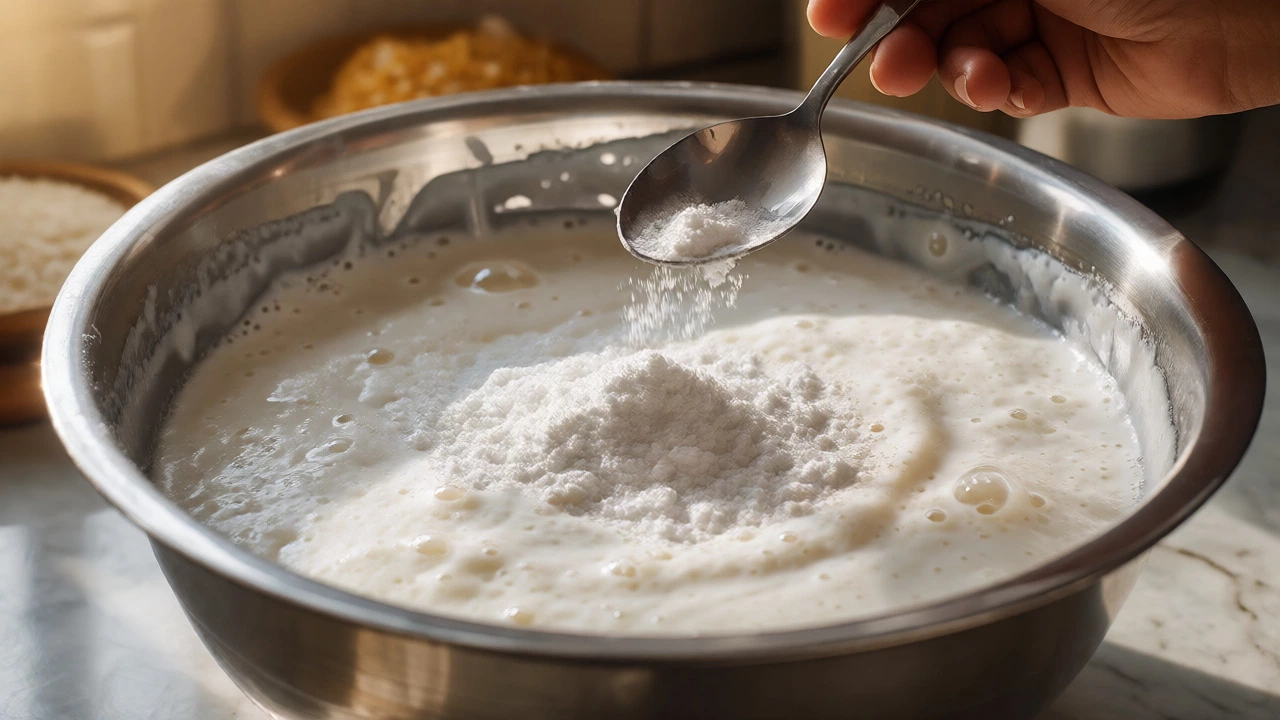
If you are using baking powder, add it right before you start making dosas. Not the night before. Not in the morning while you shower. Right before you scoop the first ladle.
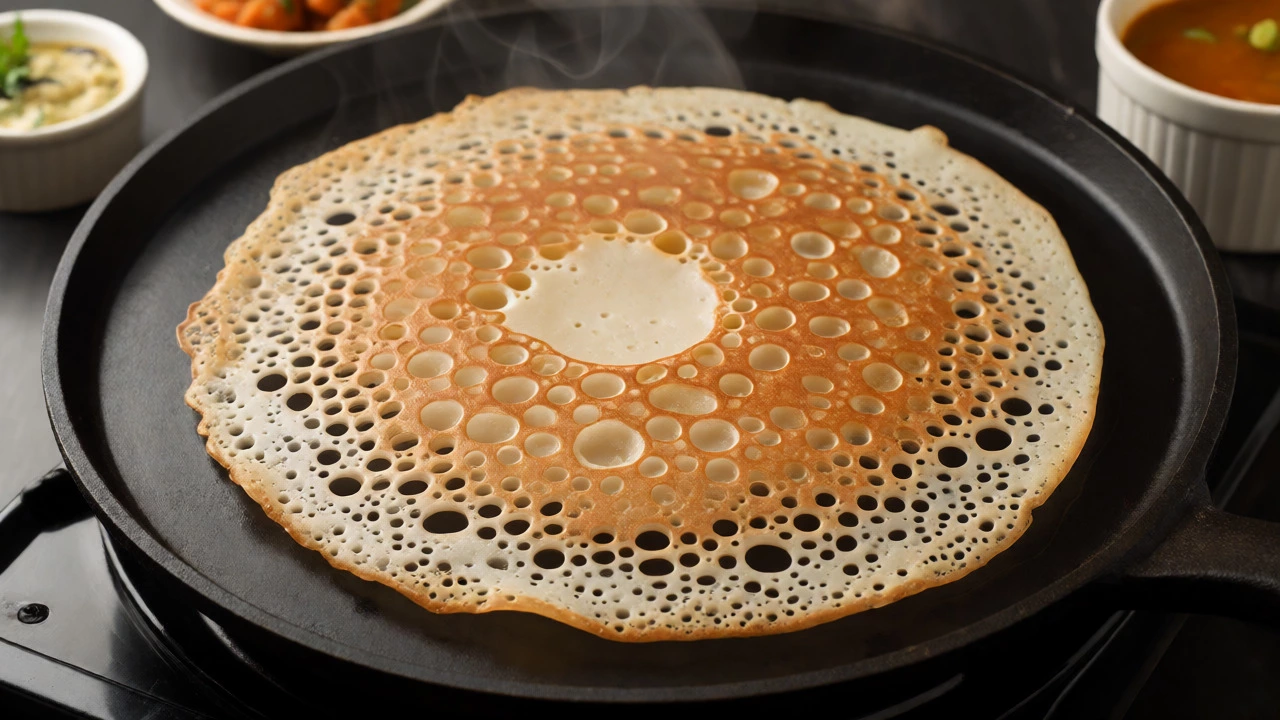
Why? Because baking powder starts reacting the moment it hits moisture. In a thick batter, those bubbles can survive a few minutes, but they won’t last hours. By waiting until the last second, you ensure the maximum amount of gas is trapped inside the batter when it hits the hot tawa (griddle). This gives you that signature holey texture.
Think of it like opening a soda bottle. Shake it up, and the fizz dies fast. Let it sit gently, and the bubbles stay. Your batter needs gentle handling after adding the powder. Stir lightly-don’t beat it down.
How Much Baking Powder Should You Use?
Less is more. Too much baking powder leaves a metallic, soapy aftertaste that ruins the delicate flavor of fermented rice and lentils. A common mistake home cooks make is treating it like flour. You don’t need cups; you need teaspoons.
| Batter Volume | Baking Powder Amount | Expected Result |
|---|---|---|
| 1 Cup (approx. 250ml) | 1/4 teaspoon | Light lift, subtle crispness |
| 2 Cups (approx. 500ml) | 1/2 teaspoon | Noticeable airy holes |
| 4 Cups (approx. 1L) | 1 teaspoon | Maximum rise without chemical taste |
Start with half the recommended amount. If your dosas are still dense, bump it up slightly next time. Remember, baking powder is not a substitute for fermentation quality. If your batter smells sour or rotten, no amount of powder will save it.
Can You Combine Fermentation and Baking Powder?
Yes, and this is actually the pro move for consistent results. Natural fermentation provides flavor depth-the tangy, complex taste you can’t fake. Baking powder provides structural insurance. Using both gives you the best of both worlds.
Here’s how to do it: Let your batter ferment naturally for 8-10 hours. Check if it has doubled in volume and smells pleasantly sour. Then, right before cooking, stir in your measured baking powder. This method works especially well in winter months when ambient temperatures drop below 20°C (68°F), slowing down yeast activity. The powder compensates for the sluggish fermentation.
Some cooks also add a pinch of sugar along with the baking powder. Sugar feeds any remaining active yeast, giving them one last burst of energy. It’s a small trick, but it helps stabilize the rise during the critical first minute of cooking.
Troubleshooting Common Dosa Disasters
Even with perfect timing, things go wrong. Here’s how to fix the most frequent issues related to leavening.
- Dosus stick to the pan: This usually means the batter is too thin or the pan isn’t hot enough. Baking powder doesn’t fix sticking. Ensure your tawa is seasoned properly and heated to medium-high before pouring.
- Dosus are rubbery: Over-mixing after adding baking powder kills the bubbles. Fold gently. Also, check your ratio-if there’s too much urad dal, the batter becomes elastic. Aim for a 3:1 or 4:1 rice-to-dal ratio.
- No holes in the dosa: The batter was likely over-fermented or the baking powder was added too early. Next time, shorten the fermentation time by 2 hours or add the powder strictly at serving time.
- Metallic taste: You used too much baking powder. Reduce the amount by half. Alternatively, switch to double-acting baking powder, which reacts in two stages (once when wet, once when heated), offering more control.
Alternatives to Baking Powder
If you want to avoid chemical leaveners altogether, consider these options. Each affects the final texture differently.
| Agent | Reaction Time | Flavor Impact | Best For |
|---|---|---|---|
| Natural Fermentation | 8-12 hours | Tangy, authentic | Traditional Masala Dosa |
| Baking Powder | Immediate | Neutral (if minimal) | Quick Breakfast Dosas |
| Eno Fruit Salt | Immediate | Slightly fruity | Crispy Instant Dosas |
| Yeast | 2-4 hours | Bready, mild | North Indian Variations |
Eno fruit salt is popular in street food stalls across India. It creates large, irregular holes and a very crisp edge. However, it can make the batter overly salty if you aren’t careful. Yeast is slower than baking powder but faster than full overnight fermentation. It produces a softer, thicker dosa, closer to a uttapam.
Step-by-Step: Adding Baking Powder Correctly
Follow these steps to ensure every dosa comes out perfectly aerated.
- Check consistency: Your batter should be pourable but not watery. It should coat the back of a spoon. If it’s too thick, add water slowly.
- Measure precisely: Use a measuring spoon, not a guess. For 2 cups of batter, measure 1/2 teaspoon of baking powder.
- Sift it in: Don’t dump clumps directly into the batter. Sift the baking powder through a fine mesh strainer over the surface. This prevents bitter spots where undissolved powder concentrates.
- Fold, don’t whisk: Use a spatula to gently fold the powder into the batter. Stop as soon as it looks uniform. Agitation breaks the bubbles.
- Rest briefly: Let the batter sit for 5 minutes. This allows the initial reaction to settle. You’ll see slight foaming on top.
- Cook immediately: Do not let it sit longer than 15 minutes. The efficacy drops rapidly after that window.
This process takes less than ten minutes total. It’s worth the effort for breakfast that rivals restaurant quality.
Final Thoughts on Texture and Taste
Crispiness comes from high heat and proper oil distribution, not just leavening. Baking powder helps create the structure that holds up under that heat. Without it, thin batters tear easily. With too much, they taste medicinal. Balance is key.
If you live in a cool climate like Sydney, where I am now, natural fermentation struggles in winter. My kitchen hovers around 18°C (64°F). I often find my batter barely rises overnight. Adding baking powder at the last minute rescues the batch. It doesn’t replace the need for good ingredients, but it saves the meal.
Experiment with your own ratios. Keep a notebook. Note the temperature, the time, and the result. After three batches, you’ll know exactly how much powder your specific recipe needs. Once you nail it, you’ll never go back to guessing.
Can I add baking powder to dosa batter the night before?
No, it is not recommended. Baking powder reacts with moisture almost immediately. If added the night before, the gas bubbles will escape during the long rest period, resulting in flat, dense dosas. Always add it right before cooking.
Does baking powder change the taste of dosa?
If used in correct proportions (1/4 tsp per cup), it has little to no impact on flavor. However, excessive amounts can leave a metallic or soapy aftertaste. Start with a small amount and adjust based on your preference.
What happens if I forget to add baking powder?
Your dosa will still cook, but it may be denser and less crispy. If the batter has been well-fermented naturally, the yeast alone may provide enough lift. If the batter is unfermented or under-fermented, the dosa will be tough and chewy.
Is Eno better than baking powder for dosa?
Eno (fruit salt) creates larger holes and a crispier texture due to its stronger effervescent reaction. Many street food vendors prefer it for 'instant' dosas. However, it can alter the salt content, so reduce added salt in the batter if using Eno.
Can I use baking soda instead of baking powder?
You can, but it requires an acid to activate, such as lemon juice or yogurt. Pure baking soda lacks the built-in acid found in baking powder. Using only baking soda in neutral batter may result in a yellowish color and a bitter taste. Stick to baking powder for simplicity.