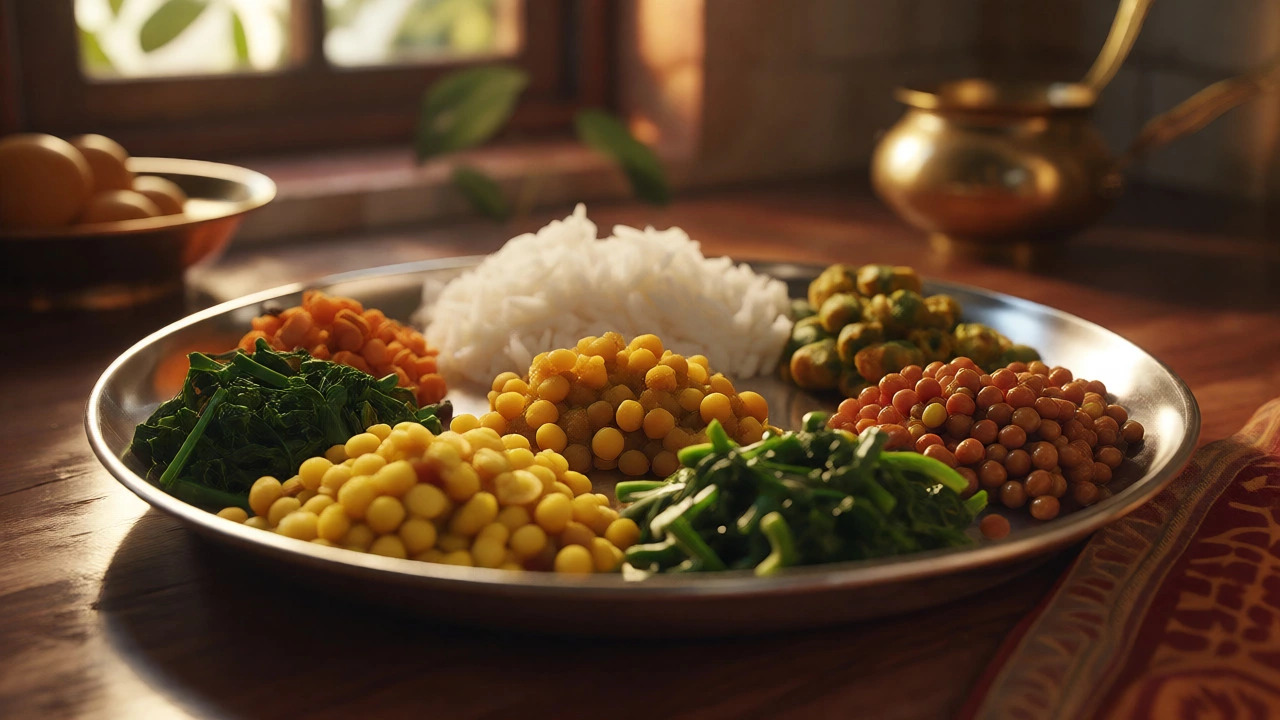
Indian Dietary Habits Quiz
How well do you know the dietary landscape of India? Take this quick quiz to test your understanding of which religions and regions lead in vegetarian adoption.
Loading question...
Quiz Complete!
You have completed the quiz.
Walk into a restaurant in Mumbai or Delhi, and you’ll likely see two menus: one for meat-eaters and one for everyone else. But if you travel to Gujarat or Rajasthan, the entire kitchen might be strictly plant-based. This isn’t just about health fads or ethical choices; it’s deeply rooted in faith. If you’ve ever wondered which religion is most vegetarian in India, the answer isn’t as simple as picking one name from a list. It’s a mix of strict theological mandates, cultural habits, and regional availability.
The short answer? Jainism holds the title for the highest percentage of adherents who are vegetarian, often exceeding 90% due to strict non-violence principles. However, when we look at sheer numbers, Hinduism has the largest population of vegetarians simply because of its massive demographic size. But there’s more nuance here. Some communities within Hinduism are almost entirely vegetarian, while others eat meat daily. Let’s break down the data, the beliefs, and the actual plates of food that define these diets.
Jainism: The Strictest Code of Non-Violence
If we’re talking about consistency and strictness, Jainism is the undisputed leader. Jains follow the principle of Ahimsa (non-violence) more rigorously than any other major Indian religion. For a practicing Jain, being vegetarian isn’t just about avoiding steak; it’s about minimizing harm to all living beings, including microorganisms.
This leads to some unique dietary restrictions that outsiders find surprising. Many Jains don’t just avoid meat; they also exclude root vegetables like potatoes, onions, garlic, and carrots. Why? Because pulling up a plant kills the entire organism and disturbs the soil, harming tiny insects and microbes in the process. In many Jain households, even lentils are soaked and inspected to ensure no small insects are present before cooking.
| Religion | Meat Consumption | Egg Consumption | Root Vegetables | Estimated Vegetarian % |
|---|---|---|---|---|
| Jainism | Strictly Prohibited | Generally Avoided | Often Avoided (strict sects) | >90% |
| Hinduism (Vaishnav/Brahmin) | Prohibited in specific castes/sects | Varies (often avoided) | Allowed | ~30-40% (overall) |
| Sikhism | Halal/Kosher prohibited; others vary | Varies | Allowed | ~20-30% |
| Buddhism | Varies by tradition | Varies | Allowed | ~15-20% |
The commitment level among Jains is remarkably high. Unlike some Hindu communities where vegetarianism might drop during festivals or outside the home, Jain families tend to maintain their diet across generations. This makes them the most reliable source of purely vegetarian cuisine in India, influencing everything from street snacks to high-end banquet menus.
Hinduism: The Largest Vegetarian Population
Hinduism is diverse, and so is its plate. There is no single "Hindu diet." Instead, dietary habits are dictated by caste, region, family tradition, and personal belief. According to recent National Family Health Survey (NFHS) data, roughly 39% of Hindus in India identify as vegetarian. While this percentage is lower than Jainism, the absolute number of people is staggering-over 400 million individuals.
Why do so many Hindus choose this path? It often ties back to purity and spiritual discipline. Many Brahmins and Vaishnavas (devotees of Vishnu) abstain from meat to maintain ritual purity. In states like Gujarat, Rajasthan, and Haryana, vegetarianism is the norm rather than the exception. You’ll find entire towns where finding a non-veg restaurant requires a drive out of city limits.
However, don’t assume all Hindus are vegetarians. In coastal regions like Kerala and Goa, or in northeastern states, fish and chicken are staples. Even within North India, Punjabi Sikhs and many Rajput communities consume meat regularly. The key takeaway is that Hindu vegetarianism is often voluntary and culturally reinforced, rather than universally mandated by scripture for every follower.
Sikhism and Buddhism: Nuanced Approaches
Sikhism presents an interesting case. The Guru Granth Sahib, the central religious scripture, does not explicitly forbid meat. However, it prohibits Kutha meat (meat slaughtered in a ritualistic manner, similar to Halal). Many Sikhs interpret this as a call to simplicity and humility, leading a significant portion to adopt a lacto-vegetarian diet, especially in Punjab. Yet, in practice, many Sikh men, particularly those with military backgrounds, eat meat freely. So, while the theology leans toward simplicity, the real-world application varies widely.
Buddhism in India also shows mixed results. While the Buddha himself didn’t mandate vegetarianism, he advised against eating meat if the animal was killed specifically for you. Over time, Mahayana Buddhist traditions in parts of India and Tibet adopted stricter vegetarian practices. However, Theravada Buddhists in southern India often eat whatever is available, including meat. Thus, Buddhism contributes to the vegetarian count but lacks the uniformity seen in Jainism.

Regional Hotspots: Where Vegetarianism Rules
Geography plays a huge role in what ends up on your plate. If you want to experience the heartland of Indian vegetarianism, head west and north.
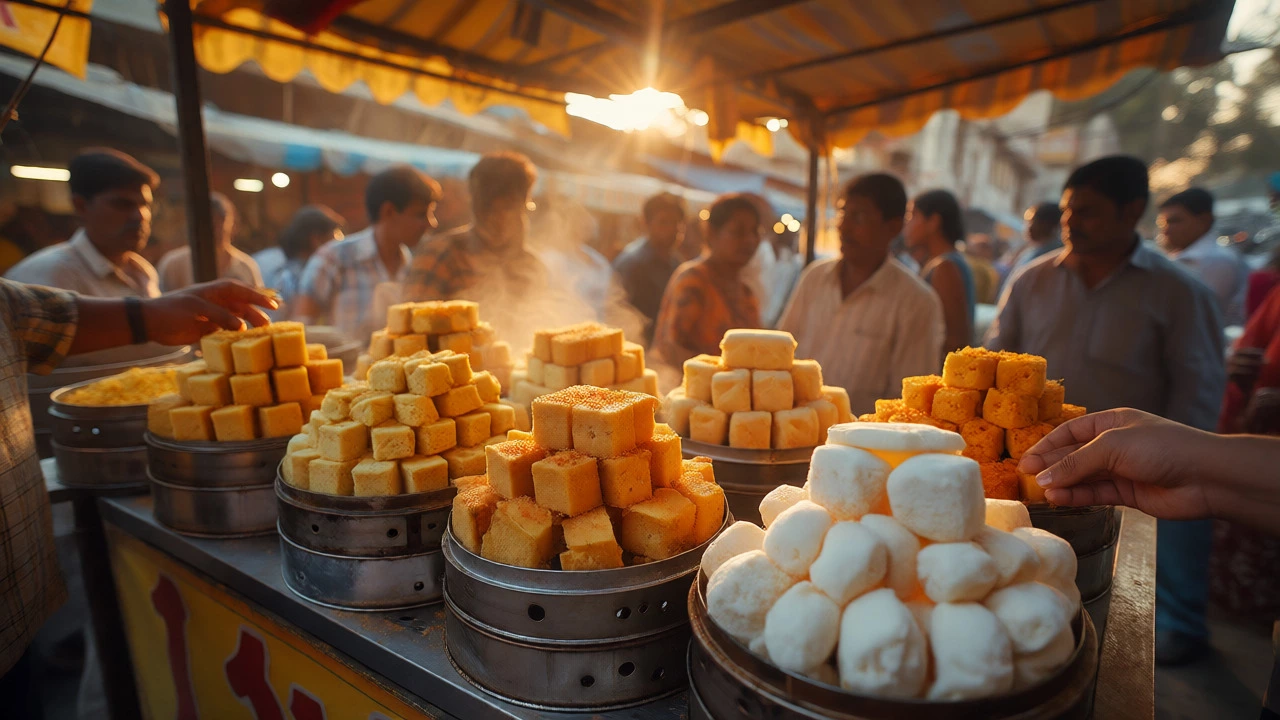
- Gujarat: Often called the vegetarian capital of India. Gujarati cuisine relies heavily on lentils, beans, and vegetables. Dishes like Dhokla, Khaman, and Thepla are globally famous and naturally vegan-friendly.
- Rajasthan: Historically a desert region, agriculture focused on hardy crops like millet, pulses, and dairy. Meat was scarce and expensive, so vegetarianism became a survival strategy that evolved into a cultural identity.
- South India (Brahmin Communities): In Tamil Nadu and Karnataka, Brahmin households serve elaborate vegetarian thalis. Dishes like Sambar, Rasam, and various Podis (spice mixes) showcase how flavorful plant-based food can be without relying on meat substitutes.
In contrast, states like West Bengal, Odisha, and the Northeastern states have much lower rates of vegetarianism. Here, fish is considered a staple protein, and pork is common in tribal communities. Understanding this geographic divide helps explain why the national average for vegetarianism sits around 39%, despite pockets of near-100% adherence.
The Rise of Ethical and Environmental Vegetarianism
It’s worth noting that the conversation around vegetarianism in India is shifting. Younger generations aren’t just following ancestral rules; they’re making choices based on climate change and animal welfare. Urban centers like Bangalore, Mumbai, and Delhi are seeing a surge in flexitarianism-people who reduce meat intake without quitting it entirely.
This trend blurs the lines between religious duty and lifestyle choice. A young Hindu professional in Bangalore might skip meat on Tuesdays and Fridays for religious reasons but go fully vegan on weekends for environmental ones. Meanwhile, Jain restaurants are expanding beyond traditional fare, offering modern interpretations of ancient recipes. This fusion creates a dynamic food scene where religious boundaries meet contemporary ethics.
For travelers or food enthusiasts, this means India offers an unparalleled variety of vegetarian options. From the rich, creamy gravies of the north to the fermented, tangy flavors of the south, you never have to compromise on taste. Whether you’re motivated by faith, health, or curiosity, the Indian vegetarian table is ready to welcome you.
Is Jainism the only religion that forbids root vegetables?
While Jainism is the most prominent religion associated with avoiding root vegetables, some strict Vaishnava Hindu sects also avoid them during specific fasting periods. However, for Jains, this is a permanent, core tenet of their Ahimsa practice to prevent harm to underground life forms.
Do all Hindus eat vegetarian food?
No, not all Hindus are vegetarian. Dietary habits vary significantly by region, caste, and personal belief. While approximately 39% of Hindus identify as vegetarian, millions in coastal and northeastern regions consume meat and fish regularly.
Why do Jains avoid eggs?
Jains generally avoid eggs because they consider them potential life forms. Eating an egg could mean consuming a developing embryo, which violates the principle of non-violence. Additionally, commercial egg farming often involves practices that cause suffering to animals, further reinforcing the avoidance.
Which Indian state has the highest vegetarian population?
Gujarat consistently ranks as having one of the highest percentages of vegetarians in India, largely due to the strong influence of Jainism and Vaishnavism. Other states with high vegetarian rates include Rajasthan, Haryana, and parts of Maharashtra.
Is Sikhism inherently vegetarian?
Sikhism does not mandate vegetarianism. The Guru Granth Sahib discourages ritualistic slaughter but allows meat consumption. However, many Sikhs choose a vegetarian diet for ethical reasons or to align with the community kitchen (Langar) standards, which are typically vegetarian.