Indian Sweetener & Ingredient Calculator
Plan your perfect batch. Enter the quantities for each ingredient to estimate the total weight, approximate sugar load, and overall sweetness profile.
Recipe Analysis
Total Weight
0 grams
Estimated Sugar Content
0 grams
*Approximate based on standard compositionHave you ever bitten into a perfectly soft Gulab Jamun, a deep-fried milk-solid dumpling soaked in rose-flavored sugar syrup and wondered why it tastes so different from a Western donut? The answer isn't just the spices. It’s the sugar. In fact, asking "which sugar is used in Indian sweets" is like asking "what paint do artists use?" The answer varies wildly depending on the masterpiece being created.
While regular white granulated sugar (sucrose) plays a role, it is far from the only player on the field. Traditional Indian confectionery relies on a complex ecosystem of sweeteners, each bringing distinct textures, flavors, and cultural significance. From the earthy depth of Jaggery, an unrefined cane sugar product rich in minerals to the creamy richness of reduced milk solids, understanding these ingredients changes how you cook and eat.
The Big Three: White Sugar, Jaggery, and Palm Sugar
To understand Indian sweets, you first need to separate the concept of "sweetness" from the ingredient "sugar." In the West, sweetness usually equals sucrose. In India, sweetness is a spectrum. Let's look at the primary sweeteners that define the cuisine.
White Granulated Sugar (Shakkar) is the most common base for syrups. When you make Gulab Jamun or Rasgulla, soft cottage cheese balls soaked in light sugar syrup, you are using a precise ratio of water to white sugar to create a viscous liquid. This syrup acts as both a flavor carrier and a preservative. The key here is not just the sugar itself, but the chashni (syrup) consistency-often tested by dropping a spoonful into water to see if it forms a soft ball.
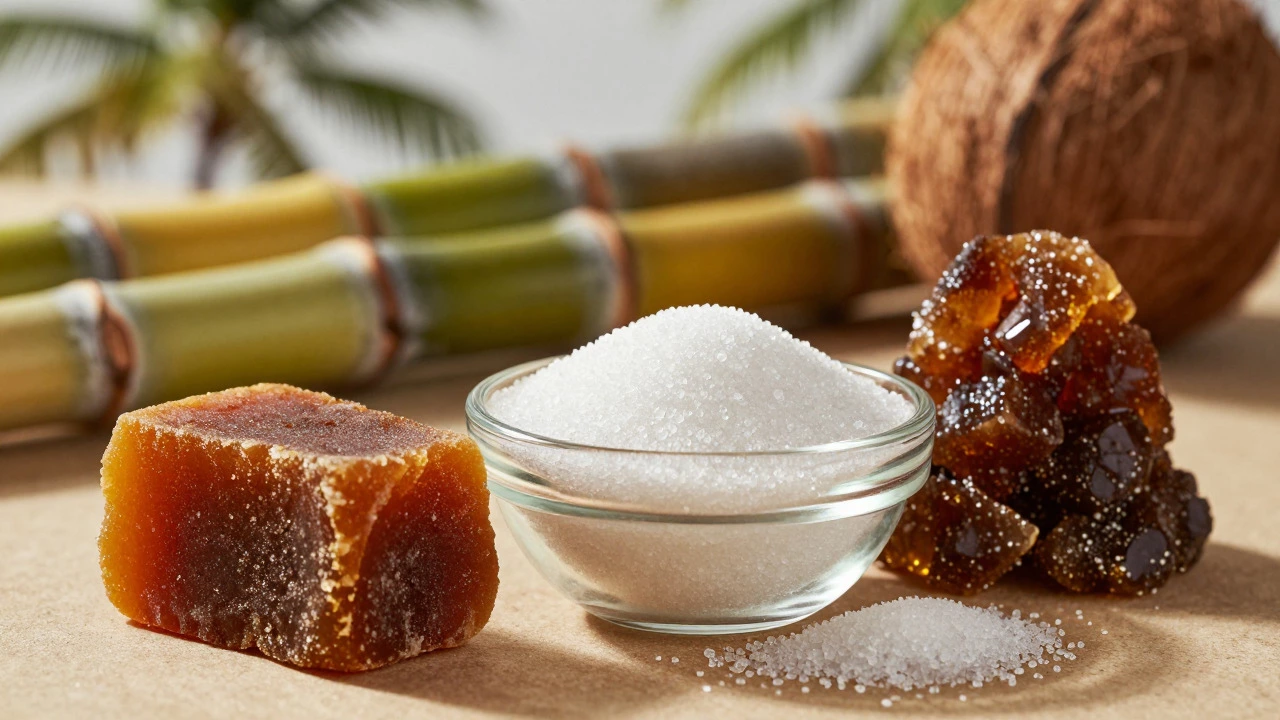
However, white sugar is often considered too "sharp" or one-dimensional for many traditional recipes. That’s where Jaggery, also known as Gur or Nongru, an unrefined natural sweetener made from sugarcane juice or palm sap enters the picture. Jaggery retains the molasses, giving it a caramel-like color and a complex flavor profile with notes of brown sugar, maple, and even slight bitterness. It is essential for sweets like Peda, a fudge-like sweet made from reduced milk and sugar/jaggery and various festival offerings. Unlike refined sugar, jaggery contains trace amounts of iron, magnesium, and potassium, making it a popular choice for those seeking slightly more nutritional value.
A third contender is Palm Sugar, derived from the sap of date palms or coconut palms. Known as Nariyal Gur when made from coconut, this sweetener has a lower glycemic index than white sugar and a distinct fruity aroma. It is particularly prominent in South Indian and coastal recipes, adding a subtle tropical note that white sugar cannot replicate.
| Sweetener Type | Source | Flavor Profile | Common Uses |
|---|---|---|---|
| White Sugar (Shakkar) | Sugarcane or Beets | Neutral, pure sweetness | Syrups (Chashni), binding agent |
| Jaggery (Gur) | Sugarcane Juice | Earthy, caramel, molasses | Peda, Halwa, Chikki |
| Palm Sugar | Date/Coconut Sap | Fruity, mild, smoky | South Indian payasams, teas |
| Honey (Madhu) | Bee Nectar | Floral, variable intensity | Health tonics, specific Ayurvedic sweets |
Milk Solids: The Real Secret Ingredient
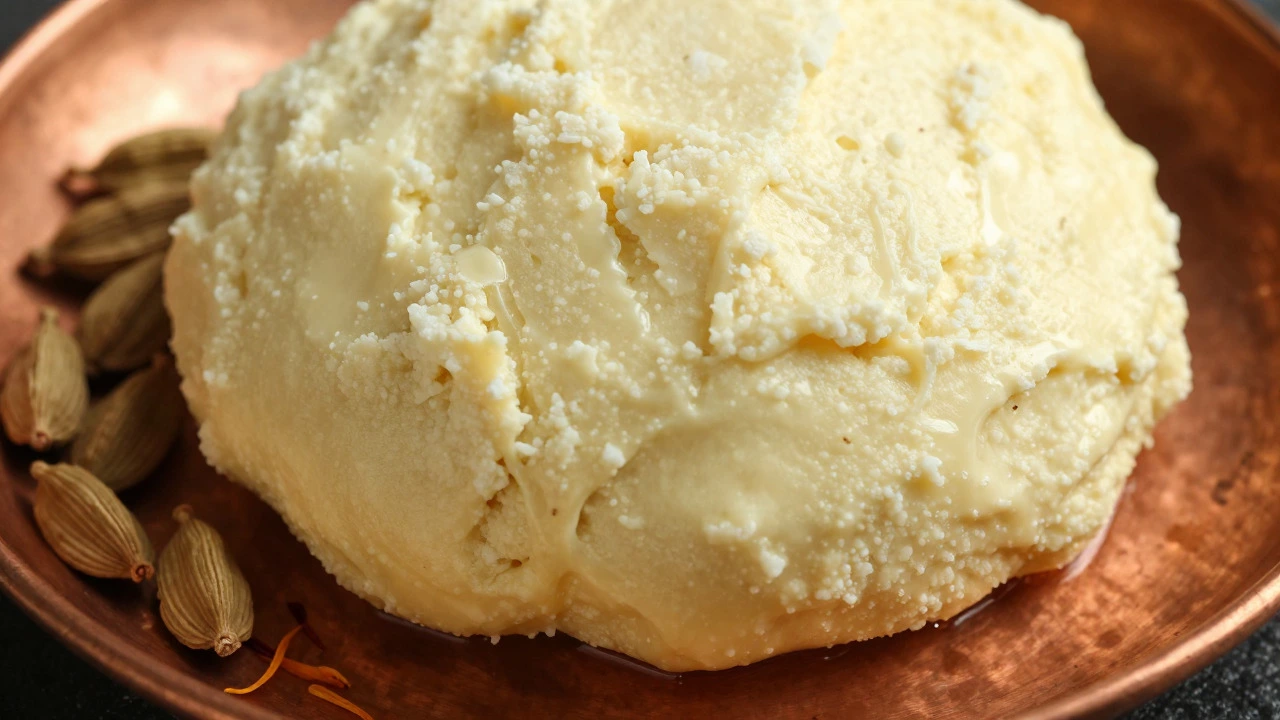
If you think sugar is the main event in Indian sweets, you might be missing the plot. For many iconic desserts, the primary bulk comes not from sugar, but from milk solids. This is where the concept of Khoya, also known as Mawa, a concentrated dairy product made by boiling down milk until all moisture evaporates becomes crucial.
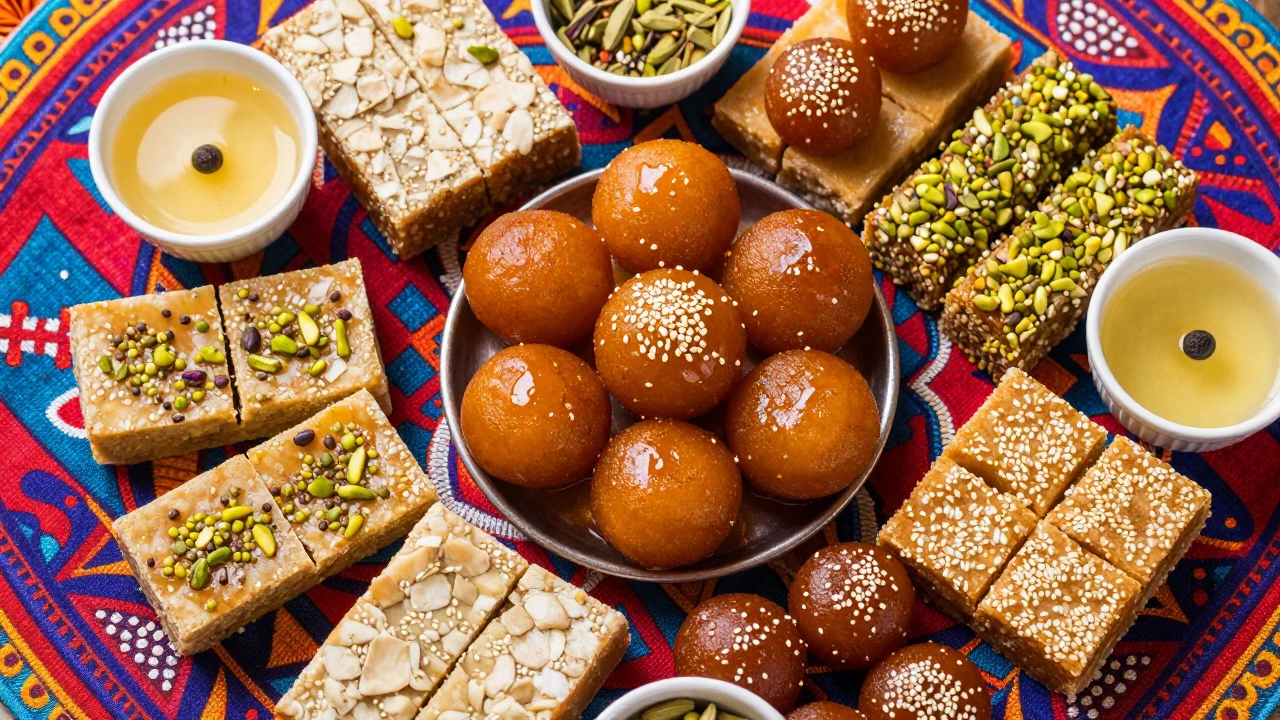
Khoya is not a sweetener in the traditional sense; it is a texture builder. It provides the dense, fudgy mouthfeel found in Barfi, a square-shaped milk-based sweet similar to fudge and Gulab Jamun. When you buy a packet of Barfi, you are eating a mixture of khoya, sugar, and flavorings. The sugar here acts as a binder and sweetener, but the khoya provides the structure. Without khoya, these sweets would dissolve into mush or lack their signature chewiness.
Making khoya at home is labor-intensive. It involves simmering liters of full-fat milk for hours until it reduces to a thick paste. This process concentrates the lactose (milk sugar) and proteins, creating a naturally sweet, creamy base. In modern times, you can buy powdered khoya or ready-made blocks, which have democratized access to these sweets. However, the quality of the milk directly impacts the final taste. High-quality khoya should be grain-free and melt smoothly on the tongue.
Flours and Legumes: Sweetening Beyond Dairy
Not all Indian sweets rely on dairy. Many regional specialties use flours and legumes as their base, sweetened with sugar or jaggery. This creates a completely different textural experience-crunchy, brittle, or crumbly rather than soft and fudgy.
Besan, gram flour or chickpea flour is a superstar in this category. When roasted in ghee and mixed with sugar, it becomes Beslath or simply Besan Burfi. The nutty flavor of the chickpea flour pairs beautifully with cardamom and pistachios. Similarly, Sooji, semolina or fine wheat bran is used to make Sooji Halwa, a comforting dessert often served after meals. Here, the semolina absorbs the sugar syrup, becoming tender and glossy.
Legumes also play a significant role. Moong Dal, split yellow mung beans are cooked down and sweetened to make Moong Dal Halwa, a staple during religious festivals. The dal provides a protein-rich base that balances the high sugar content, making the sweet feel more substantial and less cloying.
The Role of Ghee and Spices
You cannot talk about Indian sweets without mentioning Ghee, clarified butter with a high smoke point and rich aroma. While not a sugar, ghee is integral to the sweetening process. It carries fat-soluble flavors and adds a luxurious mouthfeel. In many recipes, sugar is dissolved directly into hot ghee, creating a caramelized base that enhances the overall sweetness perception.
Spices act as flavor modulators. Cardamom (Elaichi) is the most common, added to almost every sweet to cut through the heaviness of the sugar and milk. Saffron (Kesar) adds color and a floral aroma, while saffron-infused milk is often used in premium versions of Kheer and Payasam. These spices don't add sweetness, but they make the sugar taste more complex and enjoyable.
Regional Variations and Modern Trends
India's diversity means sweet preferences vary by region. In the North, milk-based sweets like Rasgulla and Gulab Jamun dominate. In the West, especially Gujarat and Maharashtra, jaggery-based sweets like Chikki (brittle) and Til Laddu (sesame seed balls) are popular, particularly during winter festivals. In the South, rice flour and coconut take center stage, with sweets like Mysore Pak (made from gram flour, sugar, and ghee) and Payasam (rice pudding).
Modern health trends are influencing traditional recipes. There is a growing demand for low-sugar alternatives. Stevia, monk fruit, and erythritol are increasingly being experimented with in homemade versions of Indian sweets. However, these substitutes often fail to replicate the exact texture provided by sucrose, particularly in crystallization-dependent sweets like Barfi. Jaggery remains the go-to "healthier" alternative because it maintains the structural integrity required for traditional methods.
Practical Tips for Home Cookers
If you are trying to make Indian sweets at home, keep these points in mind:
- Syrup Consistency Matters: Always test your sugar syrup. If it's too thin, your sweets will become soggy. If it's too thick, they may crack. The "one-string consistency" (ek dhaga) is a common benchmark where two fingers dipped in the syrup form a single thread when pulled apart.
- Quality of Ingredients: Use full-fat milk for khoya-based sweets. Low-fat milk results in dry, crumbly textures. For jaggery, choose blocks over powder if possible, as powder often contains impurities.
- Temperature Control: Many sweets require slow cooking. High heat can burn the sugar, leading to a bitter taste. Patience is key, especially when reducing milk for khoya.
- Storage: Most Indian sweets have a short shelf life due to high moisture content. Store them in airtight containers in the refrigerator and consume within 3-5 days. Some dry sweets like Chikki can last longer at room temperature.
Frequently Asked Questions
Is jaggery healthier than white sugar?
Jaggery contains small amounts of minerals like iron, magnesium, and potassium, which are lost in refined white sugar. However, it is still primarily sucrose and should be consumed in moderation. It is not a "free pass" for unlimited consumption, but it offers a more complex nutrient profile than white sugar.
Can I substitute white sugar with honey in Indian sweets?
Generally, no. Honey behaves differently under heat and can turn bitter if boiled for long periods. It also does not crystallize the same way as sugar, which affects the texture of sweets like Barfi. Honey is best used in cold preparations or added at the very end of cooking.
What is the difference between Khoya and Paneer?
Both are made from milk, but Khoya is made by boiling milk until it reduces to a solid mass, retaining all the fats and sugars. Paneer is curdled milk strained to remove whey, resulting in a fresh, tangy cheese. Khoya is sweet and dense; Paneer is savory and crumbly.
Why do Indian sweets taste so heavy?
Traditional Indian sweets are designed to be energy-dense, often served in small portions. They combine high-fat ingredients like ghee and milk solids with high-sugar syrups. This combination creates a rich, satiating effect that was historically useful for providing quick energy.
How long do Indian sweets last?
Most milk-based sweets like Gulab Jamun and Rasgulla last 3-5 days in the refrigerator. Dry sweets like Ladoo or Barfi can last up to 2 weeks if stored in airtight containers. Avoid freezing unless necessary, as it can alter the texture.