Mithai Explorer: Discover South Asian Muslim Sweets
Click on a sweet below to learn about its history, ingredients, and the occasions when it is traditionally served.
You’ve probably noticed it. You walk into a shop in Old Delhi during Eid, or you visit a home in Hyderabad for a wedding, and the first thing offered isn’t water or tea-it’s something sticky, sweet, and dripping with ghee. It’s gulab jamun, barfi, or jalebi. For many outsiders, this intense love for sugar among Muslim communities in South Asia seems like just a dietary preference. But if you dig deeper, you’ll find it’s not about having a "sweet tooth" in the medical sense. It’s a complex mix of history, theology, hospitality, and survival.
Let’s be honest: sugar is cheap energy. But why did it become so central to the identity of Muslim communities from Kashmir to Kerala? To understand this, we have to look past the recipe books and into the social fabric. This article breaks down the religious, historical, and cultural reasons why sweets are non-negotiable in Muslim households, especially within the context of Indian and South Asian traditions.
The Theological Nudge: Sugar as Charity
First, let’s clear up a common misconception. Islam does not mandate eating sweets. There is no verse in the Quran that says, "Thou shalt eat barfi." However, there is a massive emphasis on Sadaqah (charity) and sharing food. In many cultures, the easiest, most universal way to share abundance is through sweetness.
Think about Ramadan. After a long day of fasting, the body craves quick energy. Dates are the traditional breaker of fasts because they offer natural sugars and fiber. But over centuries, this evolved. Breaking the fast became a communal event. If you couldn’t afford dates for everyone, you made what you had taste better by adding sugar. Over time, serving something sweet became synonymous with blessing your guest. When you offer someone a piece of mithai (Indian confectionery), you are essentially saying, "I wish sweetness upon your life." It’s a tactile prayer.
Historical Fusion: The Persian Influence
You can’t talk about Muslim sweets without talking about Persia. Before the Mughals arrived in India, the culinary landscape was already shifting due to trade routes connecting the Middle East and Central Asia. Persian cuisine introduced techniques like distilling rose water, using saffron, and creating delicate syrups. These weren’t just ingredients; they were status symbols.
When the Mughal Empire established itself in the Indian subcontinent, they didn’t just rule politically; they merged their courtly aesthetics with local Indian ingredients. Indian cooks had mastered dairy-turning milk into khoya (dried milk solids). Persian chefs brought the art of syrup-making (chashni). The marriage of these two traditions created a new genre of dessert. Dishes like Shahi Tukda (royal bread pudding) are literally a fusion story: stale bread (survival/humility) soaked in rich milk and sugar (luxury/grace).
This historical blending explains why Muslim sweets in India look different from Hindu sweets. While both use similar base ingredients like milk and sugar, the flavor profiles differ. Muslim sweets often lean heavier on nuts, dried fruits, and aromatic spices like cardamom and mace, reflecting that Central Asian heritage. Hindu sweets might focus more on lentils or grains, though there is huge overlap today.
Hospitality and Social Currency
In many Muslim-majority neighborhoods, refusing a sweet is considered rude. Why? Because hospitality (Mezbaani) is a core value. Offering food is how you show respect. But offering sweet food elevates that respect.
Consider the concept of Nazr or offerings at shrines. People bring sweets to dargahs (shrines) to seek blessings. These sweets are then distributed to the poor. It’s a cycle: you buy the sweet to give thanks, and the sweet feeds someone else. This creates a social economy where sweets act as currency. During weddings, the quantity and quality of the mehndi and Walima (wedding feast) sweets are scrutinized. It’s not just gluttony; it’s a public display of generosity. If the sweets run out, the host loses face. If they are homemade and exquisite, the family gains reputation.
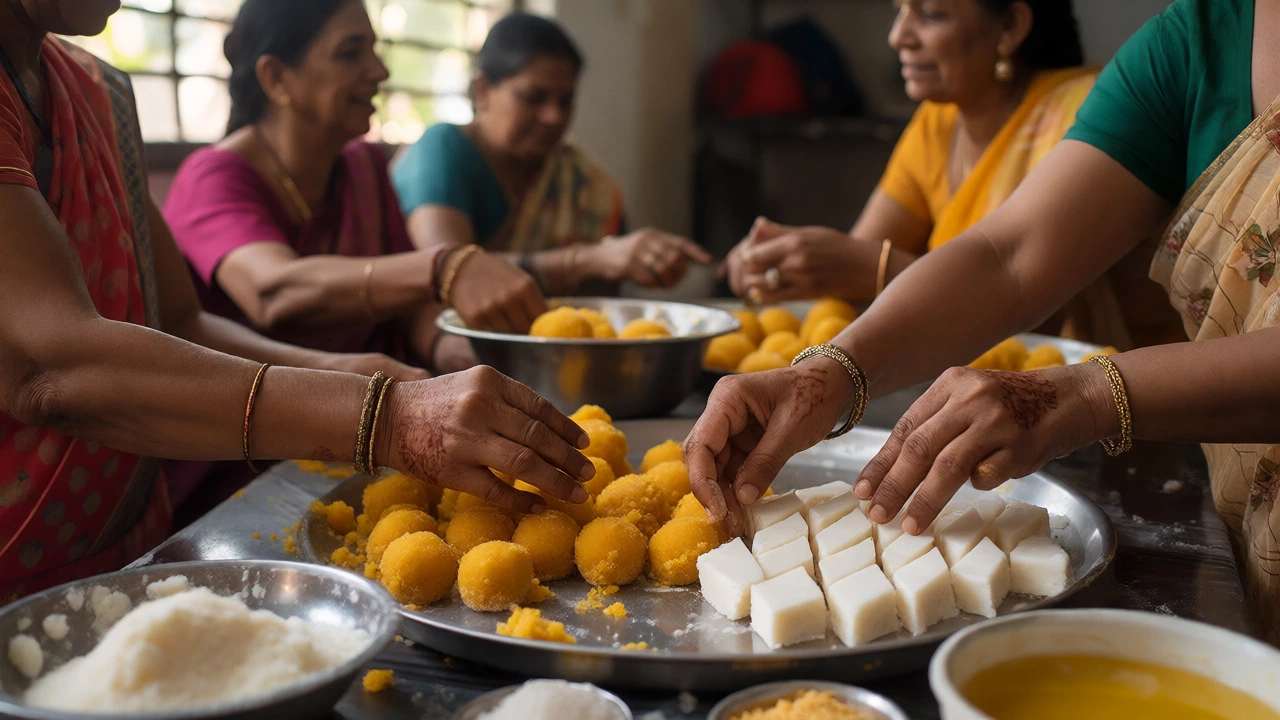
For women in these households, making sweets is also a form of creative expression and economic contribution. In many families, women sell homemade halwa or laddoo to neighbors during festivals. It’s a small business model rooted in tradition.
Festivals: When Sugar Becomes Sacred
Certain times of the year turn sugar into a ritual object. The two biggest examples are Eid al-Fitr and Eid al-Adha.
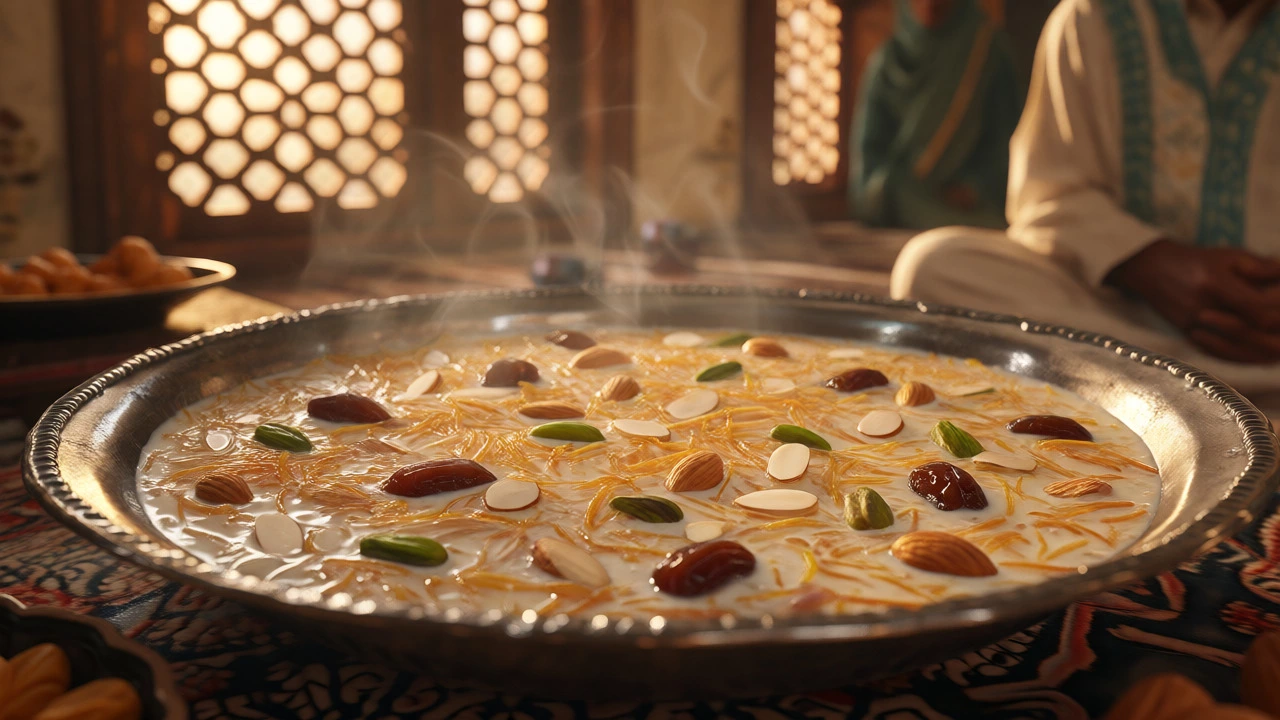
Eid al-Fitr marks the end of Ramadan. The entire month has been about restraint. Suddenly, you are allowed to eat again. The first meal of the morning is often light, but the afternoon is a sugar rush. Families prepare trays of Sheer Khurma (vermicelli pudding with dates and nuts). This dish is almost mandatory. If you don’t have Sheer Khurma, is it really Eid? The richness of the dish-full-fat milk, ghee-roasted vermicelli, tons of sugar-symbolizes the return of abundance after a month of scarcity.
Eid al-Adha involves the sacrifice of an animal. Meat is plentiful. What do you do with all that fat and meat? You balance it with something intensely sweet. Baklava and Kunafa become popular in regions with Turkish influence, while in India, Gajar ka Halwa (carrot halwa) takes center stage. The contrast between savory, heavy meats and sharp, sugary desserts helps digestion and palate cleansing.
Common Festive Sweets and Their Roles
| Sweet Name | Main Ingredients | Cultural Context | Symbolism |
|---|---|---|---|
| Sheer Khurma | Vermicelli, Milk, Dates, Nuts | Eid al-Fitr Breakfast | Abundance after fasting |
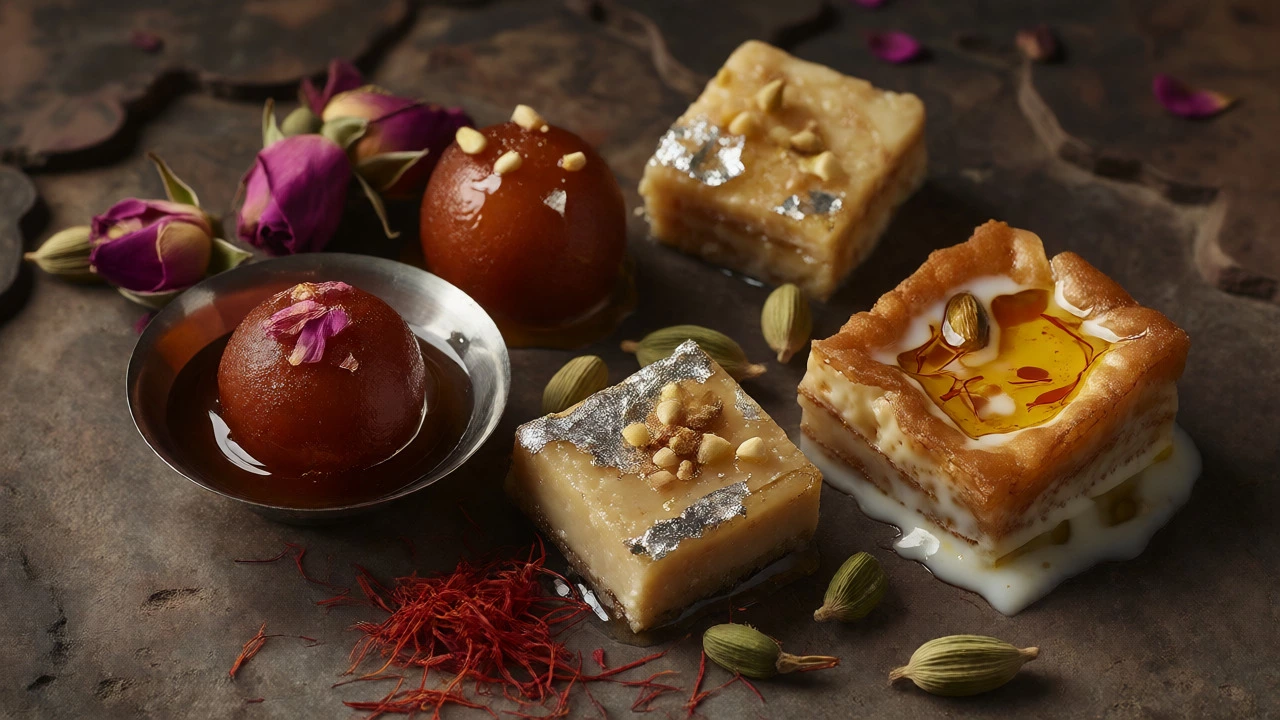
| Gulab Jamun | Khoya, Flour, Rose Syrup | Weddings & General Celebrations | Joy and Hospitality |
| Barfi | Milk Solids, Sugar, Cardamom | Gift-giving & Diwali/Eid | Purity and Sharing |
| Jalebi | Fermented Batter, Sugar Syrup | Morning Snack & Iftar | Energy and Warmth |
| Halwa | Semolina/Wheat, Ghee, Sugar | Religious Offerings & Funerals | Solace and Memory |
Geography Matters: Not All Muslims Eat the Same Sweets
It’s dangerous to generalize. A Muslim in Cairo eats differently than a Muslim in Jakarta or Lucknow. The love for sweets is global, but the *type* of sweet depends on geography.
- South Asia (India/Pakistan/Bangladesh): Dairy-heavy. Think khoya-based sweets like Rasgulla and Malai Laddoo. The climate allows for abundant milk production, and the agrarian society values calorie-dense foods.
- Middle East/North Africa: Nut-and-honey based. Baklava, Kunafa, and Basbousa rely on phyllo dough, pistachios, walnuts, and honey or simple syrup. Less dairy, more crunch.
- Southeast Asia (Indonesia/Malaysia): Coconut and palm sugar dominate. Klepon (glutinous rice balls filled with palm sugar) and Onde-onde reflect the tropical availability of coconuts and pandan leaves.
So, when you ask "why," you must also ask "where?" The environment dictates the pantry. In arid regions, dried fruits and nuts preserve well and provide concentrated energy. In lush river valleys, fresh milk is available daily, leading to creamy, soft sweets.
The Science of Satisfaction
On a biological level, there’s a practical reason too. Many traditional Muslim communities historically engaged in physically demanding labor or lived in climates where high caloric intake was necessary. Sugar provides immediate glucose. Fat (from ghee or cream) provides sustained energy. Combining them creates a "bliss point" in the brain-a release of dopamine that reduces stress.
During Ramadan, the body undergoes significant metabolic changes. Breaking the fast with a spike in blood sugar prevents hypoglycemia symptoms like dizziness or weakness. This physiological need reinforces the cultural habit. Generations of parents have seen their children perk up instantly after eating a date or a piece of seviyan. That positive reinforcement sticks.
Is It Just About Religion?
No. If you look at modern urban Muslims in cities like London, New York, or Sydney, the consumption of traditional sweets is changing. Younger generations might prefer chocolate cake over barfi. Yet, even those who rarely cook traditional meals still buy mithai for major holidays. This suggests that the attachment is less about hunger and more about identity.
Eating the sweet connects you to your ancestors. It’s a sensory memory. The smell of frying jalebi reminds you of your grandmother’s kitchen. The taste of cardamom-laced milk pudding recalls your childhood Eid mornings. In a world that moves fast and feels disconnected, these flavors anchor you to your community.
Furthermore, the act of preparing these sweets is often gendered and communal. Women gather to roll laddoos or cut barfi. It’s a time for gossip, bonding, and passing down skills. If the sweets disappear, that social space shrinks too.
Troubleshooting the Sweet Tooth
If you’re trying to engage with this culture-whether you’re cooking for friends or just curious-here are some tips:
- Don’t skimp on Ghee: Traditional recipes call for clarified butter. Substituting with oil changes the texture and flavor profile significantly. It won’t taste authentic.
- Syrup Consistency is Key: For dishes like Gulab Jamun, the syrup needs to be one-string consistency. If it’s too thin, the dumplings get soggy. Too thick, and they crystallize. Use a thermometer or test between your fingers.
- Balance the Spice: Don’t be afraid of black cardamom or mace. They add depth that plain vanilla lacks. These spices are distinct markers of Mughlai-influenced sweets.
- Temperature Matters: Some sweets are best hot (Jalebi), others cold (Kheer). Serving them at the wrong temperature ruins the experience.
Ultimately, the love for sweets in Muslim communities isn’t a quirk. It’s a language. It speaks of generosity, history, faith, and joy. Next time you’re offered a plate of sticky, golden barfi, accept it. You’re not just getting calories; you’re being welcomed into a circle of warmth that spans centuries.
Do all Muslims eat sweets during Ramadan?
While not every individual consumes large amounts of sweets, it is a widespread cultural tradition across most Muslim-majority countries to break the fast (Iftar) with something sweet. Dates are the religious standard, but regional variations include fruit juices, fried doughs like Jalebi, or milk puddings like Kheer. The sugar helps restore blood glucose levels quickly after a day of fasting.
What is the difference between Hindu and Muslim sweets in India?
There is significant overlap, but differences exist in flavor profiles and ingredients. Muslim-associated sweets (often called Mughlai sweets) tend to use more nuts, dried fruits, saffron, and ghee, influenced by Persian and Central Asian cuisines. Hindu sweets may feature more lentil-based flours (besan) or specific regional dairy preparations. However, in modern India, these boundaries have blurred, and many sweets are enjoyed by all communities regardless of religion.
Why is Sheer Khurma important for Eid?
Sheer Khurma is a vermicelli pudding made with full-fat milk, dates, almonds, and pistachios. It is traditionally served on the morning of Eid al-Fitr. Its importance lies in its symbolism of abundance and celebration after the austerity of Ramadan. Preparing it requires expensive ingredients, signifying the host's generosity and the special nature of the occasion.
Are Indian sweets healthy?
Generally, traditional Indian sweets are high in calories, sugar, and saturated fats (from ghee or cream). While they contain nutritious ingredients like milk, nuts, and dates, they are typically consumed in moderation as treats rather than health foods. Modern versions sometimes use low-fat milk or alternative sweeteners, but the classic preparation remains indulgent.
Can I make Muslim sweets vegan?
Yes, but it requires substitution. Most traditional sweets rely heavily on dairy (milk, khoya, ghee). Vegan alternatives involve using coconut milk, almond milk, and plant-based ghee (vegan butter). Dishes like Jalebi are naturally vegan-friendly if made with water-based batter and vegetable oil, provided the sugar used is bone-char free (if strict veganism applies).