Dal Flavor Calculator
Fix Your Bland Dal
Calculate the perfect seasoning ratios based on your lentil quantity. Follow the article's layering method for restaurant-quality dal.
Salt Required
Use 0 tsp total (divided by stages)
Acid Addition
Add 0 tsp at end
Tempering Tip: Heat oil until shimmering before adding
Finishing Tip: Add 0 tsp ghee right before serving
Ever made a pot of dal that looked perfect but tasted like warm water? You’re not alone. Millions of home cooks around the world-whether they grew up with it or just discovered it-have stared at their bowls wondering, why does my dal taste bland? It’s not about the lentils. It’s not about the water. It’s about the missing steps most recipes skip.
Most dal recipes leave out the real flavor builders
Look at any basic dal recipe online. It says: rinse lentils, boil with turmeric and salt, done. That’s not dal. That’s boiled lentils. Real dal has layers. It’s built in stages, not dumped into a pot and forgotten. The secret isn’t more spices-it’s timing. You need to build flavor before, during, and after cooking.
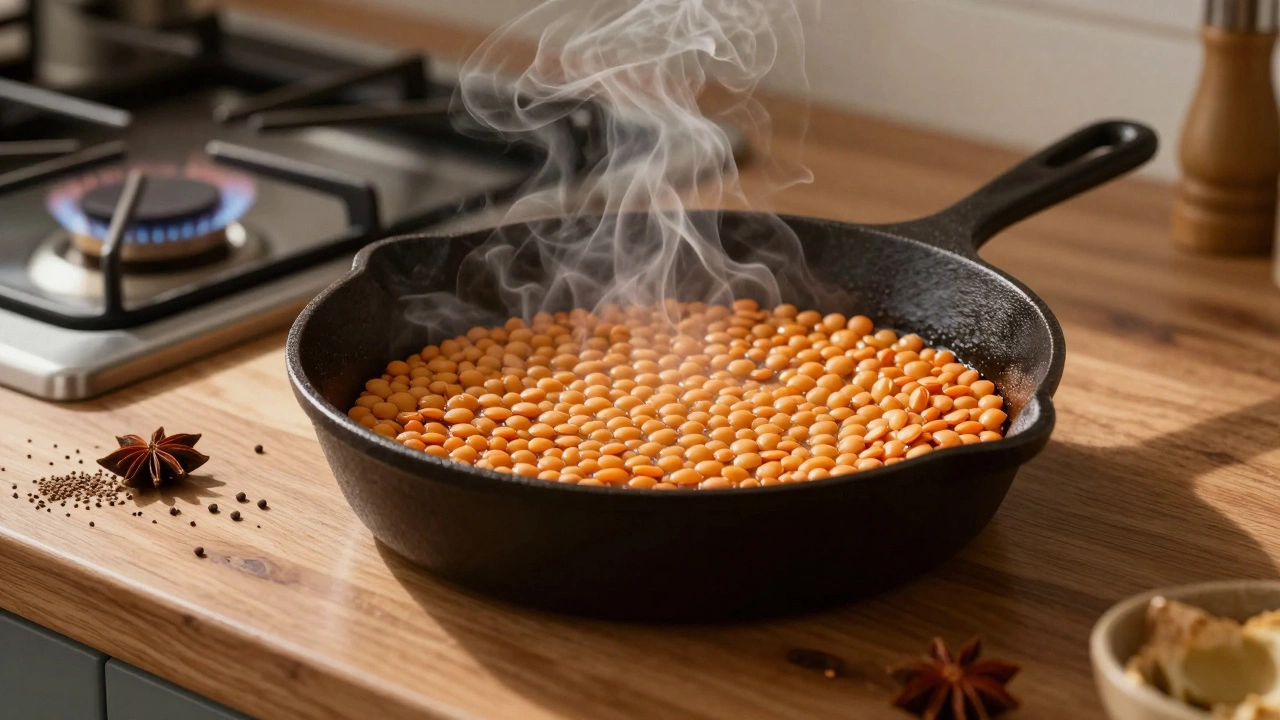
Start with the lentils. Red lentils (masoor dal) cook fast but have almost no flavor on their own. Yellow split peas (moong dal) are slightly sweeter. But neither holds flavor unless you treat them right. Don’t just throw them in boiling water. Soak them for 20 minutes. It’s not traditional, but it helps them absorb seasoning better. Drain them. Then, toast them dry in the same pan you’ll use for tempering. Just 90 seconds over medium heat. You’ll smell it-nutty, earthy, alive. That’s your flavor base.
The tempering (tadka) is where dal comes to life
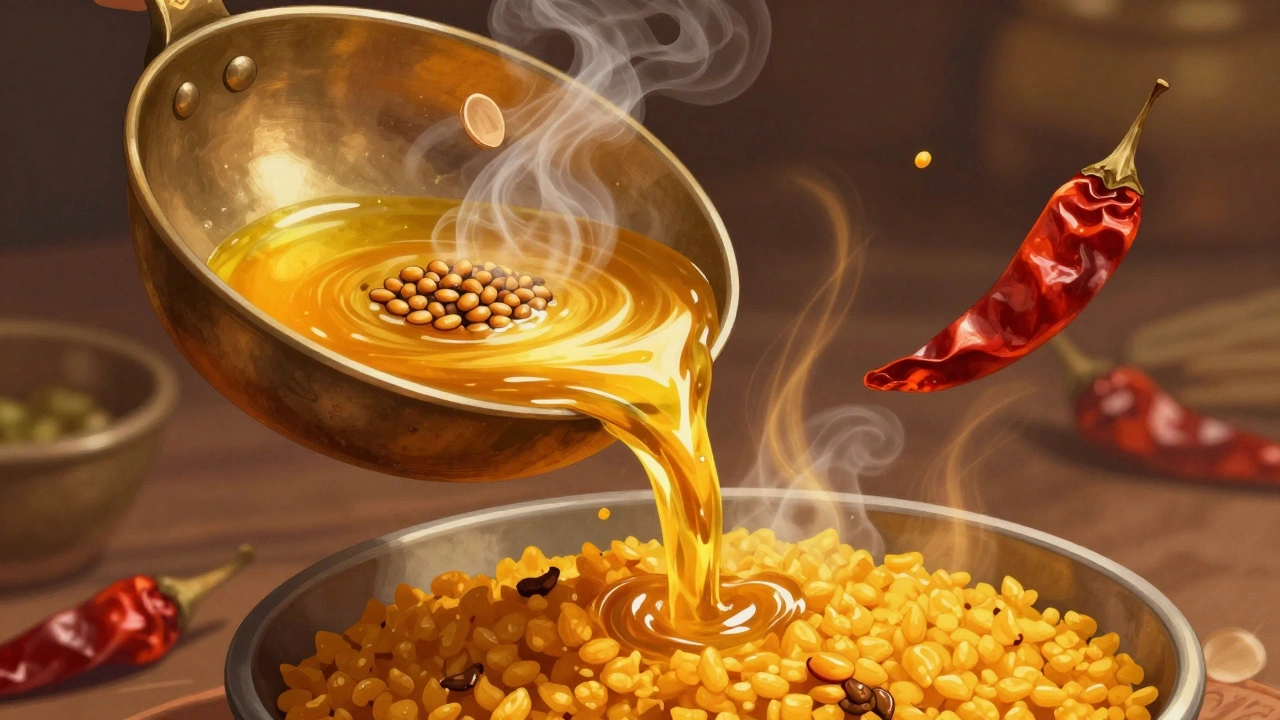
This is the step most people rush or skip. Tadka isn’t an afterthought. It’s the soul of dal. Heat oil or ghee in a small pan. Wait until it shimmers. Then add whole spices: cumin seeds, mustard seeds, hing (asafoetida), and dried red chilies. Don’t dump them in cold oil. Wait for the oil to get hot. The moment the mustard seeds pop, you’ve got it.
Here’s what most people miss: add the hing after the seeds sizzle, not before. Hing burns fast. Add it right after the mustard seeds pop, then immediately pour the whole thing over your cooked dal. The sizzle hits the steam rising off the dal, and the aroma explodes. That’s when the flavor jumps from background to front and center.
And don’t stop at cumin and mustard. Try adding a pinch of ground coriander to the oil, or a dried curry leaf or two. They don’t need to be fried hard-just kissed by heat. One teaspoon of crushed garlic or ginger added right at the end of the tadka? Game changer. You don’t need a long list. You need the right ones, at the right time.
Acidity makes dal sing
Ever notice how restaurant dal tastes brighter? They don’t just add salt. They add acid. A squeeze of lemon juice, or a teaspoon of tamarind paste stirred in at the very end. This isn’t optional. Acid cuts through the earthiness of lentils and wakes up every other flavor. Salt alone won’t do it. You need that sharpness to balance the richness.
Use fresh lime juice if you can. Bottled lemon juice? It’s fine, but it’s flat. Fresh is always better. Add it after you turn off the heat. Heat kills acidity. Stir it in gently. Taste. If it still feels flat, add another half teaspoon. You can’t fix bland dal without acid.
Salt isn’t just salt
Here’s a brutal truth: most people under-salt dal. They think it’s a side dish, so they go light. It’s not. Dal needs salt like a steak does. Use at least 1 teaspoon per cup of cooked lentils. Taste it like you’re seasoning soup, not a side. If you’re using store-bought turmeric powder, you might need even more salt-low-quality turmeric can mute flavor.
And don’t just add salt at the start. Add half when you begin cooking, then another quarter when it’s halfway done, and the last bit right at the end. Salt layers like flavor. One big addition doesn’t penetrate.
The magic of ghee and finishing touches
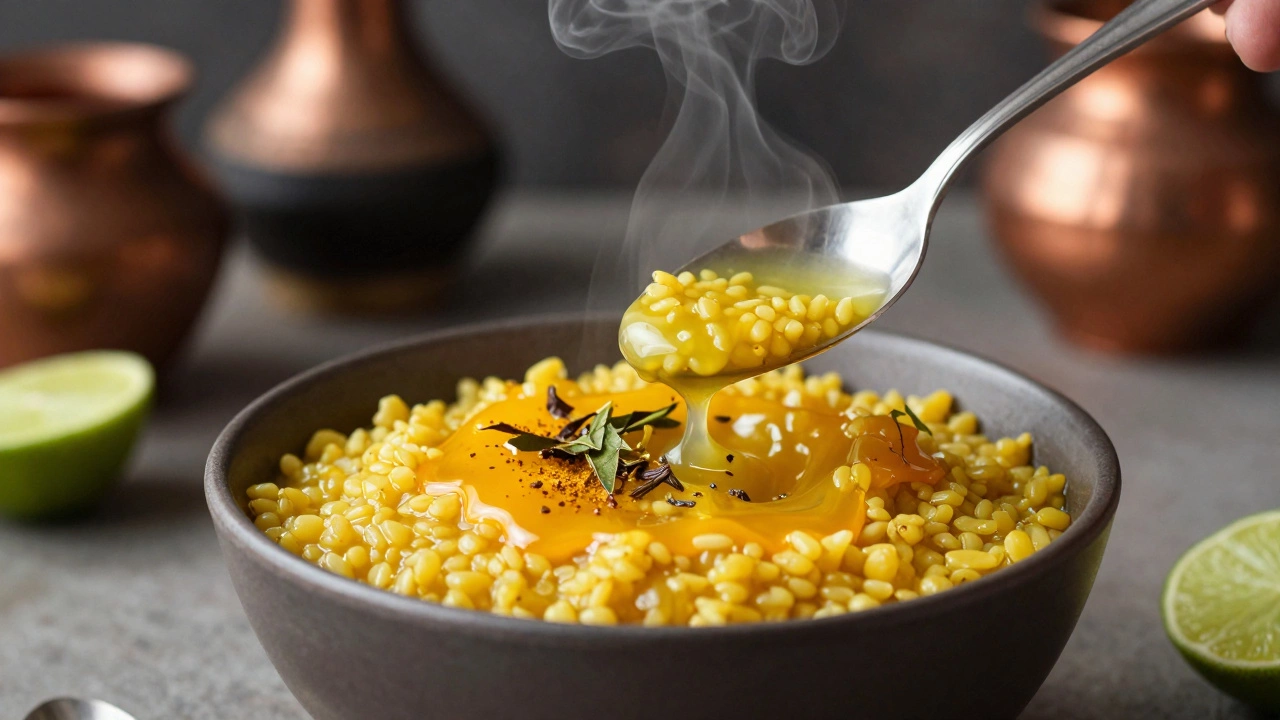
Finish your dal with a spoonful of ghee. Not butter. Not olive oil. Ghee. It’s clarified, nutty, rich. Swirl it on top right before serving. It melts into the surface, adding a glossy sheen and deep aroma. This isn’t decoration. It’s flavor delivery.
Want to go further? Sprinkle a pinch of amchur (dry mango powder) on top. It adds tang without liquid. Or a dash of kasuri methi (dried fenugreek leaves)-crushed between your fingers before sprinkling. They’re not in every recipe, but they’re why some dals make you pause mid-bite.
What you’re probably doing wrong
- Boiling lentils in plain water without toasting them first
- Adding spices to cold oil
- Skipping the tadka entirely
- Using only salt and turmeric as flavor
- Adding lemon juice while the dal is still boiling
- Using old, stale turmeric powder
- Not tasting and adjusting salt at three stages
These aren’t minor mistakes. They’re flavor killers.
Quick fix for bland dal-right now
Already made your dal and it’s flat? Don’t throw it out. Here’s how to rescue it in five minutes:
- Heat a teaspoon of ghee in a small pan.
- Add ½ tsp cumin seeds and let them sizzle.
- Drop in a pinch of hing and 1 dried red chili.
- Wait until the seeds pop, then pour this over your dal.
- Squeeze in half a lime.
- Stir, taste, and add salt if needed.
That’s it. Your dal goes from forgettable to unforgettable.
Why restaurant dal never tastes bland
Restaurants use the same ingredients you do. But they build flavor in layers. They toast their lentils. They make fresh tadka for every order. They finish with ghee and lemon. They salt aggressively. They use tamarind or amchur. They don’t treat dal like a side dish. They treat it like the main event.
And they never, ever serve it cold. Dal tastes best warm-not piping hot, but warm enough that the aromas rise. Serve it with rice, roti, or just a spoon. It’s not about fancy ingredients. It’s about attention.
Final rule: Taste three times
Once before you start cooking. Once halfway through. Once right before serving. Each time, ask: Does this taste like something? Or just like lentils? If it’s the latter, you’re missing something. Salt. Acid. Heat. Fat. One of them. You just have to find which one.
Why does my dal taste flat even after adding spices?
Most likely, you’re adding spices too early or to cold oil. Whole spices need hot oil to release their oils. If you dump cumin or mustard seeds into a cold pan, they’ll just sit there, flavorless. Always heat the oil until it shimmers, then add the seeds. Let them pop. That’s when the flavor activates. Also, check if your spices are old. Ground spices lose potency after six months. Whole spices last longer but still fade.
Can I use butter instead of ghee in dal?
You can, but it won’t taste the same. Ghee is clarified butter-no milk solids, no water. That means it can be heated to high temperatures without burning, and it adds a nutty, caramelized depth. Butter has water and milk proteins that can burn and turn bitter. If you use butter, use it at the very end, cold, just to melt on top. But ghee is the real deal for dal. It’s what gives restaurant dal its signature richness.
Should I soak lentils before cooking dal?
Soaking isn’t required, but it helps. Soaking red or yellow lentils for 20 minutes removes excess starch and helps them cook more evenly. It also lets them absorb seasoning better. If you’re in a hurry, skip it. But if you want deeper flavor, soak them. Drain well before cooking. Don’t cook them in the soaking water-it can taste muddy.
Is turmeric enough to flavor dal?
Turmeric gives color and a mild earthiness, but it’s not a flavor powerhouse. It’s like adding paprika to chicken-you get a hint of color and a whisper of spice. But you need more. Salt, acid, fat, and aromatics like cumin, garlic, or ginger are what make dal taste alive. Turmeric is a supporting actor, not the lead.
Why does my dal taste bitter?
Bitterness usually comes from burnt spices or too much hing. Hing is strong-use just a pinch, never more than ⅛ tsp. If you added it to cold oil or let it sit too long in the pan, it can turn bitter. Also, old or low-quality turmeric can taste metallic. Try a fresh batch. And never let your tadka oil smoke-that’s another source of bitterness. Heat the oil, add spices quickly, and pour it over the dal while it’s still hot and fragrant.