
Sikh Dietary Laws Quiz
How Well Do You Know Sikh Dietary Traditions?
This interactive quiz explores the nuances of why many Sikhs avoid eggs, the significance of Langar, and the difference between religious law and cultural habit.
Loading question...
Quiz Complete!
Great job!
You’re at a friend’s house for dinner. The host offers you a plate of scrambled eggs with toast. You politely decline because you know they are Sikh and follow specific dietary laws. But have you ever stopped to ask why? It’s not just about health trends or allergies. For millions of people worldwide, the egg is off the menu due to deep-rooted religious principles.
This isn’t a simple "yes" or "no" question that applies to every single person who identifies as Sikh. There is nuance here. Some Sikhs eat meat (but not halal or kosher). Some eat fish. Many are strict vegetarians. And then there’s the egg-a gray area that confuses outsiders and even some younger Sikhs. Let’s break down exactly what the Guru Granth Sahib says, how history shaped these habits, and why this topic still sparks debate today.
The Core Principle: Ahimsa and Compassion
At the heart of Sikhism lies the concept of Ahimsa, which translates to non-violence or non-harming. This isn’t just a passive wish; it’s an active commitment to minimize harm to all living beings. While Sikhism doesn’t strictly mandate vegetarianism for everyone, the ideal is to live lightly on the earth.
Eggs sit in a tricky spot. Are they alive? Technically, no unfertilized egg contains a developing embryo. But many Sikhs view the consumption of any animal product as a step away from pure compassion. The logic follows a slippery slope: if you accept eggs, do you also accept chicken broth? Do you accept rennet in cheese? By drawing a hard line at eggs, many Sikhs create a clear boundary that keeps their diet aligned with spiritual purity.
Think of it like a fence around a garden. The fence isn’t there because the flowers inside are dangerous. It’s there to keep the deer out. For many Sikhs, avoiding eggs is that fence. It prevents the gradual erosion of their ethical stance against consuming animal flesh.
What Does the Guru Granth Sahib Actually Say?
The central scripture of Sikhism, the Guru Granth Sahib, does not explicitly say "Thou shalt not eat eggs." If you search for the word "egg," you won’t find a direct prohibition commandment like "Do not eat pork" found in other faiths. Instead, the guidance is more philosophical.
The Gurus emphasized that food should not distract the soul from remembering God. They warned against gluttony and the desire to consume flesh for pleasure. One famous hymn by Guru Nanak states that those who kill animals for food will eventually face judgment. This general condemnation of killing led many followers to adopt a plant-based diet.
However, the text distinguishes between different types of food. It often contrasts "pure" foods (like fruits, vegetables, grains) with "impure" foods (often interpreted as meat and alcohol). Since eggs come from animals, they fall into the category of products derived from life. For devout Sikhs, consuming anything that comes from the body of a creature feels contrary to the spirit of the Gurus’ teachings.
The Role of Langar: Community Kitchen Rules
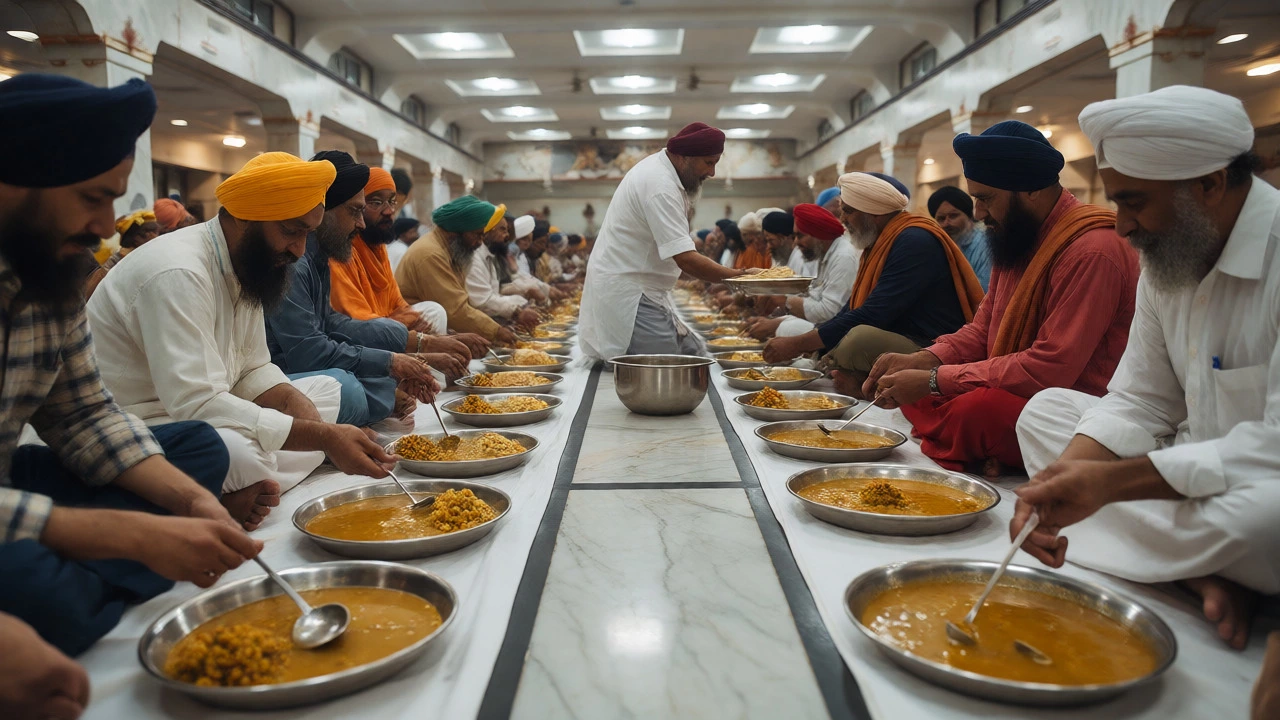
If you want to understand Sikh eating habits, look no further than the Langar. This is the community kitchen found in every Gurdwara (Sikh temple). Here, thousands of people sit on the floor together and share a meal, regardless of caste, creed, or wealth.
Here is the critical detail: Langar is almost always lacto-vegetarian. No meat, no fish, and yes, usually no eggs. Why? Because the Langar must be acceptable to everyone. A Hindu might not eat beef. A Muslim might not eat pork. A Jain might avoid root vegetables. To ensure that every guest can eat without offense, the kitchen sticks to the safest common denominator: vegetables, lentils, dairy, and grains.
This practice has had a massive influence on home cooking. When you grow up seeing your family cook only vegetarian meals for community service, those habits stick. Even if a Sikh family eats eggs at home, they might exclude them from special occasions or gatherings to respect the broader community norms. The Langar sets the standard for what is considered "clean" and respectful food within the faith.
Amritdhari vs. Non-Amritdhari Sikhs
Not all Sikhs follow the same rules. There is a significant difference between those who have taken Amrit (initiation) and those who haven’t. An Amritdhari Sikh is someone who has undergone the Khanda di Pahul ceremony. These individuals follow the Code of Conduct (Rehat Maryada) strictly.
The Rehat Maryada explicitly forbids eating Kutha meat (meat slaughtered in a ritualistic manner like Halal or Kosher). It also discourages intoxicants. While it doesn’t ban eggs outright, most Amritdhari Sikhs interpret the spirit of the code to mean a vegetarian lifestyle. They view their bodies as temples of the divine, and putting animal products inside is seen as polluting that temple.
On the other hand, a non-Amritdhari Sikh might have a much looser relationship with food. Some may eat chicken, fish, and eggs without guilt. Others might be vegetarian for cultural reasons rather than religious ones. This diversity means you can’t generalize. You might meet a Sikh accountant in Sydney who loves omelets and a Sikh doctor in Punjab who hasn’t touched an egg since childhood.
Cultural Habits vs. Religious Law
We need to separate religion from culture. Much of what we think is "religious rule" is actually centuries-old Punjabi tradition. In rural Punjab, where Sikhism originated, agriculture was the backbone of survival. Cows were sacred helpers, not just livestock. Killing a cow for meat was economically impractical and culturally taboo. Chickens, however, were kept for eggs.
Historically, poor families might eat eggs when they couldn’t afford milk or paneer. But as Sikh identity solidified, especially during the British colonial period, leaders pushed for stricter codes to distinguish Sikhs from others. Vegetarianism became a marker of discipline and purity. Over time, the cultural habit of avoiding eggs merged with religious sentiment.
Today, many young Sikhs growing up in Western countries like Australia, Canada, or the UK struggle with this. They see eggs as a cheap, high-protein source. They wonder, "Is my grandfather’s rule really about God, or is it just old-fashioned?" This generational gap is real. Some choose to stay vegetarian to honor their heritage. Others switch to veganism or include eggs, arguing that modern farming makes the "life" argument less relevant.

Nutritional Concerns and Modern Adaptations
Let’s talk practicality. If you cut out eggs, where do you get your protein? This is a common concern for anyone adopting a Sikh-style vegetarian diet. Fortunately, Indian cuisine is rich in alternatives.
Paneer (Indian cottage cheese), Dal (lentils), chickpeas, and yogurt provide ample protein. Traditional dishes like Rajma Chawal (kidney beans with rice) or Palak Paneer (spinach with cheese) are nutritional powerhouses. You don’t need eggs to survive or thrive.
Moreover, the rise of plant-based diets globally has made this easier. Today, a Sikh teenager in Sydney can buy tofu, tempeh, or pea-protein shakes. The stigma of being "just a vegetarian" is fading. In fact, many non-Sikhs are adopting similar diets for environmental reasons. The Sikh way of eating-simple, fresh, and compassionate-is gaining mainstream appeal.
Common Misconceptions About Sikh Diets
- Misconception: All Sikhs are vegetarians.
Reality: Many Sikhs eat meat, provided it is not Halal or Kosher (Jhatka meat). - Misconception: Eating eggs is a sin.
Reality: It’s generally discouraged but not universally forbidden by scripture. - Misconception: Sikhs never drink alcohol.
Reality: Amritdharis abstain completely, but cultural drinking exists among some groups.
How to Respect Sikh Dietary Preferences
If you’re hosting a Sikh friend or partner, here’s how to navigate the menu without awkwardness. First, ask. Don’t assume. Some Sikhs are strict vegans. Others eat fish. Some love eggs. A simple "Are you okay with eggs?" saves everyone trouble.
When cooking, focus on flavor over restriction. Indian spices are incredible. Use cumin, coriander, turmeric, and garam masala to bring depth to vegetable dishes. Avoid using chicken stock as a base for soups or gravies unless you know your guest eats it. Stick to vegetable broth or water.
Remember, food is social glue. Sharing a meal is about connection, not just nutrition. By respecting their choices, you show respect for their identity. And honestly, once you taste a well-made Aloo Gobi or Dal Makhani, you might wonder why you ever needed eggs anyway.
Can Sikhs eat chicken?
Yes, many Sikhs eat chicken. However, they typically avoid Halal or Kosher meat. The preferred method of slaughter for meat-eating Sikhs is Jhatka, where the animal is killed instantly with a single strike, ensuring minimal suffering.
Why is Langar always vegetarian?
Langar serves people from all backgrounds, including Hindus, Muslims, Jains, and Buddhists. A vegetarian meal ensures that everyone can eat together without violating their own religious or cultural dietary restrictions, promoting unity and equality.
Do Sikh scriptures explicitly forbid eggs?
No, the Guru Granth Sahib does not explicitly mention eggs. The avoidance of eggs stems from interpretations of Ahimsa (non-violence) and the desire to maintain a pure, compassionate lifestyle, rather than a direct textual commandment.
Is fish considered meat in Sikhism?
Fish is generally considered meat. Many Sikhs avoid fish along with other meats. However, practices vary by region and family tradition. Some coastal communities may have different customs, but the general trend in orthodox circles is to avoid animal flesh.
Can I serve eggs to a Sikh guest?
It depends on the individual. Strictly observant Sikhs, especially Amritdharis, will likely refuse eggs. More secular or liberal Sikhs might accept them. Always ask beforehand to be safe and respectful.