Paneer Texture Predictor & Guide
Will my paneer be soft or crumbly?
Key Takeaways for Perfect Paneer
- Avoid over-boiling the milk or adding acid too quickly.
- Use full-fat milk for the best protein-to-fat ratio.
- Don't over-press the cheese; too much weight squeezes out the moisture that keeps it soft.
- Cool the curds in warm water to prevent a rubbery or grainy skin.
The first thing to understand is that Homemade Paneer is a fresh, non-aged acid-set cheese made by curdling milk with a food-grade acid. Unlike aged cheeses, it doesn't undergo a fermentation process. Instead, it relies on the rapid denaturation of Casein, the primary protein in milk, which clumps together to form curds when the pH level drops. If those clumps are too small or too tight, you get a crumbly texture.
The Role of Temperature and Acid
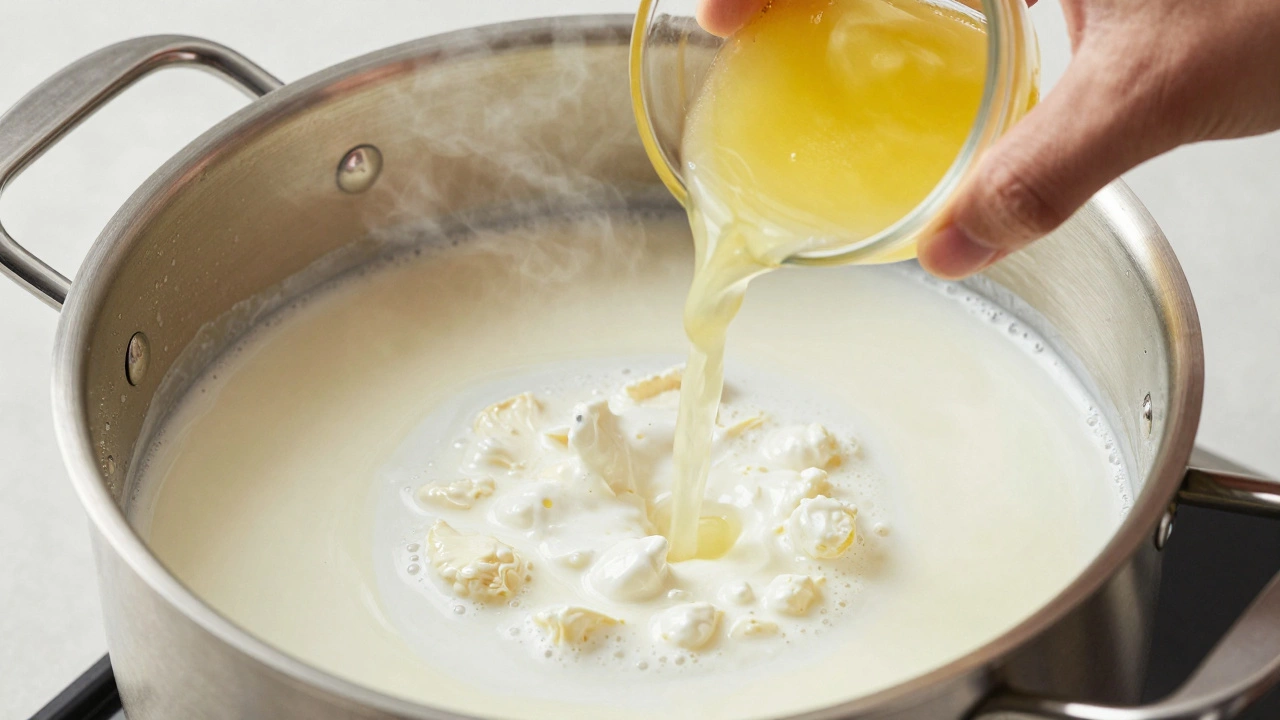
One of the biggest culprits for crumbly cheese is the temperature at which you add your acid. If you add Lemon Juice or Vinegar to milk that hasn't reached a full boil, the curds don't form strong enough bonds. Conversely, if you let the milk boil violently for too long, you might over-cook the proteins, making them tough and grainy.
Think of it like this: you want the milk to be just at the point of boiling over. When you add the acid, do it slowly. If you dump in a quarter cup of lemon juice all at once, the milk curdles instantly and unevenly. This creates a mix of large, rubbery clumps and tiny, sandy grains. Instead, stir in the acid one tablespoon at a time. This allows the casein proteins to migrate and link up more smoothly, resulting in a cohesive curd that stays together when sliced.
Why Fat Content Matters
If you're using skim or 2% milk, you're fighting a losing battle. Fat acts as a lubricant between the protein strands. In full-fat milk, the fat globules get trapped within the protein matrix, which prevents the curds from packing too tightly. Without that fat, the proteins bond too closely, squeezing out all the moisture and leaving you with a dry, brittle block.
| Milk Type | Protein Bond | Final Texture | Best Use Case |
|---|---|---|---|
| Whole Milk (3.5%+) | Flexible & Spaced | Soft, Creamy, Slicable | Palak Paneer, Shahi Paneer |
| Low Fat / 2% | Tight & Dense | Slightly Grainy | Crumbled in Salads |
| Skim Milk | Extremely Compact | Crumbly and Dry | Tofu-style substitutes |
The Pressing Process: The Fine Line Between Firm and Dry
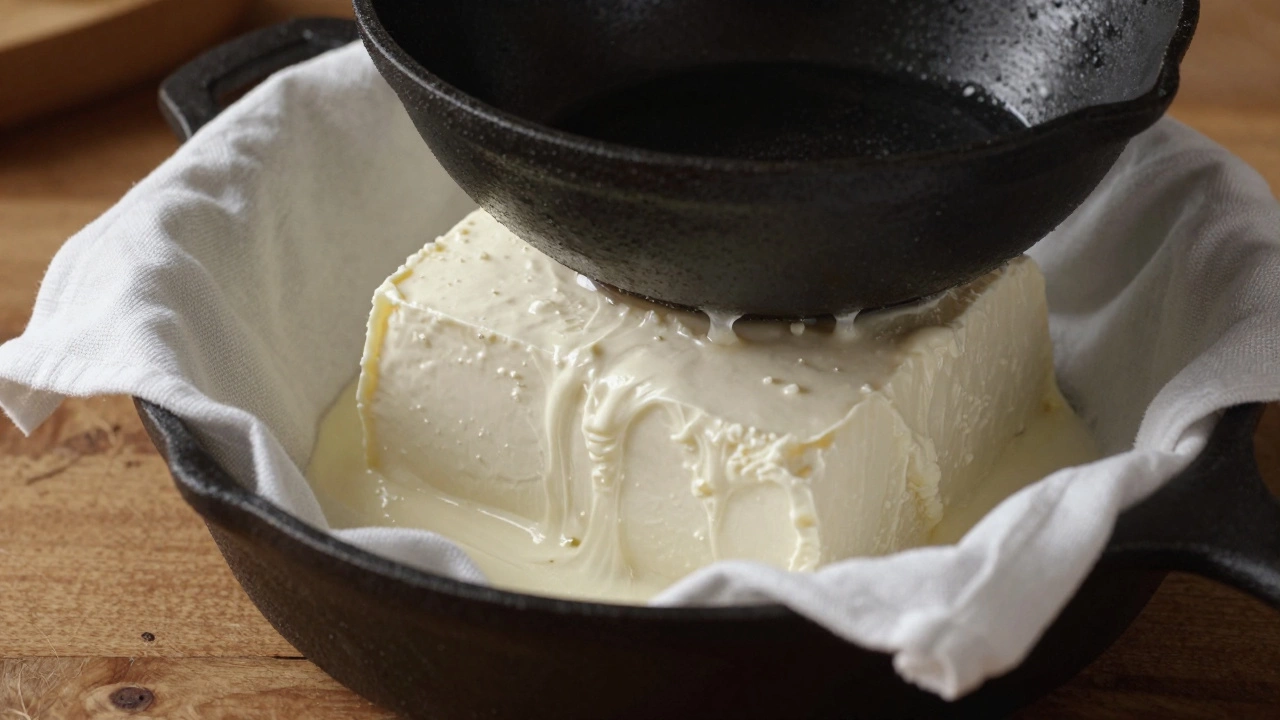
Pressing is where most people go wrong. You want a block that holds its shape, but if you leave it under a heavy cast-iron skillet for four hours, you're essentially dehydrating your cheese. When you remove too much whey, the structural integrity of the paneer collapses, leading to that dreaded crumbling effect when you try to cube it.
A pro tip is to check the paneer every 30 minutes. As soon as the block feels firm to the touch but still has a slight "give" (like a firm sponge), stop pressing. If you're using a Cheesecloth, make sure it's not wrapped too tightly, as this can create deep indentations and uneven density in the block, making some parts softer and others crumbly.
The Secret Step: The Warm Water Soak
Have you ever noticed that store-bought paneer is incredibly smooth? One trick they use is temperature control after the curds are formed. If you rinse your curds with cold water to stop the cooking process, you might accidentally shock the proteins, causing them to tighten and become grainy. Instead, rinse them with lukewarm water.
Even better, once the paneer is pressed and shaped, soak the block in a bowl of warm, salted water for 20 to 30 minutes before refrigerating. This re-hydrates the outer layer and relaxes the protein structure. It's a game-changer for those who find their homemade version too "stiff" compared to commercial brands.
Common Pitfalls to Avoid
- Using old milk: Milk that is very close to its expiration date has a higher acidity level. This can cause the paneer to curdle too fast and too harshly, leading to a grainy texture.
- Over-stirring: Once the curds have separated from the whey, stop stirring. If you keep agitating the mixture, you break the delicate protein bonds, turning your smooth cubes into small crumbs.
- High heat frying: If your paneer is already a bit crumbly, avoid searing it at extremely high temperatures. The sudden heat causes the remaining moisture to evaporate instantly, making the cheese even drier. Use a medium heat and a bit of Ghee for a golden crust without drying out the center.
Comparing Acidulants: Lemon vs. Vinegar
The type of acid you use changes the chemistry of the curd. White Vinegar is a stronger acid than lemon juice. Because it's more aggressive, it tends to create a firmer, slightly more brittle curd. If you're struggling with crumbly paneer, try switching to lemon juice or even Citric Acid powder. Lemon juice provides a gentler curdling process, which usually results in a softer, more cohesive block.
Can I fix paneer that is already crumbly?
Once the proteins have fully tightened and the moisture is gone, you can't truly "reverse" the texture to make it a sliceable block. However, you can save the dish. Instead of cubing it, crumble the paneer into a gravy (like Matar Paneer) or blend it with a little milk or cream to make a smooth paste for a filling. This incorporates the crumbly bits into the sauce so they aren't as noticeable.
Why does my paneer feel rubbery instead of crumbly?
Rubbery paneer is usually the result of overcooking the milk or using too much acid. When the proteins are overheated or exposed to too much acid, they bond too tightly, creating a "rubber band" effect. To avoid this, remove the pan from the heat the second the whey turns clear/yellowish and stop adding acid immediately.
Is it better to use raw milk or pasteurized milk?
Pasteurized whole milk works perfectly fine for most people. Raw milk can sometimes produce a creamier result due to the intact fat globule membranes, but for the sake of safety and consistency, high-quality store-bought whole milk is the standard. Just ensure it isn't "ultra-pasteurized" (UHT), as the extreme heat used in UHT processing can sometimes interfere with how the proteins clump together.
How long should I actually press the paneer?
Depending on the weight you use, pressing usually takes between 30 minutes to 2 hours. If you use a very heavy weight (like 5kg), 30-45 minutes is plenty. If you use a light weight (like a plate with a couple of cans), 2 hours might be needed. The goal is a firm block, not a dehydrated brick.
Does the type of lemon matter?
Freshly squeezed lemon juice is best because it has a natural balance of citric acid and water. Bottled lemon juice is often more concentrated and can be more acidic, which increases the risk of over-curdling and causing a grainier texture.
Next Steps for Your Kitchen
If you've mastered the soft block, try experimenting with different milks. Some people use a mix of cow's milk and a splash of heavy cream to get an even richer, buttery texture. If you're looking for a vegan alternative, look into the process of making Tofu using soy milk and Epsom salts, which follows a similar acid-set principle but requires different temperature controls to avoid a beany taste.