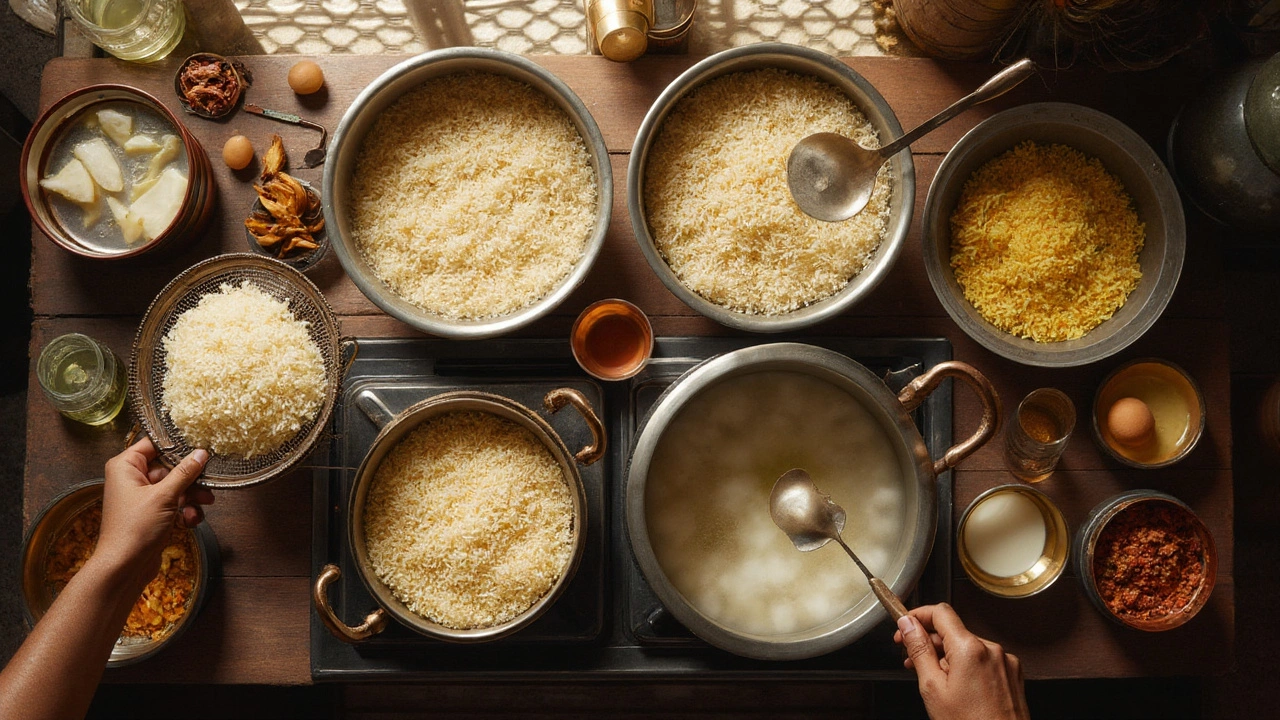
Biryani Rice Tips: How to Get Perfect Grain Every Time
When you're making biryani rice, the specific type and treatment of rice that gives biryani its signature long, separate, fragrant grains. Also known as biryani-grade basmati, it's not just any rice—it's the foundation of the whole dish. Skip the basics here, and even the best spices and meat won't save it. Most people think biryani is all about the spices, but the truth? It's the rice that holds the whole thing together. You can have perfect chicken, perfect yogurt, perfect saffron—but if the rice is mushy, sticky, or undercooked, you’re not eating biryani. You’re eating a confused mess.
The real biryani rice tips start long before you turn on the stove. First, you need the right rice. Not just any basmati—look for aged, long-grain basmati with a strong aroma. Store-bought rice labeled "for biryani" often works better than generic basmati because it’s been aged longer, which reduces moisture and helps grains stay separate. Soak it for 30 minutes before cooking. Don’t skip this. Soaking lets the grains absorb water evenly, so they cook uniformly without breaking. If you’re in a hurry, use warm water. Cold water takes longer, but either way, soaking is non-negotiable.
Then there’s the water ratio. Most recipes say "2 cups water to 1 cup rice," but that’s for regular rice. For biryani, you need less. Try 1.5 cups water per cup of soaked rice. Boil it fast, then drain it just before it’s fully cooked—about 70% done. This is called parboiling. The rice finishes cooking later, in the dum (steaming) pot, where it absorbs the aromas from the meat and spices. If you cook it all the way in the pot, it turns to paste. And don’t rinse it after soaking or parboiling—that washes away the starch that helps the grains cling gently to the spices without sticking together.
Another thing no one talks about? Salt. Add it to the boiling water, not after. Salted water seasons the rice from the inside out. A pinch of saffron soaked in warm milk goes in too—not just for color, but for flavor that lingers. And when you layer it with the meat, don’t press down. Gently spread it. Pressing squashes the steam pockets that make each grain fluffy.
These aren’t fancy chef tricks. These are the same methods used in homes across Lucknow, Hyderabad, and Delhi. The kind of tips passed down because someone once made a bad biryani and swore they’d never do it again. You’ll find posts below that break down exactly how to soak, parboil, layer, and steam your rice for the best results. Some will show you how to fix overcooked rice. Others will tell you why your rice sticks even when you follow the recipe. There’s even one on what happens if you use short-grain rice by accident—and why you should never do it again.
Forget everything you’ve heard about biryani being complicated. It’s not. It’s just precise. Get the rice right, and the rest follows. The spices, the meat, the garnish—they all depend on this one thing: rice that’s perfectly cooked, fragrant, and separate. That’s the real biryani secret. And below, you’ll find every practical tip you need to make it happen—no guesswork, no fluff, just what works.