Brown Chicken for Curry: How to Get Perfect Color and Flavor
When you cook brown chicken for curry, the process of searing chicken before simmering it in spices to build depth and color. Also known as browning meat for Indian curries, it’s not just about looks—it’s the foundation of flavor in almost every traditional North Indian and Punjabi-style curry. If you skip this step, your curry might taste fine, but it’ll lack that rich, deep, restaurant-style character that makes people ask for seconds.
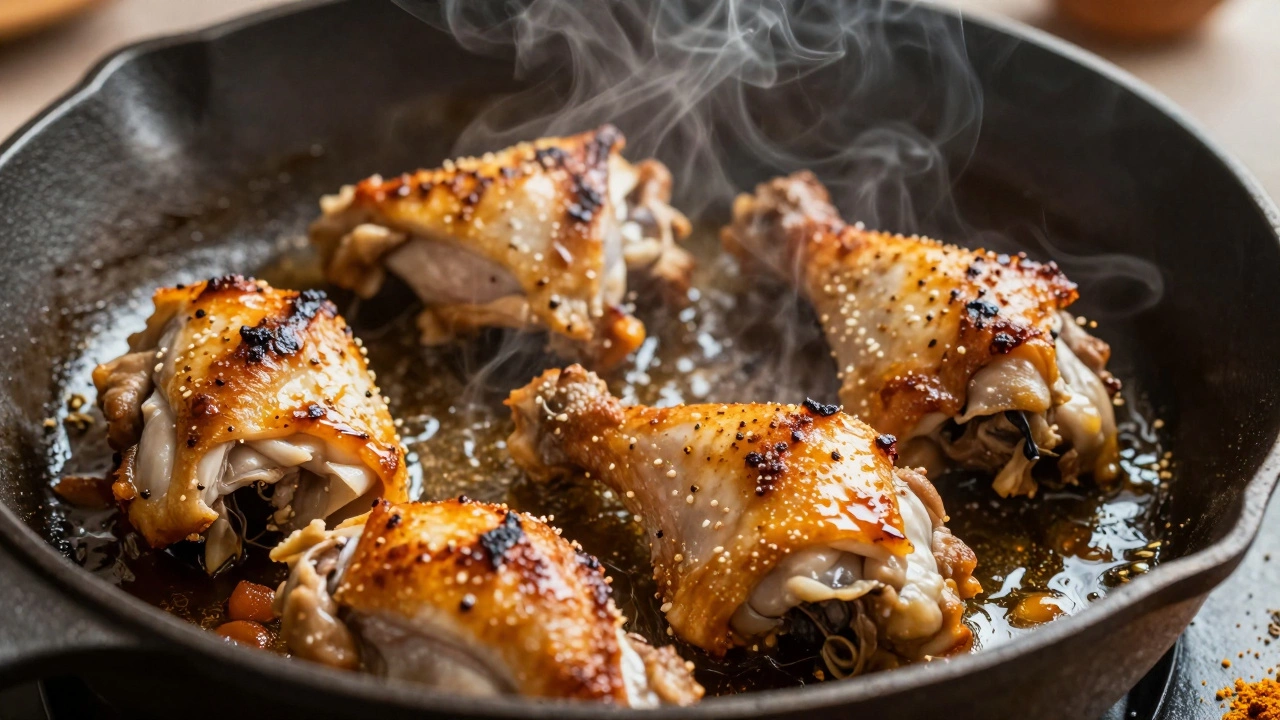
Why does browning matter? It’s called the Maillard reaction—when proteins and sugars on the surface of the chicken react with heat, they create hundreds of flavor compounds. That’s what gives your curry its savory, almost smoky base. Restaurants don’t just throw raw chicken into sauce. They heat oil, wait for it to shimmer, then add chicken pieces and let them sit without stirring for a full minute or two. You’ll hear a sizzle. You’ll see edges turn golden. That’s the sound of flavor building. Skip it, and your curry tastes like boiled chicken in spiced water.
Some people think browning chicken makes it dry. It doesn’t—if you don’t overcook it. The trick is to sear it fast on high heat, then remove it from the pan before adding onions and spices. Let the aromatics cook in the leftover browned bits (that’s called fond), then add the chicken back in to simmer gently. This keeps the meat tender and lets it soak up the spices slowly. It’s the same method used in chicken curry simmer time, the length of time chicken needs to cook gently in sauce to become tender and absorb spice flavors. Too short, and the chicken stays tough. Too long, and it falls apart. Browning first gives you control.
Related to this is the curry base, the foundational layer of fried onions, ginger-garlic paste, and spices that forms the backbone of Indian curries. Browning chicken adds another layer to that base. It’s not just about the spices you add—it’s about what’s already in the pan. The caramelized bits from the chicken mix with the spices, creating a more complex, layered taste that store-bought curry pastes can’t replicate.
Don’t confuse browning with burning. You want golden, not black. If your chicken turns dark brown or charred, you’ve gone too far. That bitterness ruins the whole dish. Keep the heat medium-high, don’t crowd the pan, and let each piece get its turn. If you’re cooking for a crowd, brown in batches. It takes five extra minutes, but it makes the difference between good and unforgettable.
You’ll find this technique in almost every post here that talks about chicken curry—whether it’s about Indian chicken dishes, traditional recipes from across India that use chicken as the main protein, often with regional spice blends, or how to make curry without cream. The method doesn’t change. The spices might. But the browning? That’s non-negotiable.
Look at the posts below. You’ll see real examples—how one cook got her curry to taste like her grandmother’s by just browning the chicken longer. How another fixed a bland curry by starting with seared chicken instead of raw. These aren’t tricks. They’re fundamentals. And they’re all right here, tested in home kitchens across India. No fluff. Just what works.