Dal Recipes: Simple, Nutritious Lentil Dishes for Every Day
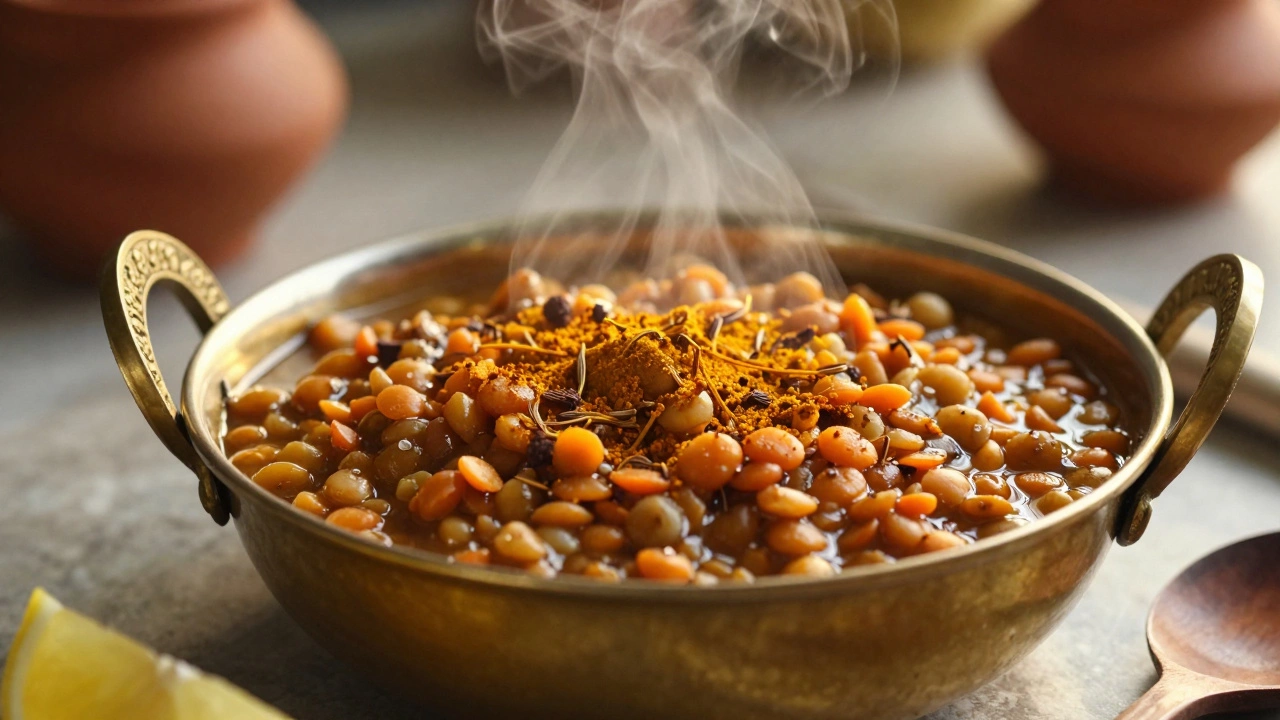
When you think of dal, a staple Indian dish made from cooked, spiced lentils. Also known as lentil curry, it’s the backbone of countless Indian meals—simple, filling, and packed with protein and fiber. Whether you’re eating it with rice, roti, or just a spoon, dal isn’t just food—it’s comfort in a bowl. But not all dals are the same. Some cook fast, others need soaking. Some are creamy, others stay firm. And the way you cook them—covered or uncovered, rinsed or not, with the right water ratio—makes all the difference.
What you put in your dal matters just as much as how you cook it. toor dal, a yellow lentil commonly used in South Indian sambar, is different from moong dal, a green lentil that’s easy to digest and great for quick meals. Then there’s chana dal, split chickpeas that hold their shape and add a nutty bite. Each has its own nutrition profile, cooking time, and best uses. You don’t need to buy fancy ingredients—just know which dal works for your stomach, your time, and your taste. And yes, rinsing dal isn’t always necessary, but skipping it when the lentils are dusty can leave grit in your food. So when do you rinse? When do you skip? The answer isn’t one-size-fits-all.
People often wonder why their dal turns out watery, mushy, or gassy. It’s not the recipe—it’s the technique. Covering the pot too early traps steam and makes dal soggy. Not soaking pulses means longer cooking and more bloating. Using the wrong water-to-dal ratio turns a creamy dish into soup. And cooking dal at night? That’s when digestion slows down, and what should be soothing becomes a problem. The good news? You can fix all of this with simple, smart steps. You don’t need to be a chef. You just need to know the basics: how much water, when to cover, which dal to pick, and how to make it digestible.
Below, you’ll find real, tested advice from people who cook dal every day. Learn why store-bought dal sometimes needs extra rinsing, how to get perfect texture without overcooking, and which lentils are the most nutritious for daily meals. You’ll also find fixes for common problems—like why your dal smells off, how to soften hard paneer when paired with dal, and whether you should add tomatoes or garlic at the start or end. This isn’t about fancy spices or complicated steps. It’s about getting the fundamentals right so your dal tastes better, digests easier, and keeps you fueled all day.