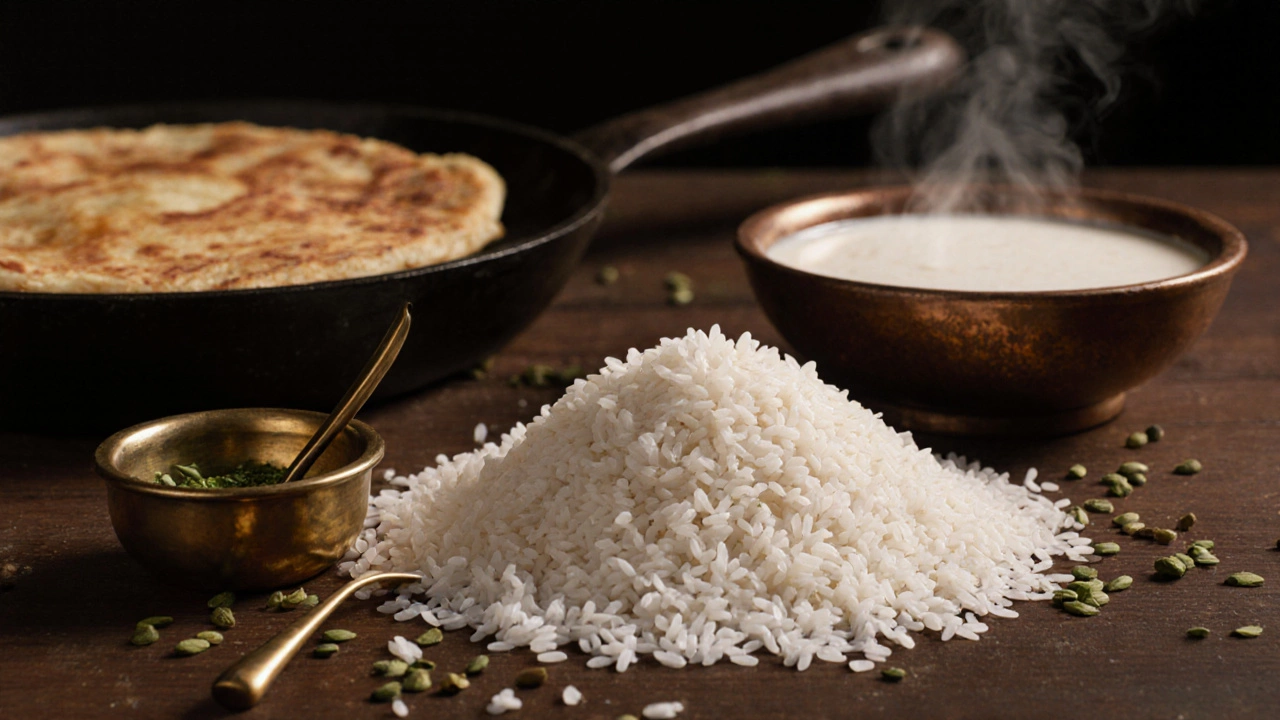
Dosa Rice: What It Is, Why It Matters, and How to Use It Right
When you think of a perfect dosa—crisp at the edges, soft inside, golden brown—it all starts with one thing: dosa rice, a short-grain, low-starch rice variety grown specifically for making South Indian fermented batters. Also known as idli rice, it’s not just any rice—it’s the foundation of one of India’s most loved breakfasts. Unlike long-grain basmati or sticky glutinous rice, dosa rice has just the right balance of starch and texture to ferment well, spread thin, and crisp up without turning gummy.
This rice doesn’t work alone. It’s paired with urad dal, hulled black lentils that add volume, fluffiness, and the magic of fermentation. Together, they create a batter that bubbles, rises, and transforms into something light and airy. You can’t substitute regular white rice and expect the same result—it won’t ferment properly, won’t spread easily, and the dosa will stick or stay doughy. Even if you skip fermentation (and yes, some posts here cover quick alternatives), using the right rice still makes a huge difference in texture and flavor.
The science is simple: dosa rice has less amylose, which means it breaks down more easily during soaking and grinding, letting the natural yeasts and bacteria do their job. That’s why traditional recipes call for soaking it overnight with urad dal. The ratio matters too—usually 3 parts rice to 1 part dal. Too much dal and the dosa turns rubbery; too little and it cracks or won’t hold together. Store-bought dosa rice blends often include a bit of parboiled rice for extra crispness, but pure dosa rice gives you the cleanest flavor.
You’ll find this rice in every South Indian kitchen, from Tamil Nadu to Kerala. It’s not just for dosas—it’s used for idlis, uttapams, and even some savory pancakes. If you’ve ever wondered why your homemade dosas don’t taste like the ones at the local stall, the answer might be in the rice you’re using. Most people don’t realize that rice isn’t interchangeable in Indian cooking. What works for pongal won’t work for dosa.
Some of the posts below dive into what happens when you skip fermentation, how to fix hard store-bought dosas, and whether you can use leftover rice. Others compare rice types, explain soaking times, and even show how to store batter for days. Whether you’re trying to make your first dosa or you’ve been making them for years, the right rice changes everything. You don’t need fancy tools or long hours—just the right grain, the right mix, and a little patience.