Essential Spices for Curry: The Core Flavors That Make Indian Curries Unforgettable
When you think of essential spices for curry, the foundational blend of ground seeds, roots, and pods that define Indian curries. Also known as curry masala, it’s not one single spice—it’s a careful balance of heat, earthiness, and aroma that turns simple ingredients into something unforgettable. You don’t need a shelf full of exotic powders. Most Indian kitchens rely on just five or six core spices, used in different ratios depending on the region, the protein, and the time of day. These aren’t just seasonings—they’re the soul of the dish.
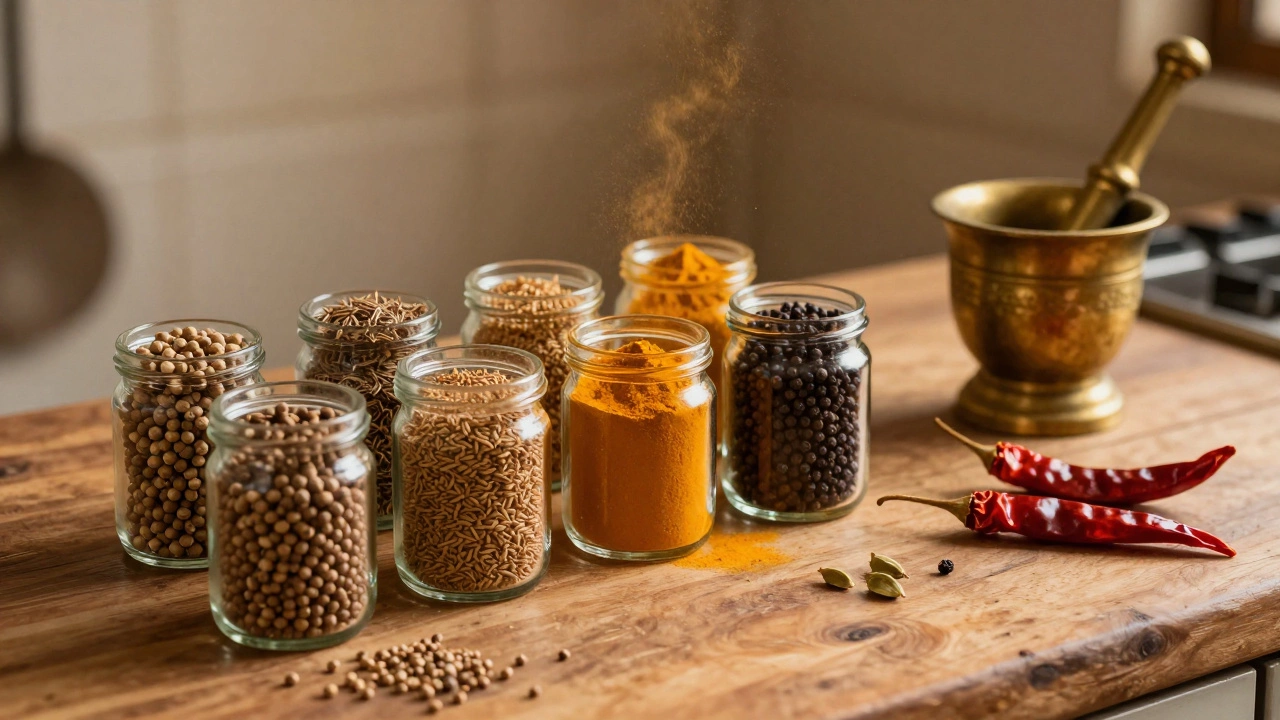
Take turmeric, a bright yellow root powder with anti-inflammatory properties and a mild earthy bitterness. It’s the color base of most curries, but it does more than dye the dish—it adds depth and helps tenderize meat. Then there’s cumin, a warm, nutty seed that’s toasted or ground to release its smoky fragrance. It’s the first spice you’ll smell when oil heats up in a pan. And coriander, the ground seed of the cilantro plant, with a citrusy, slightly sweet note that softens the sharper edges of other spices. Together, these three form the holy trinity of Indian curries. Add a pinch of red chili for heat, and maybe a touch of fenugreek for complexity, and you’ve got the base of dozens of dishes—from chicken curry to chana masala.
What makes these spices work isn’t just what’s in the jar—it’s how you use them. Toasting cumin seeds in hot oil before adding onions? That’s not a step you skip. Adding turmeric too late? You’ll taste the raw bitterness. The difference between a flat curry and a rich one often comes down to timing, temperature, and sequence. That’s why so many posts here focus on how to build flavor layer by layer—like browning chicken before adding spices, or simmering curry long enough to let the oils meld. It’s not magic. It’s chemistry you can learn in your own kitchen.
You’ll find posts here that break down exactly which spices go into biryani versus tikka masala, why store-bought curry powder often falls flat, and how to fix a bland curry with just one extra spice. There’s even a guide on how to make your own curry blend from scratch—no pre-mixed packets needed. These aren’t recipes for experts. They’re for anyone who’s ever wondered why their curry didn’t taste like the one at the local restaurant. The answer isn’t complicated. It’s in the spices. And once you know which ones matter, and how to use them, you’ll never reach for a jar of curry paste again.