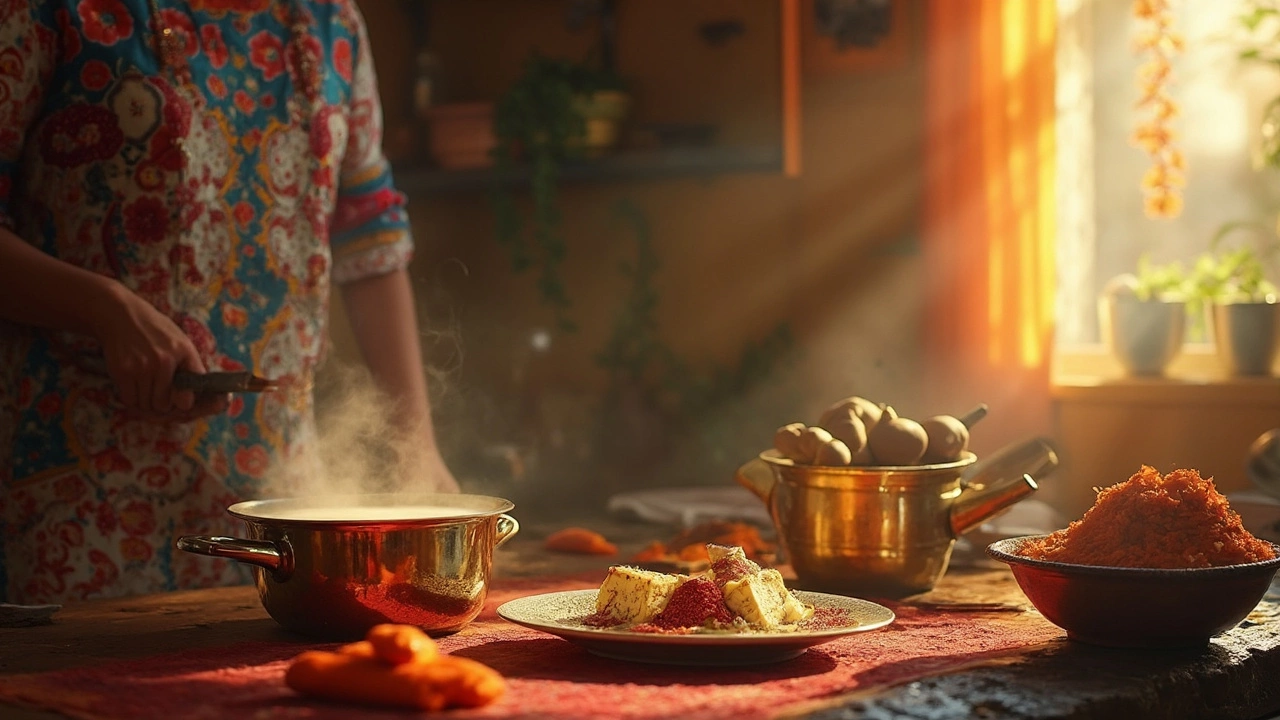
Milk in Indian Cooking: How It Shapes Paneer, Curries, and Sweets
When you think of milk, a foundational dairy ingredient in Indian households used daily for cooking, baking, and drinking. Also known as doodh, it's not just a drink—it's the base for everything from creamy curries to hand-spun sweets. In Indian homes, milk isn't stored for its shelf life—it's transformed. Turned into paneer, fermented into yogurt, reduced into khoya, or boiled down into rasgulla syrup, milk is the silent engine behind countless dishes.
Take paneer, a fresh, unaged cheese made by curdling milk with lemon juice or vinegar. Also known as Indian cottage cheese, it's the star of tikka masala, palak paneer, and even street snacks like paneer pakoda. You don’t buy paneer—you make it, often from leftover milk that’s just starting to sour. That’s why posts like "Can You Use Spoiled Milk to Make Paneer?" aren’t just curious—they’re practical. The line between fresh and spoiled milk is thin, and Indian kitchens know how to use both. Then there’s Indian sweets, desserts built on reduced milk, jaggery, and cardamom, often made without any cream or butter. Also known as mithai, these treats rely on slow-cooked milk solids called khoya or mawa, which can take hours to prepare. No machine, no additives—just heat, time, and milk.
Milk doesn’t just make cheese or candy. It thickens gravies, softens spices, and balances heat in dishes like butter chicken or kheer. Even when it’s not the main ingredient, it’s the glue holding flavors together. Store-bought paneer often fails because it’s made with powdered milk or additives—real paneer starts with fresh, full-fat milk you can taste. And if you’ve ever wondered why your dal doesn’t pair well with milk-based sides, it’s because digestion timing matters. That’s why you’ll find posts on when to eat dal, how to soften paneer, and why some sweets are better after a long simmer.
What you’ll find below isn’t just a list of recipes. It’s a map of how milk moves through Indian kitchens—how it’s saved, transformed, and trusted. From using slightly sour milk to make paneer to knowing why store-bought versions turn hard, every post here answers real questions from real cooks. No fluff. Just the facts you need to use milk the Indian way—smart, simple, and never wasted.