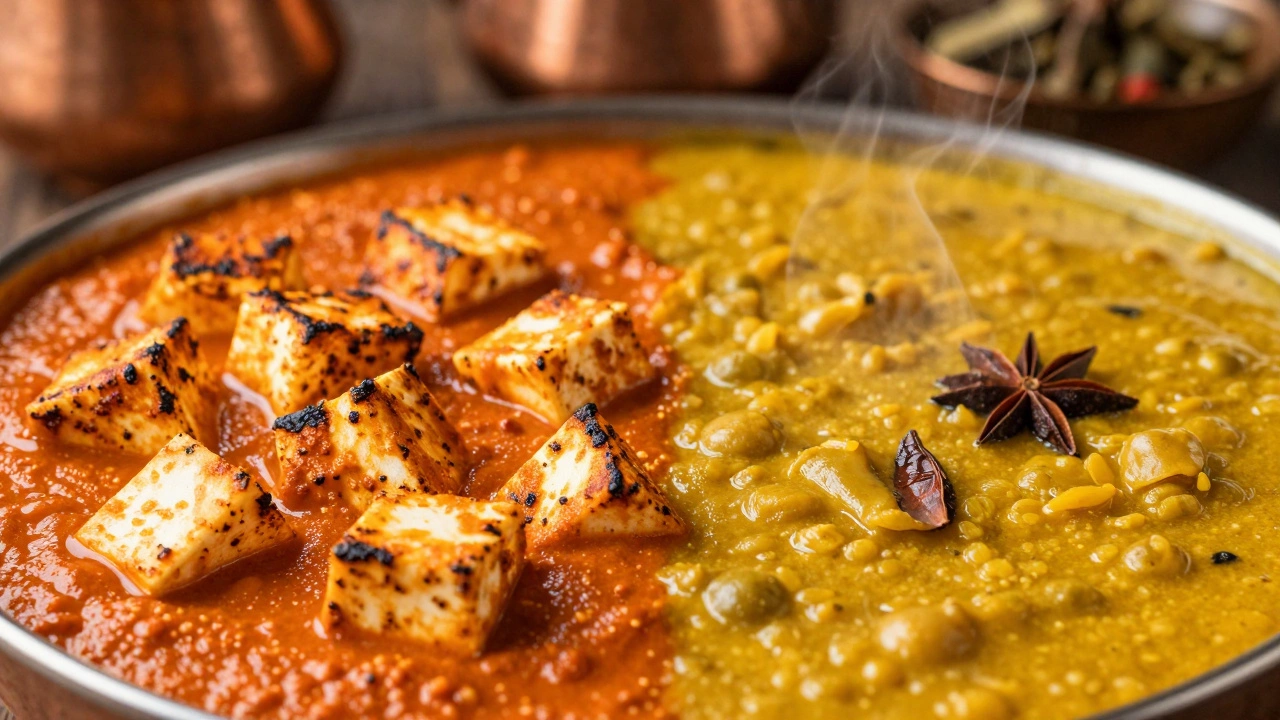
Paneer Tikka Masala: The Creamy Indian Classic You Can Make at Home
When you think of paneer tikka masala, a rich, creamy Indian curry made with grilled cubes of paneer in a spiced tomato-based sauce. Also known as tikka masala, it’s one of the most popular Indian dishes worldwide—not because it’s fancy, but because it’s deeply satisfying. This dish isn’t just restaurant fare; it’s a home kitchen staple when made right.
What makes paneer tikka masala work isn’t just the sauce—it’s the paneer, a fresh, non-melting Indian cheese made by curdling milk with lemon juice or vinegar. Also known as Indian cottage cheese, it soaks up flavor like a sponge and holds its shape even in thick sauces. But here’s the catch: store-bought paneer often turns rubbery. That’s why so many of the posts here focus on how to make soft paneer at home or how to fix hard store-bought pieces. And if you’ve ever wondered if you can use spoiled milk to make paneer? The answer is yes—if it’s safely sour, not rotten. The sauce? It’s built on tomatoes, garlic, ginger, and spices like cumin, coriander, and garam masala. Cream or yogurt adds richness, but you don’t need heavy cream to get that restaurant-style texture.
Many people think tikka masala is just a spicy red curry, but the real magic is in the balance. Too much heat, and you lose the creamy depth. Too little spice, and it’s just tomato sauce with cheese. The best versions have a slight smokiness from the grilled paneer—something you can mimic at home with a grill pan or even a broiler. And if you’re worried about calories, you’re not alone. Several posts break down how to make tikka masala healthy, by using low-fat yogurt, skipping sugar, and choosing lean paneer without losing flavor. It’s not about cutting out taste—it’s about cutting out junk.
You’ll also notice how often paneer and curry come up together in the posts below. Why? Because paneer tikka masala isn’t an island. It’s connected to how you cook dal, how you store paneer, and even how you make chutney to go with it. The same spices that flavor your curry show up in your chutney. The same storage mistakes that ruin paneer after five days will wreck your leftovers. And if you’ve ever eaten paneer at night and felt bloated, you’re not imagining it—digestion matters, even with creamy dishes.
What you’ll find here isn’t just recipes. It’s the real talk behind the dish: how to get that perfect texture, how to avoid the watery mess, what spices make the difference, and why some versions taste like they came from a Delhi street stall while others taste like cardboard. You’ll learn how to make paneer from scratch, how to fix it if it turns out hard, and how to turn your leftover sauce into something new the next day. This isn’t about following a rigid recipe. It’s about understanding the ingredients, the process, and the little tricks that turn good into great.