Rice for Dosa Batter: Best Types, Ratios, and Tips for Perfect Fermentation
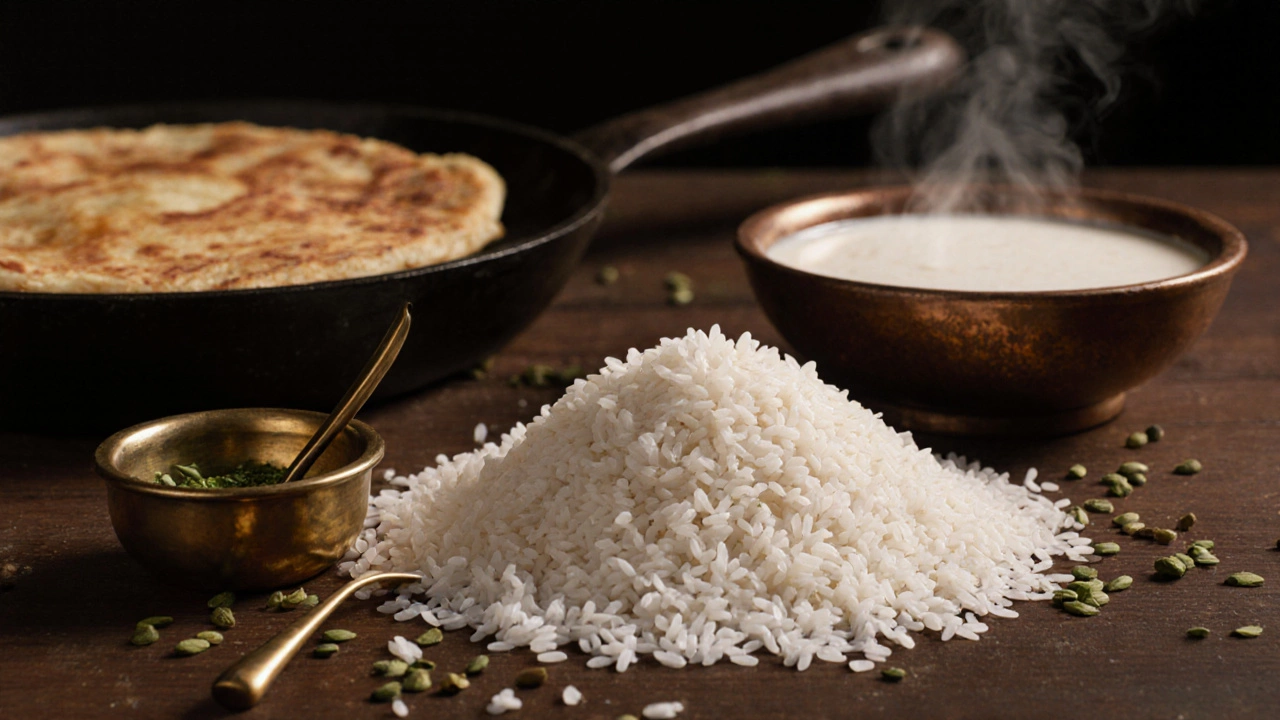
When you're making dosa batter, the rice, a key grain used in South Indian fermented batters to create light, crispy crepes. Also known as idli rice, it's not just any rice—it's a specific type that ferments well, breaks down easily, and gives the right texture. Most people grab whatever rice is in the cupboard and wonder why their dosas turn out sticky or dense. The truth? You need the right rice. Not basmati. Not jasmine. Not long-grain white rice. You need short-grain, parboiled, or idli rice—the kind that’s been steamed and dried before milling. This process changes the starch structure, making it ideal for fermentation and crispness.
The fermentation, a natural process where bacteria and yeast break down sugars in the batter to produce gas and tangy flavor. Also known as natural leavening, it’s what turns a thick paste into airy, bubbly dosa batter depends entirely on the rice. If your rice is too polished or too starchy, the microbes can’t do their job. That’s why recipes always say to use a 3:1 or 4:1 ratio of rice to urad dal. The dal adds protein and helps trap gas, but the rice gives the structure. Too much dal? Your dosa will be rubbery. Too little rice? It won’t hold shape. And if you use regular white rice, you’ll get flat, gummy results—even after 12 hours of waiting. Store-bought dosa mixes often fail because they use cheap, low-quality rice. Real flavor and texture come from the right grain.
What about soaking? Always soak the rice and dal separately. Soaking the rice for 4-6 hours softens it enough for grinding, but doesn’t make it mushy. Over-soak it, and you’ll end up with a watery batter that won’t ferment properly. Under-soak it, and your grinder will struggle, leaving bits of rice that ruin the texture. The urad dal, a black lentil used in South Indian cooking to add protein and help batter rise. Also known as black gram, it’s the fermentation engine in dosa batter should be soaked for the same time—no more, no less. Then grind them separately, mix, and let the batter rest in a warm spot. If your kitchen is cold, wrap the bowl in a towel. Heat speeds up fermentation. Cold kills it. That’s why dosas in Kerala taste different than in Delhi—it’s not just the spice, it’s the climate and the rice.
You’ll find posts below that talk about making dosa without fermentation—using baking powder or vinegar. Those work in a pinch, but they’re not real dosa. Real dosa comes from time, patience, and the right rice. The posts here cover everything from how to choose rice at the store, to why parboiled rice is better than raw rice, to what happens if you use brown rice or broken rice. Some even explain how to fix a batter that didn’t ferment. This isn’t theory. It’s what works in homes across Tamil Nadu, Karnataka, and Andhra. If you’ve ever thrown out a batch of bad dosa batter, these posts will save you the next one.