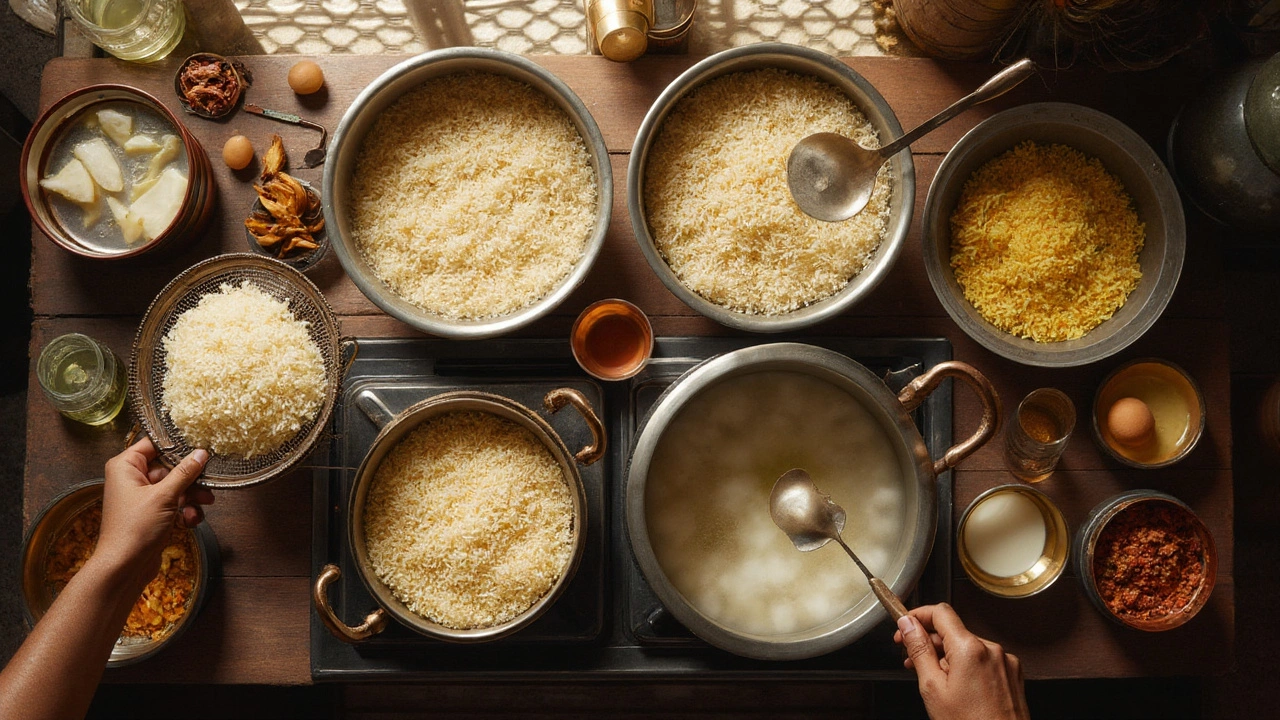
Soak Rice for Biryani: Why It Matters and How to Do It Right
When you're making soak rice for biryani, the process of soaking basmati rice before cooking to improve texture and reduce cooking time. It's not just tradition—it's science. Skipping this step might seem like a time-saver, but it’ll cost you in flavor and texture. Unsoaked rice cooks unevenly, stays too firm in the center, or turns mushy on the outside. That’s not biryani—that’s a rice accident.
Basmati rice, a long-grain aromatic rice native to India and Pakistan, prized for its fragrance and elongation when cooked. Also known as fragrant rice, it’s the backbone of every great biryani. But even the best basmati won’t deliver its full potential if you toss it straight into boiling water. Soaking helps the grains absorb water slowly, so they cook evenly and stay separate, not sticky. This matters because biryani relies on distinct, fluffy grains that hold up under layering and steaming. If your rice turns to paste, your whole dish collapses. And it’s not just about texture. Soaked rice cooks faster, which means less time over the heat and less risk of overcooking your meat or veggies layered underneath.
Rice preparation, the steps taken before cooking rice to optimize its final texture, flavor, and digestibility. This includes rinsing, soaking, and sometimes salting. For biryani, rinsing removes excess starch (which causes clumping), and soaking—usually 30 minutes in lukewarm water—is non-negotiable. Some cooks soak for up to an hour, especially if they’re using older rice. The grain should feel slightly softer but still firm to the bite. Test it: pinch a grain. If it gives easily, it’s ready. Don’t soak it overnight. That’s for idli batter. Biryani rice needs just enough time to hydrate, not turn into soup.
Think of soaking like prepping a canvas before painting. You’re not adding flavor—you’re setting the stage. The spices, the meat, the saffron milk—they all shine when the rice is perfect. And if you’ve ever bitten into a biryani where the rice was crunchy in the middle or soggy on top, now you know why.
You’ll find posts here that dig into how to pick the right basmati, how long to soak it based on age and brand, and even what happens if you forget. Some talk about rinsing rice first, others about using salted water. One even compares soaked vs unsoaked rice side by side—no guesswork, just results. You’ll also see how soaking ties into bigger ideas like digestion, cooking time, and why some people skip it (and regret it later). This isn’t about following a rule—it’s about understanding why the rule exists. And when you do, your biryani won’t just taste better. It’ll feel like it was made by someone who actually knows what they’re doing.