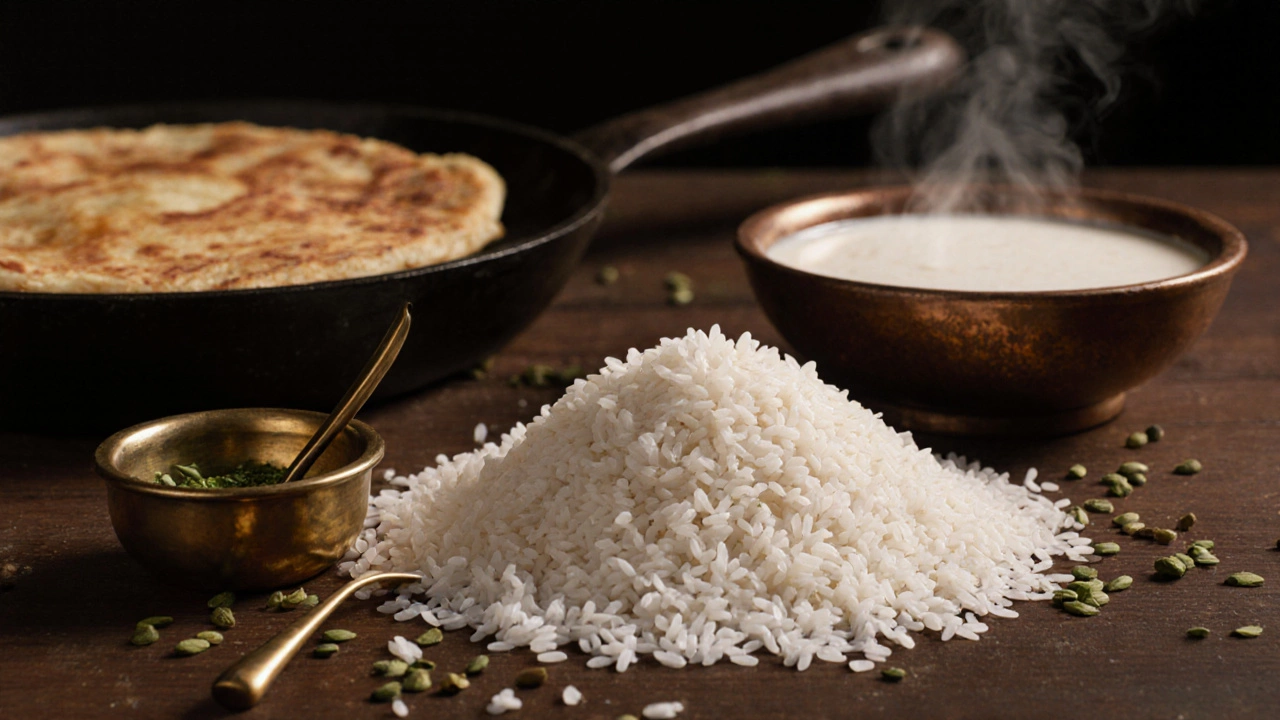
Traditional Dosa Rice: What It Is, Why It Matters, and How to Use It
When you make dosa, the batter doesn’t just come from any rice—it comes from traditional dosa rice, a short-grain, low-starch rice variety grown specifically for fermentation in South India. Also known as idli rice, it’s not the same as basmati or jasmine rice. This rice breaks down just right during soaking and fermentation, giving dosa its signature crisp edges and soft center. If you use regular long-grain rice, your batter won’t ferment properly, the dosa will stick to the pan, and you’ll end up with something flat and gummy.
Traditional dosa rice works because of its unique starch structure. It has less amylose and more amylopectin than other rices, which means it absorbs water slowly and releases it gently during cooking. That’s why it pairs perfectly with urad dal, a black lentil that’s soaked, ground, and mixed with rice to create the airy, bubbly texture of authentic dosa batter. Together, they form a natural fermentation team: the rice feeds the wild yeast, and the dal provides protein that traps air. You can’t substitute one for the other and expect the same result. Even fermented rice, a broader term that includes any rice used after soaking and resting, isn’t the same if it’s not made with the right rice variety.
Most people think any rice will do—but if you’ve ever tried making dosa with regular supermarket rice, you know it doesn’t work. Store-bought rice is often polished too much, losing the natural enzymes needed for fermentation. Traditional dosa rice is usually sold in Indian grocery stores as "idli rice" or "dosa rice," sometimes labeled as "parboiled" or "boiled rice." It’s not fancy, but it’s essential. Even in India, people who make dosa daily buy it in bulk by the sack. This isn’t a trend—it’s a tradition built on decades of trial and error.
What’s in your batter matters more than the time you let it sit. You can ferment for 12 hours or 24 hours, but if the rice isn’t right, you’re just waiting for nothing. The best dosa batter has a balance: 3 parts rice to 1 part urad dal, soaked separately, ground to a smooth paste, then mixed and left to rise. No baking powder. No shortcuts. Just rice, dal, salt, and time.
That’s why the posts below dive into exactly this—how to pick the right rice, how to fix a failed batter, how to make dosa without fermentation when you’re in a hurry, and why store-bought batter often fails. You’ll find real answers from people who’ve made hundreds of dosas, not just read about them. Whether you’re troubleshooting a sticky pan or wondering why your dosa won’t crisp up, the solutions are all here. No fluff. Just what works.