Indian Sweets: Types, Sweeteners, and How They're Made
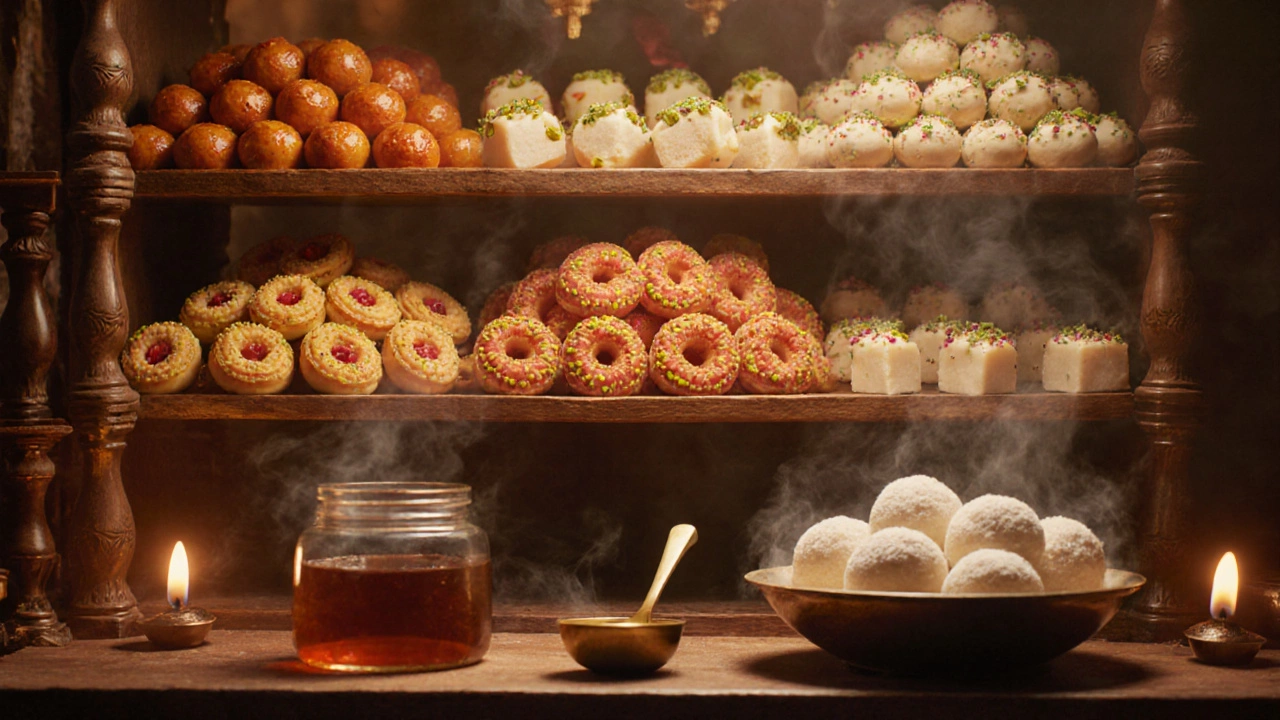
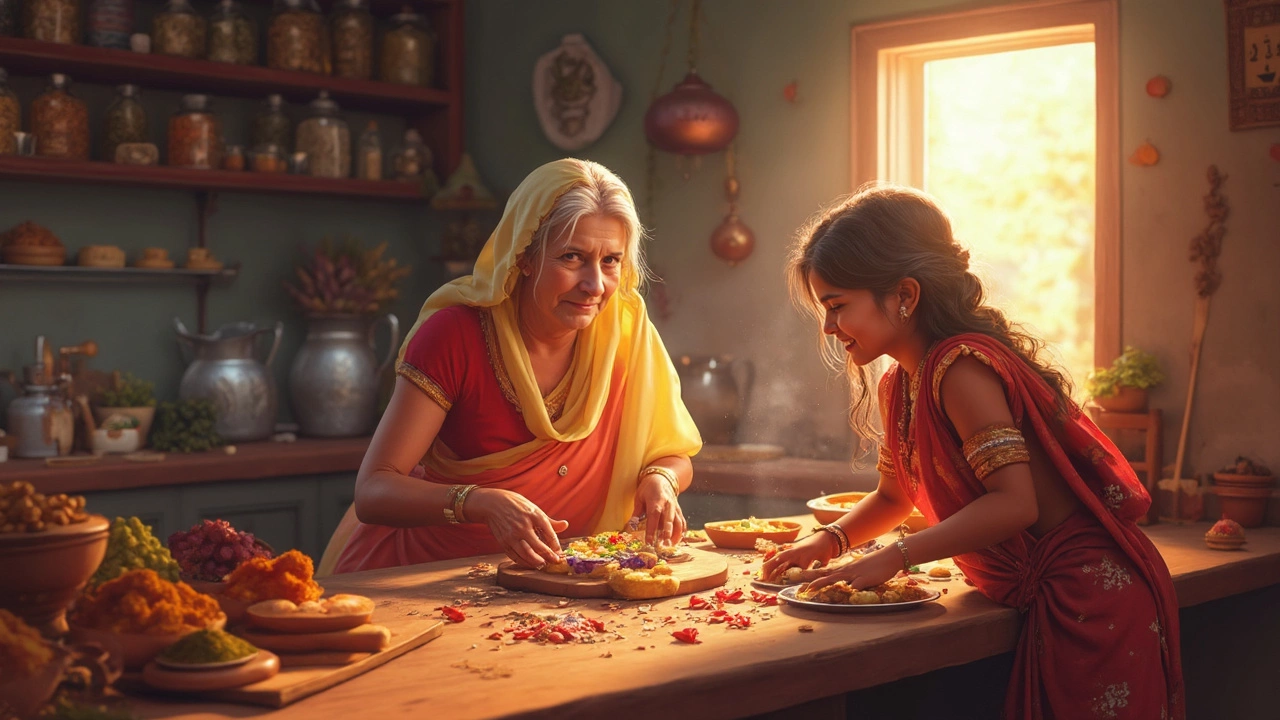
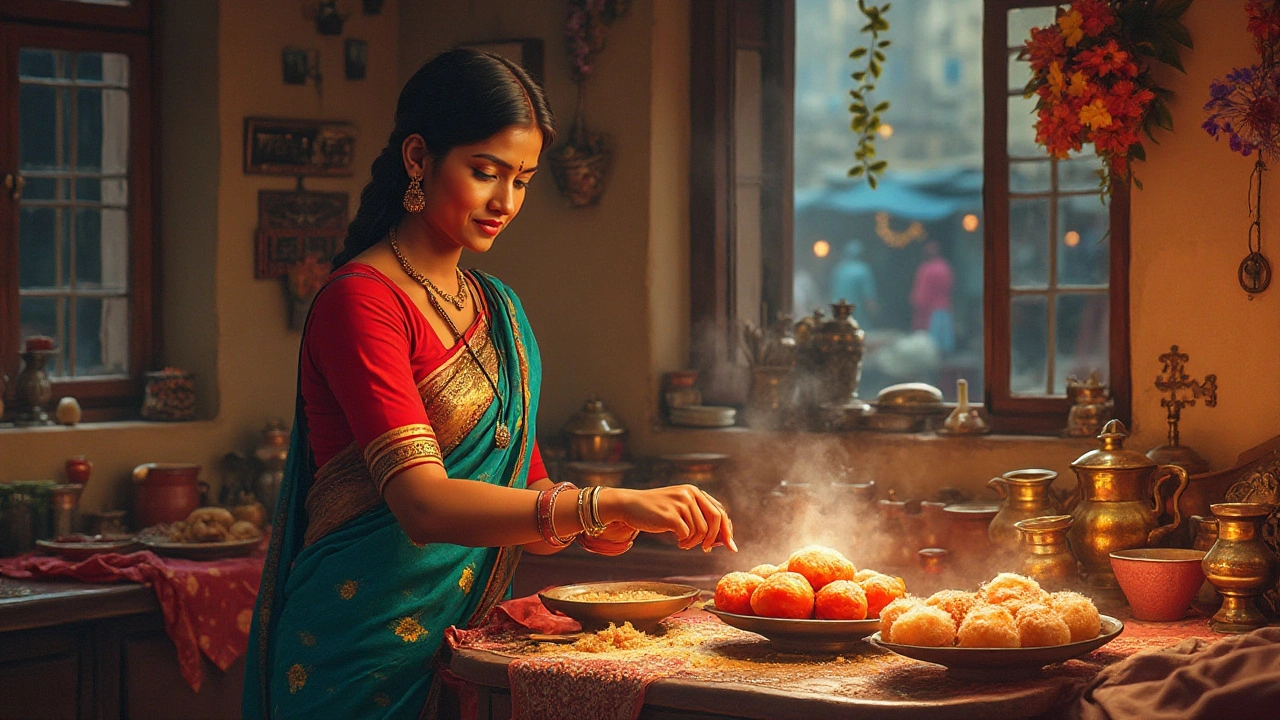
When you think of Indian sweets, traditional desserts made with milk, sugar, and spices, often served at celebrations and festivals. Also known as mithai, they're not just sugar—they're culture, memory, and手艺 wrapped in syrupy layers. These aren't the same as Western cakes or cookies. Indian sweets are slow-cooked, often dairy-based, and shaped by regional tastes—from the cardamom-kissed gulab jamun of the north to the coconut-dusted mysore pak of the south.
What makes them different isn’t just the taste—it’s what sweetens them. Many still use jaggery, unrefined cane sugar with a deep molasses flavor and minerals, instead of white sugar. Others rely on khoya, milk solids reduced for hours until thick and creamy, or even honey, a natural sweetener used in older recipes for its floral notes and digestive benefits. These aren’t just substitutes—they’re the backbone of texture and flavor. Store-bought versions often skip these for cheap syrup and preservatives, which is why homemade ones taste richer and last longer without going bad.
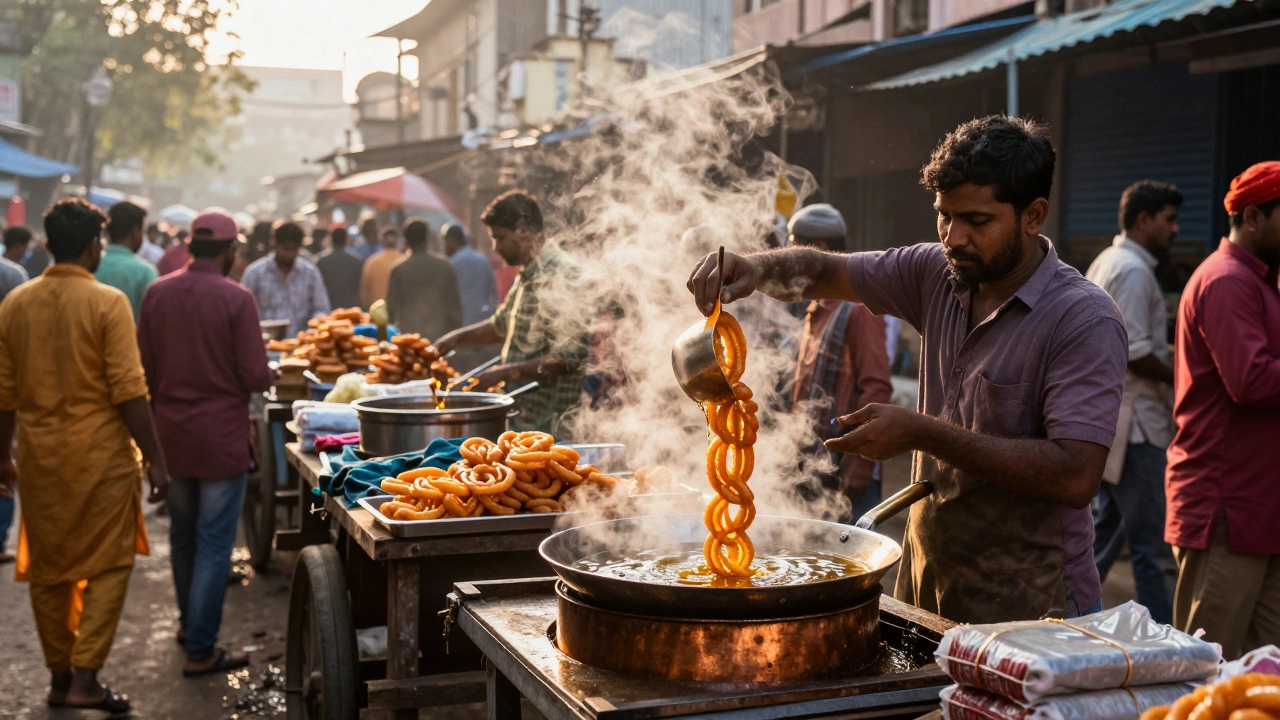
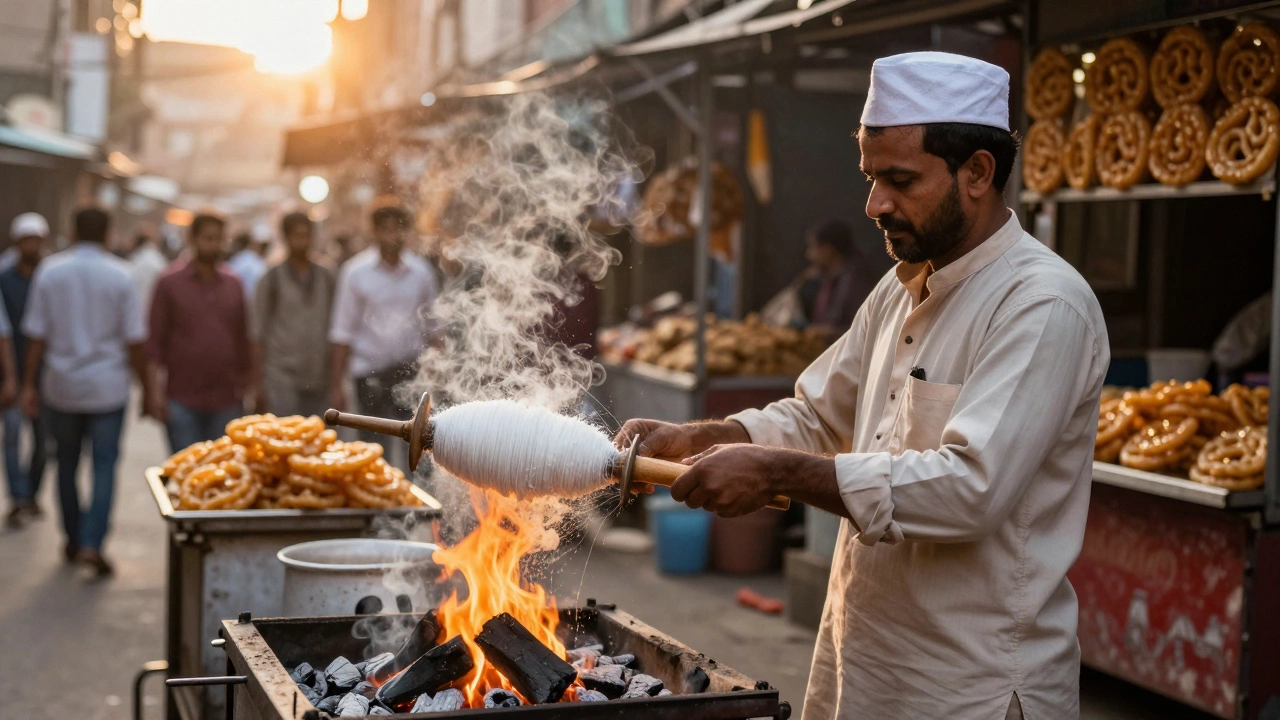
Indian sweets aren’t just eaten—they’re made with care. The process matters: how long you cook the sugar syrup, whether you stir clockwise or counterclockwise, even the type of pan you use. Some sweets need to be stirred for 45 minutes straight. Others are fried, soaked, or layered. And while you’ll find dozens of names—barfi, ladoo, rasgulla, peda—they all come from the same kitchen wisdom: patience and precision. You won’t find a single recipe that skips the smell of ghee or the sound of sugar caramelizing. That’s the real secret.
What you’ll find below are real, practical posts about how these sweets are made—what sweeteners work best, why your paneer-based dessert turned grainy, how to fix sticky sugar syrup, and which traditional methods still hold up today. No fluff. No filler. Just the facts you need to make sweets that taste like the ones your grandma made—or better.